A Stark Caution from a Former Ally
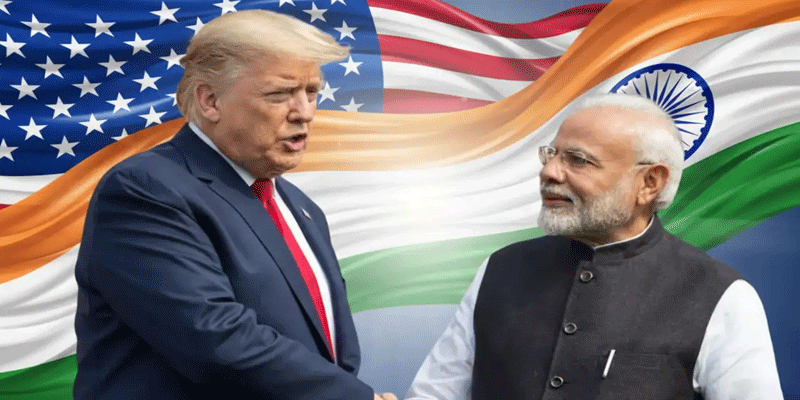
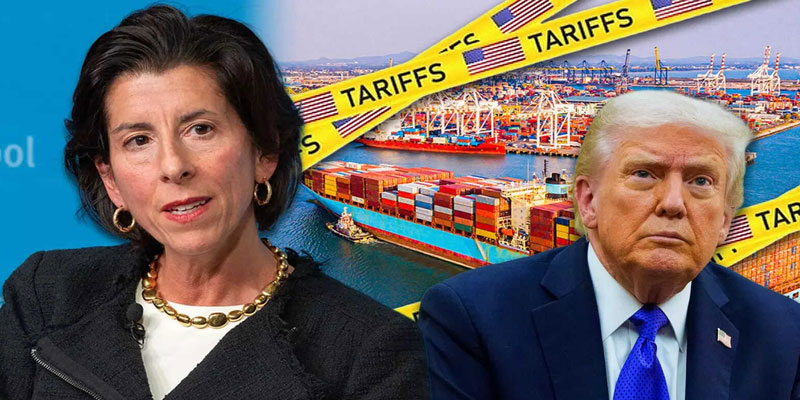
In a pointed critique that has reverberated across Washington’s foreign policy circles, former U.S. Commerce Secretary Gina Raimondo has accused President Donald Trump’s new “America Alone” strategy of being a strategic blunder—one that threatens to dismantle hard-won global alliances and alienate critical partners like India.
Speaking at Harvard’s Institute of Politics, Raimondo warned that the U.S. is “making a serious mistake with India,” arguing that Trump’s inward-looking trade and diplomacy agenda “risks leaving America friendless in an increasingly unstable world.” Her comments reflect growing unease among American policymakers who view India as indispensable to U.S. security and economic strategy in the Indo-Pacific.
Trump’s Policy Shifts: From Partnership to Pressure
In recent months, the Trump administration has rolled out a succession of decisions that have rattled New Delhi and unsettled global investors. These actions mark a sharp departure from the collaborative tone that characterized U.S.-India relations under previous administrations.
1. Harsh Tariffs:
The White House slapped a 25% “reciprocal” tariff on Indian goods in August 2025, followed by another 25% penalty linked to India’s continued energy trade with Russia. The combined 50% tariff—one of the steepest ever imposed on a U.S. trading partner—targets key export sectors such as jewelry, textiles, auto parts, and chemicals. Indian authorities estimate that the move could slash exports to the U.S. by nearly 40%, threatening hundreds of thousands of jobs.
2. Frozen Trade Talks:
Negotiations meant to resolve disputes over data regulations and intellectual property were abruptly halted. These talks, which had gained traction under President Biden, are now in limbo—stranding hopes of a balanced trade pact between the two democracies.
3. Sanction Threats and Favoritism:
Adding to the tension, the administration has warned Indian firms and banks against engaging with Russian entities, hinting at secondary sanctions. Meanwhile, Trump’s overtures to Pakistan, including lower tariffs and selective investment deals, have been interpreted in New Delhi as an unmistakable diplomatic snub.
4. Visa and Services Clampdown:
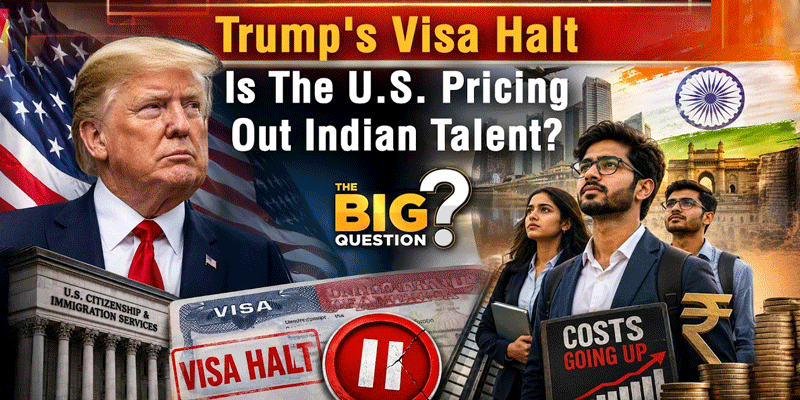
The reintroduction of stricter H-1B visa caps and new restrictions on digital service exports strike at the heart of India’s IT and professional workforce—one of the cornerstones of bilateral engagement.
Raimondo’s Argument: Alienation in a Multipolar World
Raimondo contends that Trump’s coercive tactics not only undermine India’s confidence but also push it closer to China and Russia, eroding decades of bipartisan U.S. diplomacy. “You cannot strong-arm a partner like India into submission,” she said, “especially when global power is no longer unipolar.”
Her analysis aligns with a wider consensus among American strategists who emphasize that:
· India is central to the Quad alliance (with the U.S., Japan, and Australia) that counters China’s dominance in the Indo-Pacific. Alienating India destabilizes this delicate equilibrium.
· The tariffs contradict the spirit of the “Mission 500” trade initiative launched under Biden to double U.S.-India commerce by 2030.
· Washington’s approach ignores India’s insistence on “strategic autonomy”—its long-held principle of independent decision-making in global affairs.
Diplomatic Fallout: India’s Defiance and Market Repercussions
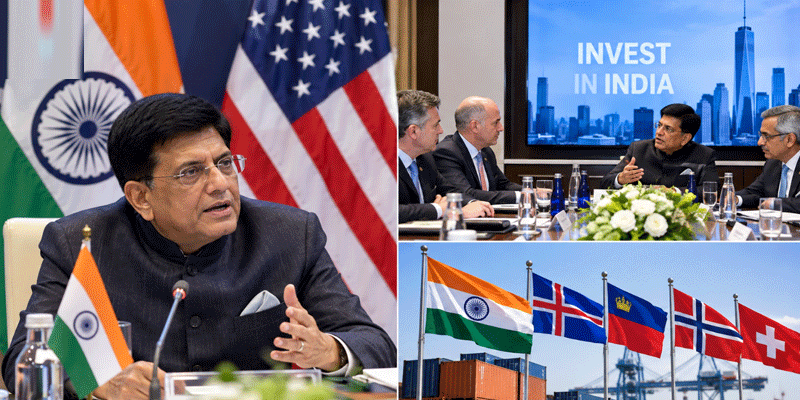
India’s reaction has been firm and unambiguous. Commerce Minister Piyush Goyal has reiterated that India “will not negotiate under pressure,” signaling a willingness to withstand short-term pain to defend its sovereignty.
Economists warn that the MSME sector, heavily reliant on exports to the U.S., will bear the brunt of the tariff war. Meanwhile, American corporations invested in India—especially in technology, pharmaceuticals, and manufacturing—fear retaliatory hurdles and regulatory delays.
Far from isolating Russia, analysts suggest, Trump’s moves may strengthen non-Western trade blocs and accelerate India’s pursuit of diversified global partnerships, including with Europe and Southeast Asia.
A Warning Washington Should Heed
Gina Raimondo’s outspoken critique represents more than a policy disagreement—it’s a wake-up call. Her warning underscores a growing recognition that “America Alone” risks becoming America isolated, undermining the very alliances that sustain its leadership.
For the U.S. and India—two of the world’s largest democracies—the path forward must rest on mutual respect, economic fairness, and strategic foresight, not tariffs and ultimatums. If this course is not corrected, the real casualty may not be trade statistics but the trust that anchors one of the most consequential partnerships of the 21st century.
(With agency inputs)