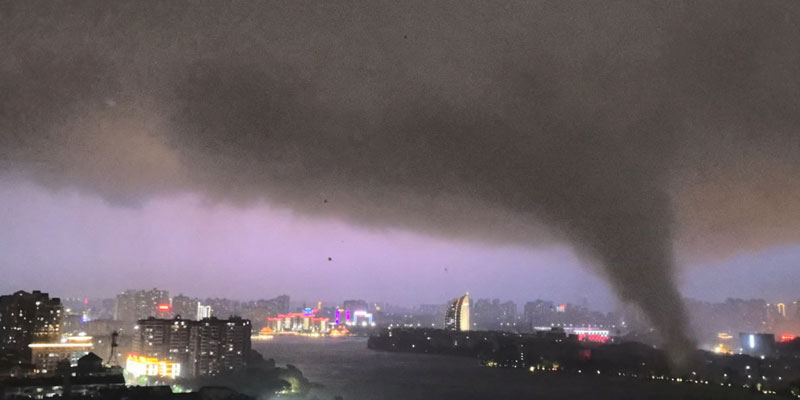
Typhoon Bavi is expected to make landfall near Wenzhou in eastern China's Zhejiang province early on Sunday, prompting one of the largest precautionary evacuation exercises in recent years. Chinese authorities have evacuated more than 1.8 million people from vulnerable coastal areas as the powerful storm approaches, while emergency response teams, rescue personnel and military units remain on high alert. The severe weather system has also disrupted transportation across the region, with widespread flight cancellations in Taiwan and warnings issued for parts of southern Japan. As Bavi advances towards China's economically significant eastern coastline, officials are racing to minimise both human casualties and infrastructure damage.
A Powerful Storm Gathering Strength
Typhoon Bavi developed over the western Pacific Ocean before intensifying into a severe tropical cyclone and moving northwest towards Taiwan and China's eastern seaboard. Meteorological agencies tracked the storm as it gathered strength, expanding into a system with an extensive wind field capable of affecting multiple regions simultaneously.
Forecasts indicate landfall along the Fujian-Zhejiang coastal belt, with Wenzhou identified as one of the principal impact zones. This stretch of coastline is among China's most densely populated and economically productive regions, hosting major ports, manufacturing hubs and urban centres that remain particularly vulnerable to storm surges, heavy rainfall, flooding and landslides.
Given the uncertainty surrounding the precise path and intensity of tropical cyclones, Chinese authorities initiated large-scale preventive measures well before landfall.
Current Situation: Authorities Mobilise on an Unprecedented Scale
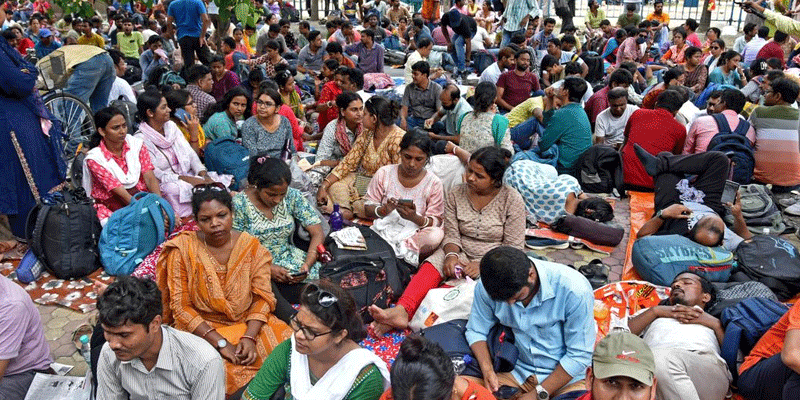
The response to Typhoon Bavi reflects the seriousness with which Chinese authorities are treating the approaching disaster. More than 1.8 million residents have been relocated from vulnerable coastal and low-lying areas to safer shelters. Emergency rescue teams have been deployed across the expected impact zone, while military personnel remain on standby to assist in evacuation, relief and rescue operations if required.
Transportation services have also been significantly affected. Taiwan has witnessed extensive flight cancellations as airlines suspended operations due to strong winds and deteriorating weather conditions. Several airports have reduced services while maritime transport across affected waters has also been curtailed as a precaution.
Meanwhile, the typhoon has already brushed past Japan's Sakishima Islands, generating rough seas, heavy rainfall and strong winds, highlighting the storm's broad regional impact before reaching mainland China.
Why Wenzhou and the Eastern Coast Matter
Wenzhou occupies a strategically important position along China's eastern coastline, combining dense urban settlements with extensive industrial and commercial activity. A direct landfall in this region poses risks extending far beyond immediate weather-related damage.
The greatest threats often arise not solely from destructive winds but from prolonged rainfall, urban flooding, overflowing rivers and landslides. Such conditions can disrupt transportation networks, halt industrial production, damage ports and interrupt supply chains that serve both domestic and international markets.
Large-scale evacuations therefore represent an effort to minimise casualties while reducing pressure on emergency services during the most dangerous phase of the storm.
Resilience Faces Another Severe Test
Typhoon Bavi underscores the growing challenges posed by increasingly intense weather systems across East Asia. While timely evacuations and coordinated emergency responses significantly improve public safety, the true extent of the disaster will become evident only after landfall, when assessments of flooding, infrastructure damage and economic losses begin. The current response demonstrates the importance of preparedness, rapid mobilisation and disaster management in protecting lives. As climate-related weather extremes become more frequent, strengthening resilient infrastructure and effective early-warning systems will remain essential for safeguarding vulnerable coastal communities and sustaining economic stability.
(With agency inputs)