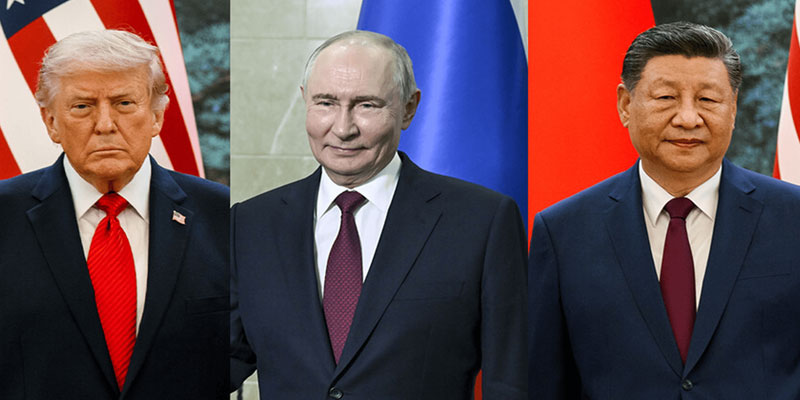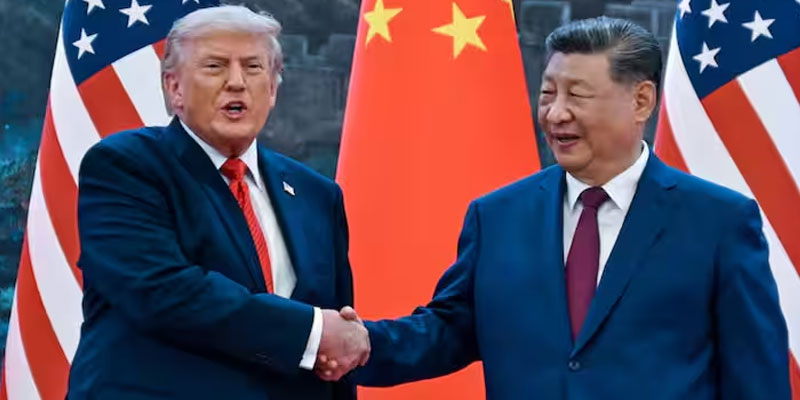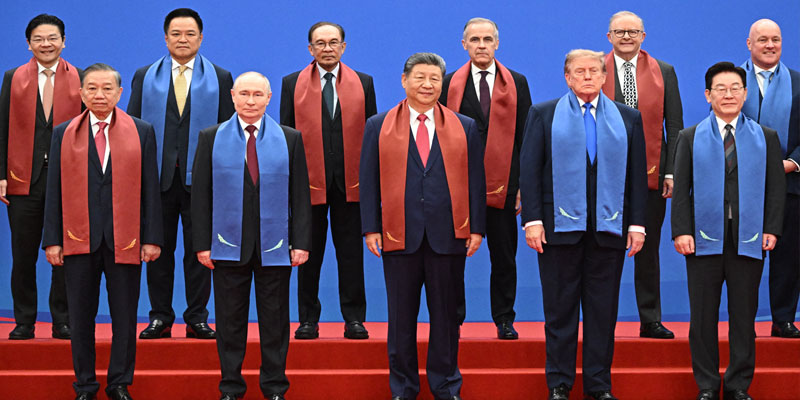
US President Donald Trump, Russian President Vladimir Putin and Chinese President Xi Jinping issued a joint declaration of peace following their historic 90-minute trilateral talks in Shenzhen, China, on November 19, 2026, on the sidelines of the Asia-Pacific Economic Cooperation (APEC) summit. The unprecedented meeting brought together the leaders of the world's three major nuclear powers, raising expectations of a breakthrough in global security, nuclear disarmament and the ongoing international conflicts. However, their four-point declaration focused primarily on nuclear-risk reduction, United Nations reform, energy security and the jurisdiction of international courts, without announcing any binding arms-control agreement or concrete resolution to the wars in Ukraine and Iran.
A Historic Meeting Amid Global Tensions
The Shenzhen summit marked the first-ever trilateral face-to-face meeting between the leaders of the United States, Russia and China. It came at a particularly sensitive moment, with geopolitical rivalries intensifying, nuclear arsenals undergoing modernisation and international institutions facing growing challenges.
The expiration of the New START treaty between Washington and Moscow in February 2026 had further weakened the existing nuclear arms-control framework. Against this background, Trump had sought a broader understanding involving China, Russia and the United States to reduce nuclear threats and establish a new framework for strategic stability.
The meeting therefore carried considerable diplomatic significance, although the final declaration revealed differences between the leaders' ambitions and their willingness to make specific commitments.
Four Major Outcomes of the Shenzhen Declaration
· United Nations reform: The three permanent members of the UN Security Council agreed to work towards reforming the organisation to make it more effective in addressing global challenges and maintaining international peace and security.
· Energy security: They proposed increasing the production and supply of refined petroleum products, emphasising stable energy flows and the importance of reliable supplies for countries worldwide.
· International Criminal Court: The leaders stressed state sovereignty and immunity for government officials, opposing what they described as the misuse of jurisdiction by the International Criminal Court (ICC) and similar institutions.
· Nuclear risk reduction: Reaffirming that nuclear war cannot be won and must never be fought, they committed to dialogue on reducing nuclear risks and preventing nuclear proliferation.
Nuclear Disarmament: The Biggest Unfinished Agenda
Nuclear diplomacy was arguably the most consequential subject of the summit. With New START no longer in force, the United States and Russia face fewer bilateral constraints on their strategic nuclear arsenals. China, meanwhile, has been expanding its nuclear capabilities but has resisted joining a trilateral arms-reduction agreement, citing the substantial difference between its arsenal and those of Washington and Moscow.
Consequently, the declaration established no numerical limits, verification mechanisms, negotiation timetable or legally binding disarmament commitments. It created an opening for diplomatic engagement rather than an actual arms-control framework.
Ukraine and Iran Wars Remain Unresolved
Despite Trump's stated intention to discuss the Ukraine and Iran conflicts, neither war featured in the final declaration. There were no announcements concerning ceasefires, peace negotiations, security guarantees or coordinated international intervention.
This omission was particularly significant because Russia remains directly involved in the Ukraine war, while the United States is involved in the conflict with Iran. The summit therefore failed to produce any publicly announced breakthrough on two major international security challenges.
A Historic Handshake, Not Lasting Peace
The Shenzhen summit has created an important diplomatic opening among three powerful nuclear nations. However, its four-point declaration remains largely a political commitment rather than a comprehensive peace agreement. Its real significance will depend on whether the promised dialogue translates into measurable cooperation, credible nuclear safeguards and meaningful progress towards resolving international conflicts.
(With agency inputs)