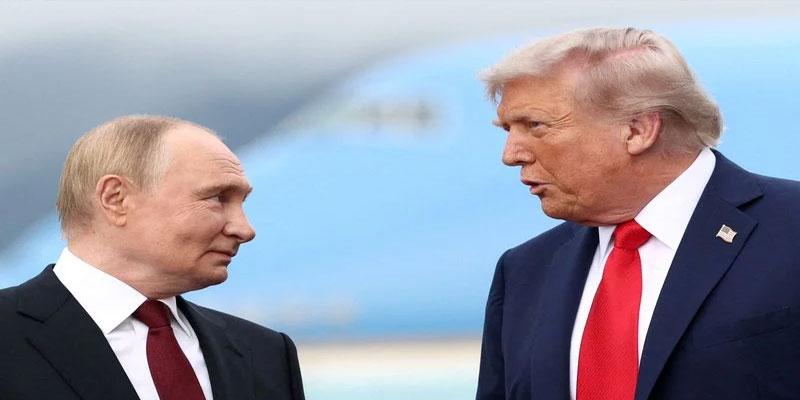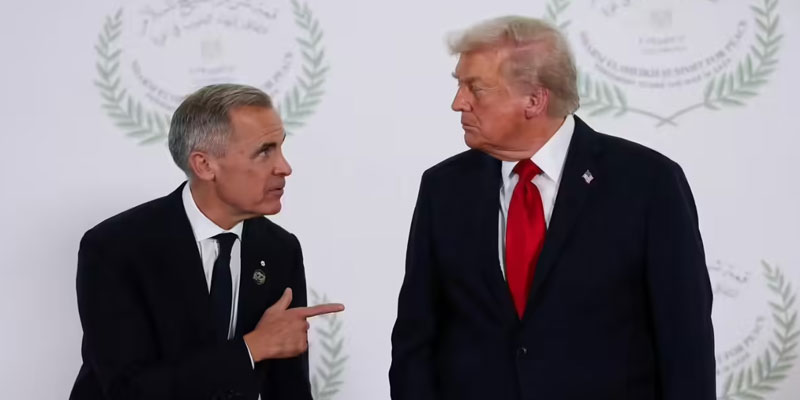
“China will eat them up.” With that blunt warning, US President Donald Trump reignited diplomatic tensions with Canada and rattled European allies. In a January 23, 2026 post on Truth Social, Trump attacked Ottawa for resisting his proposed “Golden Dome” missile defense system over c, accusing Canada of freeloading on US security while drifting closer to Beijing. The remark, as much about power politics as policy, exposed growing fractures within the Western alliance at a time of intensifying Arctic and great-power competition.
The Broader Context: Security, Sovereignty, and Strategic Drift
The dispute sits at the intersection of defense planning, trade realignment, and sovereignty concerns. Trump has revived a hard-edged approach toward allies, blending security guarantees with economic pressure. Canada, under Prime Minister Mark Carney, has responded by diversifying its economic partnerships and asserting that defense cooperation cannot be imposed through coercion. Greenland—strategically vital but politically sensitive—has become the symbolic and geographic center of this clash.
Golden Dome: Missile Shield or Political Lever?
The Golden Dome project is envisioned as a $175 billion, space-enabled missile defense architecture designed to intercept hypersonic and nuclear threats approaching North America through the Arctic. Drawing comparisons to Israel’s Iron Dome, the system would rely heavily on Greenland’s location to provide early detection and interception capability, with a target operational date of 2029.
Trump argues that Golden Dome would automatically protect Canada and therefore justifies US pressure on Ottawa to fall in line. Canadian officials, however, see it differently. UN Ambassador Bob Rae has previously described the proposal as resembling a “protection racket,” while Ottawa maintains that continental defense must operate through NORAD and NATO principles, not unilateral demands. Denmark, which retains sovereignty over Greenland, has also underscored that any military arrangement must respect Greenlandic self-determination.
Canada’s China Turn and Washington’s Fury
Fueling Trump’s outburst was Canada’s recent trade engagement with China. Following a January visit to Beijing, Prime Minister Carney announced a $7 billion trade framework that eased tariffs on Chinese electric vehicles in exchange for major reductions in Chinese barriers on Canadian agricultural exports, particularly canola. The move was framed in Ottawa as economic risk management, reducing Canada’s heavy dependence on the US market amid rising American tariffs.
Trump, however, portrayed the pivot as strategic naïveté, warning that China’s predictability was illusory. His rhetoric escalated into personal and political threats, including revoking Carney’s participation in a US-led peace forum and circulating provocative maps hinting at Canadian subordination.
Global Reactions: Allies Push Back, Rivals Watch Closely
European leaders responded cautiously but firmly. Danish Prime Minister Mette Frederiksen welcomed dialogue on Arctic security but drew an unequivocal line on Greenland’s sovereignty. Sweden and other Nordic states called on Europe to resist great-power pressure while strengthening collective defense.
Within NATO, Secretary General Mark Rutte acknowledged US concerns over burden-sharing but warned that internal disputes weaken alliance credibility. EU foreign policy chief Kaja Kallas openly criticized the confrontation, arguing that public rifts only benefit adversaries such as China and Russia.
Canada, for its part, reaffirmed support for Denmark and Greenland’s right to decide their future, rejecting any linkage between security cooperation and economic or political concessions.
Alliance Stress in a Multipolar Arctic
The Golden Dome dispute is less about missile defense than about shifting power relationships in a multipolar world. Trump’s confrontational style seeks to extract loyalty through leverage, while Canada’s response reflects a broader trend of middle powers hedging against overdependence on any single patron. As the Arctic grows in strategic importance, unresolved tensions among allies risk undermining collective security. Whether through G7 dialogue or NATO recalibration, restoring trust will be essential—because in today’s fractured geopolitical landscape, alliance unity may be the strongest defense of all.
(With agency inputs)