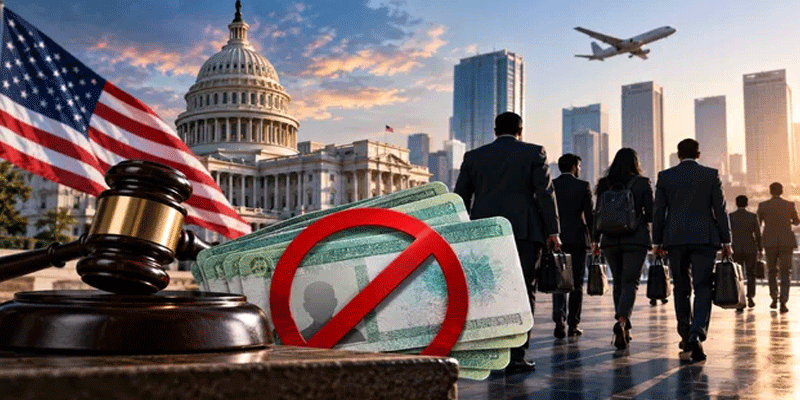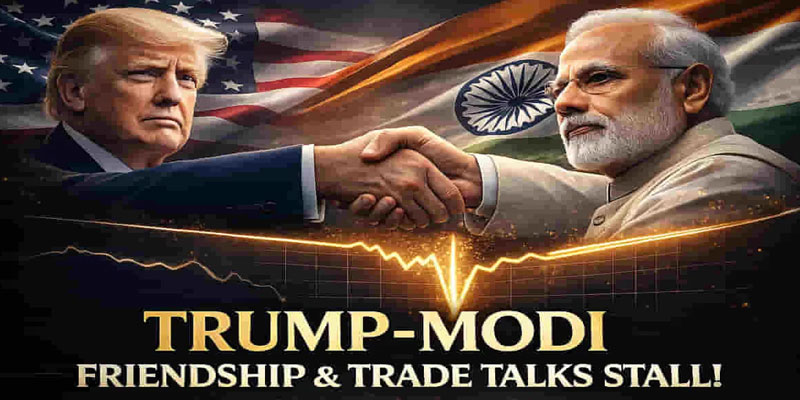
Global trade negotiations have entered a new phase of uncertainty following a landmark U.S. Supreme Court ruling that struck down tariffs imposed by President Donald Trump under emergency economic powers. The decision has not only reshaped America’s trade strategy but also triggered immediate ripple effects across Asia and Europe.
India has emerged as one of the first major economies to react. New Delhi has postponed plans to send a high-level trade delegation to Washington, signaling caution amid the evolving legal and policy landscape in the United States.
The delegation had been scheduled to depart on February 22 to finalize an interim trade agreement. Under the proposed framework, U.S. tariffs on Indian goods were expected to fall to 18%, while India would commit to purchasing $500 billion worth of American goods over five years.
The delay reflects growing ambiguity about the durability of U.S. trade commitments. With the Supreme Court limiting executive authority on tariffs, partner countries now face uncertainty over which policies can be sustained and which may face further legal challenges.
Europe is also reassessing its position. According to reports, Bernd Lange, chair of the European Parliament’s trade committee, is preparing to propose freezing ratification of the European Union’s trade deal with the United States until clearer policy direction emerges.
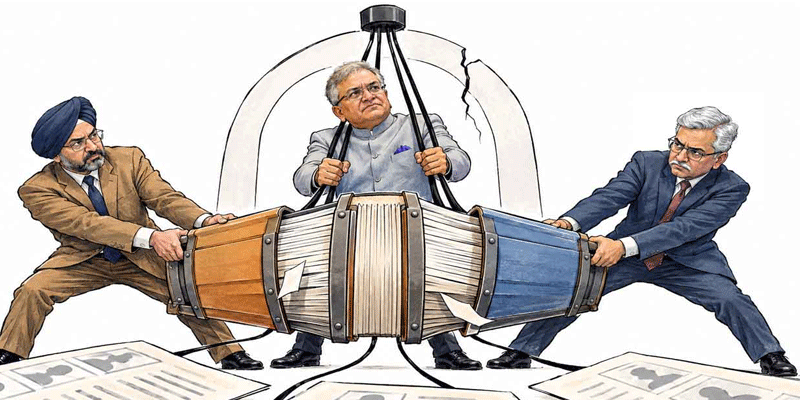
The broader concern is institutional. Trade agreements rely on predictability, and sudden judicial interventions complicate negotiations that require long-term certainty.
As Washington recalibrates its legal and economic strategy, trading partners are watching closely. For now, global trade diplomacy appears paused, awaiting clarity on the future of U.S. tariff authority.