A Political Message Amid Development Announcements
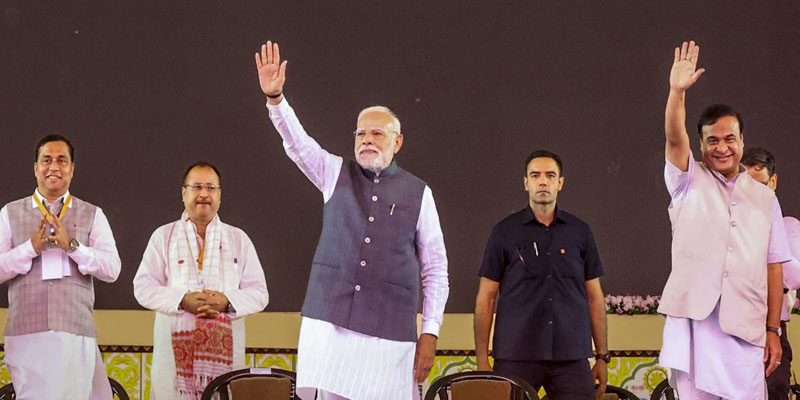
During his visit to poll-bound Assam on March 13, 2026, Prime Minister Narendra Modi combined development announcements with a sharp political message. Addressing large gatherings in Kokrajhar and Guwahati ahead of the upcoming Assembly elections, the prime minister accused the opposition Indian National Congress of spreading misinformation about fuel shortages during a global crisis.
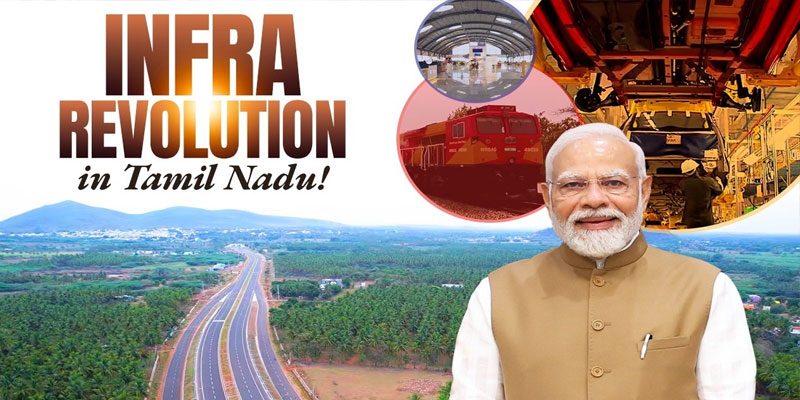
At the same time, Modi highlighted the government’s welfare initiatives and inaugurated infrastructure projects worth more than ₹19,480 crore. These projects span roads, railways, and energy infrastructure, forming part of the National Democratic Alliance’s broader strategy to showcase development in the Northeast while gearing up for the elections expected between March and May.
The Oil and LPG Debate
A key part of Modi’s speech focused on allegations that the Congress was exaggerating concerns about oil and LPG shortages. The global energy market has been under strain due to tensions involving United States and Iran, which have created uncertainty around oil supply routes.
The prime minister accused the opposition of politicizing these developments and spreading “rumours” that could create panic among citizens. To underscore his point, Modi referenced a speech by India’s first prime minister, Jawaharlal Nehru, during the early 1950s when global events like the Korean War had triggered inflationary pressures.
According to Modi, such historical lessons demonstrate the importance of responsible political communication during global crises. He argued that the government has strengthened India’s energy resilience through refinery expansions, pipeline networks in the Northeast, and increased investment in renewable energy. These measures, he said, help cushion India from international price shocks even when global markets become volatile.
Focus on Farmers and Welfare Delivery
Alongside criticism of the opposition, Modi used the occasion to highlight welfare schemes aimed at farmers and rural communities. He released the 22nd instalment of the PM-Kisan Samman Nidhi, transferring more than ₹18,640 crore directly to over 9.32 crore beneficiaries across the country through Direct Benefit Transfer.
The prime minister also announced steps benefiting tea garden workers and tribal communities in Assam. Land ownership certificates were distributed to residents of tea garden areas across more than 100 gardens in 20 districts, addressing a long-standing demand from families who had lived on plantation land for generations.
By combining welfare announcements with development projects, the government sought to reinforce its message that economic growth and social support remain central to its governance approach.
The Infiltration and Security Narrative
Another major theme of Modi’s speech was immigration and regional security. He accused the Congress of historically supporting policies that allowed illegal migration into Assam, which he said altered demographic balances and threatened local livelihoods.
The prime minister praised Assam Chief Minister Himanta Biswa Sarma for efforts to reclaim land allegedly encroached upon by illegal migrants in districts such as Dhubri and Goalpara.
Modi framed the issue through the slogan “Roti, Beti, Mati”—referring to livelihood, women’s security, and land identity. According to him, protecting these pillars requires strict governance and development initiatives that benefit indigenous communities.
Development Push in Bodoland
In Kokrajhar, Modi also highlighted projects in the Bodoland region, emphasizing that peace and development have accelerated since the signing of the Bodo Peace Accord. Infrastructure investments in the region include roads and connectivity projects aimed at improving economic opportunities and integration with the rest of the state.
Politics, Development, and the Road to Elections
Modi’s Assam visit reflected a carefully calibrated election strategy: combine development announcements with political messaging against the opposition. By addressing issues ranging from energy security and farmer welfare to immigration and regional development, the prime minister sought to position the ruling alliance as both a guardian of stability and a driver of progress.
As the state heads toward a crucial electoral contest, the narrative battle between development claims and political criticism is likely to intensify. Ultimately, the voters of Assam will decide which vision—development-driven governance or opposition scrutiny—resonates more strongly in shaping the state’s political future.
(With agency inputs)