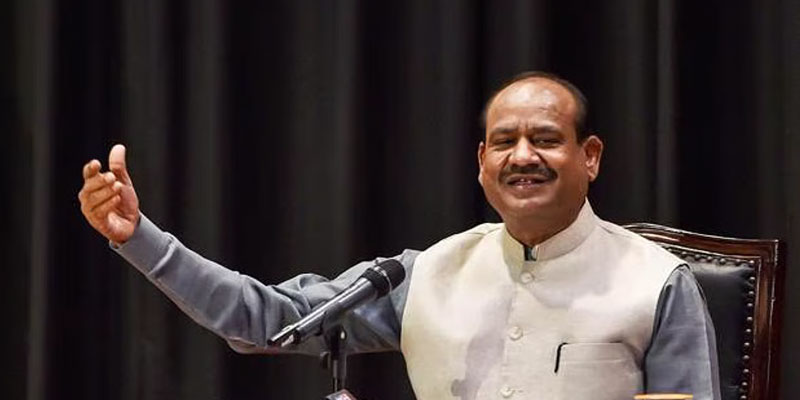
A heated political confrontation unfolded in Parliament as the Lok Sabha admitted a no-confidence motion seeking the removal of Om Birla. The resolution, moved by Congress MP Mohammad Jawed and supported by more than 50 MPs, triggered a stormy debate lasting nearly ten hours.
The motion exposed deep divisions in India’s Lok Sabha, with opposition parties accusing the Speaker of partisanship and undermining parliamentary norms, while the ruling Bharatiya Janata Party defended his conduct and accused the opposition of disrupting democratic processes.
Opposition’s Case: Allegations of Bias and Rule Violations
The debate was spearheaded by Congress MP Gaurav Gogoi, who argued that parliamentary rules had been violated from the outset. Citing Article 96 of the Constitution, Gogoi objected to Jagdambika Pal presiding over the House during the motion, arguing that neither the Speaker nor the Deputy Speaker should preside in such circumstances.
With the post of Deputy Speaker vacant since 2024, Gogoi demanded clarity on the constitutional procedure. He also referenced the landmark Nabam Rebia judgment, which emphasized that a Speaker must maintain “elevated independence, impeccable objectivity, irreproachable fairness and absolute impartiality.”
According to the opposition, these standards were not being met. Gogoi accused Birla of repeatedly interrupting opposition leaders and preventing key debates on issues such as farmers’ concerns, trade matters, and a U.S.-related investigation.
The opposition further cited mass suspensions of MPs in 2023—146 lawmakers, nearly 40% of all suspensions since 2004—as evidence of what they called an increasingly restrictive parliamentary environment.
What Rahul Gandhi Said
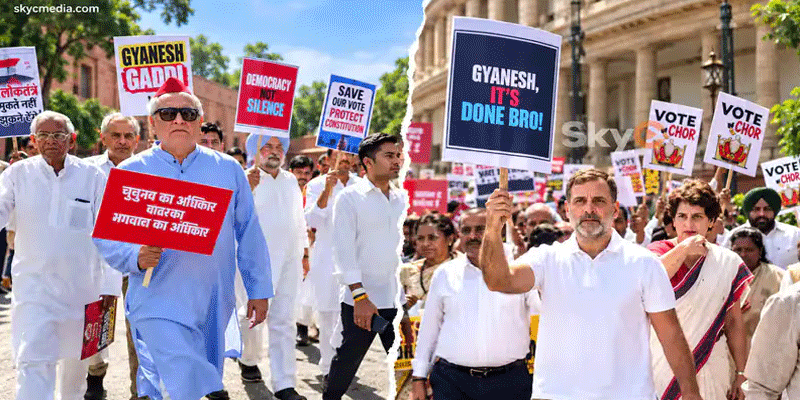
As Leader of the Opposition, Rahul Gandhi did not deliver a full speech during the debate but made several sharp interventions. Gandhi claimed he had been interrupted or silenced nearly 20 times during previous sessions, including during the motion of thanks to the President’s address.
He argued that the Leader of the Opposition should be able to raise issues of national importance without needing explicit permission from the Chair, a position contested by the treasury benches.
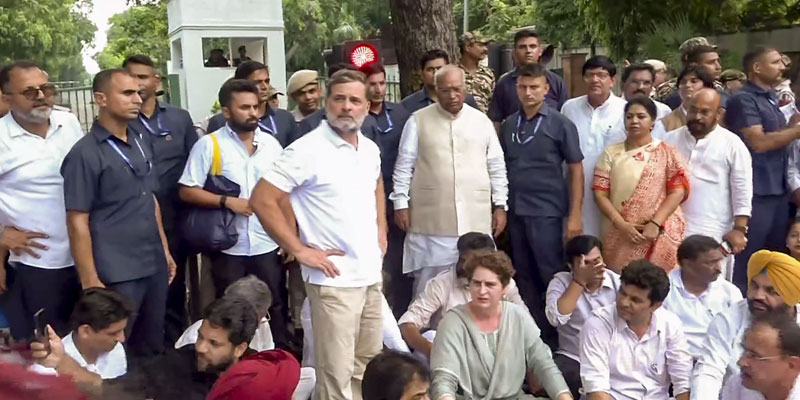
Outside Parliament, Gandhi escalated his criticism, accusing the government of blocking debates on West Asia and other geopolitical issues to avoid scrutiny. He also alleged that Prime Minister Narendra Modi was avoiding parliamentary accountability on economic and security matters.
These statements intensified tensions inside the House, with ruling party MPs accusing Gandhi of deliberately provoking disruptions.
BJP Leaders Rally Behind the Speaker
Senior BJP leaders mounted a strong defense of Speaker Birla and the parliamentary procedures followed during the debate.
Union Home Minister Amit Shah rejected procedural objections, arguing that the House must continue functioning and that the Speaker’s office cannot remain vacant during such proceedings.
Parliamentary Affairs Minister Kiren Rijiju stressed that all MPs, including the Leader of the Opposition, must obtain the Chair’s permission before speaking. He accused the opposition of deliberately creating disorder to advance political narratives.
Meanwhile, BJP MP Ravi Shankar Prasad sharply criticized Rahul Gandhi, calling the opposition’s tactics “anarchic and undemocratic” and insisting that the dignity of Parliament must be preserved.
A Symbolic Battle Over Parliamentary Norms
Given the ruling alliance’s numerical strength in the Lok Sabha, the motion to remove Speaker Om Birla is unlikely to succeed. However, the debate carries deeper political significance.
For the opposition, the motion serves as a symbolic protest against what it sees as shrinking space for dissent in Parliament. For the ruling party, it represents an attempt to politicize the Speaker’s office and disrupt governance.
Ultimately, the episode highlights the growing polarization in India’s parliamentary politics. Restoring trust in the neutrality of the Speaker—and ensuring fair space for debate—will be critical if Parliament is to remain a credible arena for democratic accountability rather than a battleground of procedural warfare.
(With agency inputs)