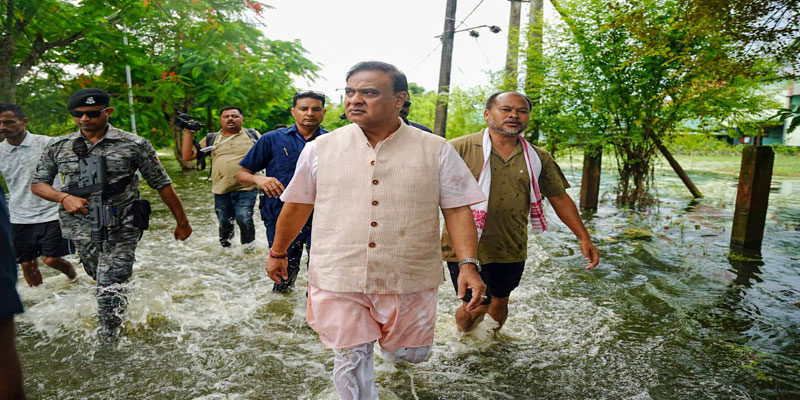
Assam's recent floods have left behind an estimated ₹480 crore in losses, damaging 26,681 houses and 18,887 cattle sheds, while disrupting the livelihoods of thousands across the state's upper districts. Chief Minister Himanta Biswa Sarma has announced that nearly 97,000 flood-hit families have already received ₹15,000 each as interim financial assistance, reflecting the government's effort to accelerate relief before the Durga Puja festival. However, with damage assessment still underway, officials acknowledge that the final cost of the disaster could rise significantly.
Flood Fury Leaves Deep Scars
The latest floods primarily devastated Sivasagar, Charaideo, Jorhat and Golaghat, exposing the vulnerability of Assam's flood-prone regions that experience recurring monsoon disasters every year.
A preliminary survey estimates losses of around ₹480 crore, covering damaged homes, livestock shelters and community assets. Officials believe this figure represents only the first phase of the assessment, with fresh surveys scheduled to continue until September 10–11, indicating that the actual economic impact may be substantially higher.
Homes, Livelihoods and Livestock Devastated
Beyond damaged houses, the floods have severely affected rural livelihoods.
Key losses recorded so far include:
· 26,681 houses damaged.
· 18,887 cattle sheds destroyed.
· Around 41,000 handloom-related assets lost.
· Nearly 5.99 lakh domestic animals either killed, injured or otherwise affected.
The destruction has dealt a major blow to farming households and Assam's traditional handloom sector, where many families depend on weaving and livestock for their primary income. Recovery, therefore, extends beyond rebuilding homes to restoring economic security.
Massive Relief Push Through Cash Assistance
The Assam government has made direct cash transfers the centrepiece of its immediate relief strategy.
A second phase alone covered 31,951 additional families, while enumeration continues in parts of Sivasagar. Authorities estimate another 3,000 to 4,000 households may become eligible in the next round, potentially pushing the relief outlay close to ₹150 crore.
Officials have set an ambitious target of completing compensation payments before Durga Puja, enabling affected families to begin rebuilding before the festive season.
From Immediate Relief to Long-Term Rehabilitation
The government plans to combine emergency assistance with long-term rehabilitation measures.
Among the key initiatives are:
· Faster housing construction under Pradhan Mantri Awas Yojana (PMAY).
· Expanded DBT support for eligible beneficiaries.
· Restoration of schools and Anganwadi centres.
· Medical and veterinary camps.
· Facilitation of insurance claims and banking support.
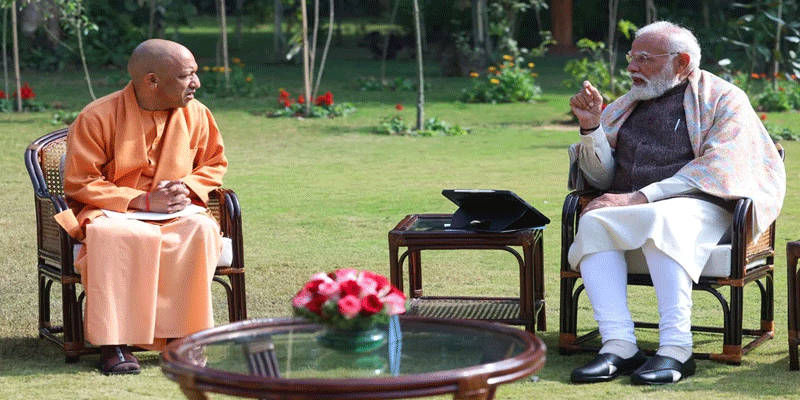
According to Chief Minister Sarma, consultations with Prime Minister Narendra Modi have paved the way for prioritising permanent housing in the worst-affected districts.
Building Resilience Beyond Relief
Assam's response demonstrates how digital cash transfers can provide rapid support after disasters, but the widening gap between immediate assistance and long-term reconstruction remains a critical challenge. As surveys continue and losses mount, sustainable recovery will require stronger flood-resilient infrastructure, livelihood restoration and more comprehensive rehabilitation planning. The true measure of success will not be how quickly relief reaches victims, but how effectively vulnerable communities are rebuilt before the next monsoon arrives.
(With agency inputs)