The detention of Cockroach Janata Party (CJP) leaders Saurav Das and Ashutosh Ranka for five days in judicial custody over alleged trespassing at Jantar Mantar has intensified the political debate over electoral transparency, freedom of expression and the right to peaceful protest. Rahul Gandhi’s strong criticism has added national political significance to the confrontation, raising questions about the boundaries between lawful enforcement and the protection of democratic dissent.
Protest Against Electoral-Roll Concerns
The controversy began on October 10, when CJP leaders arrived in Delhi for a planned demonstration against Chief Election Commissioner Gyanesh Kumar. They alleged irregularities in voter rolls and raised concerns over the Special Intensive Revision (SIR) of electoral rolls.
The dispute escalated after Jantar Mantar was de-notified as a designated protest site. The change made demonstrations there subject to applicable restrictions, prompting concerns among political activists about access to an established venue for public protest.
Fresh Arrest and Five-Day Judicial Custody
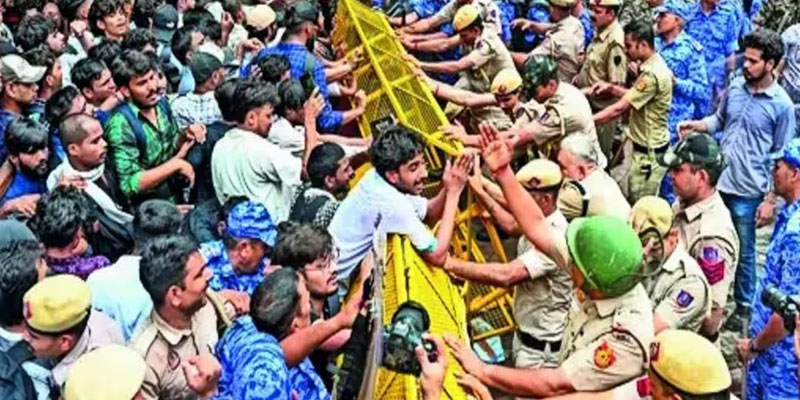
On October 13, the leaders allegedly crossed police barricades, entered the restricted protest area and raised slogans demanding Kumar’s resignation. Delhi Police registered a case involving alleged trespassing, violation of prohibitory orders, breach of the earlier peace bond and obstruction of public servants. On October 14, a magistrate ordered Das and Ranka to five days of judicial custody. Their associate Ajinkya Shinde was released on a personal bond.
The police maintain that the action concerns alleged violations of legal restrictions and the leaders’ previous undertaking to maintain peace. The CJP, however, views the renewed detention as an attempt to curb its campaign over electoral transparency.
Rahul Gandhi Calls the Action ‘Cowardice’
Congress leader and Leader of the Opposition Rahul Gandhi strongly criticised the detention, describing the imprisonment of young protesters for waving the national flag and demonstrating peacefully as an act of cowardice. He argued that peaceful protest is a constitutional right and linked the episode to broader demands for democratic freedoms.
Gandhi’s intervention elevates the controversy beyond a confrontation involving a relatively small political organisation. It connects the CJP’s campaign with the Opposition’s wider concerns about electoral integrity, the revision of voter lists and the treatment of demonstrators.
Law Enforcement Versus Democratic Dissent
The central dispute concerns whether the authorities’ actions constitute legitimate enforcement of restrictions or disproportionate curbs on political expression. The police cite alleged trespassing and breach of the peace bond, while the protesters argue that their demonstration sought accountability from the country’s electoral leadership.
The de-notification of Jantar Mantar has further intensified the debate. Although authorities have designated alternative locations, critics argue that restricting access to a prominent protest venue could diminish the visibility of public demonstrations near the national capital’s political centre.
The Democratic Test Beyond the Courtroom
The immediate legal battle will centre on bail, the allegations against the detained leaders and the scope of their peace-bond obligations. Politically, the episode could widen the debate over electoral accountability and the space available for peaceful dissent.
Ultimately, democratic governance requires both respect for lawful restrictions and protection of citizens’ fundamental rights. The credibility of the response will depend on due process, proportionality and transparency. The challenge is to enforce the law without allowing its application to undermine the democratic right to question those in power.
(With agency inputs)