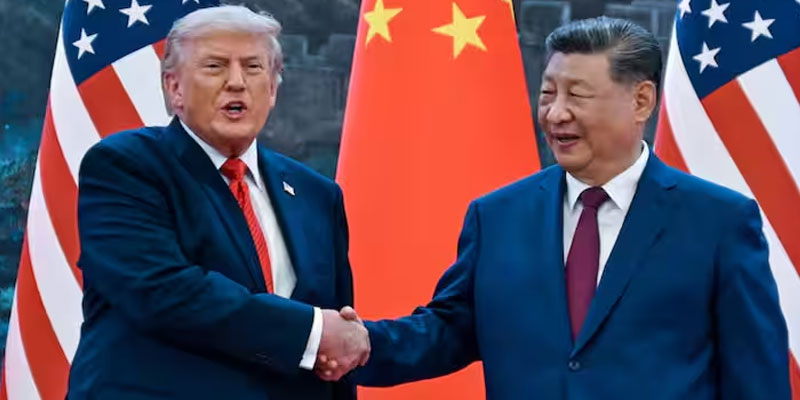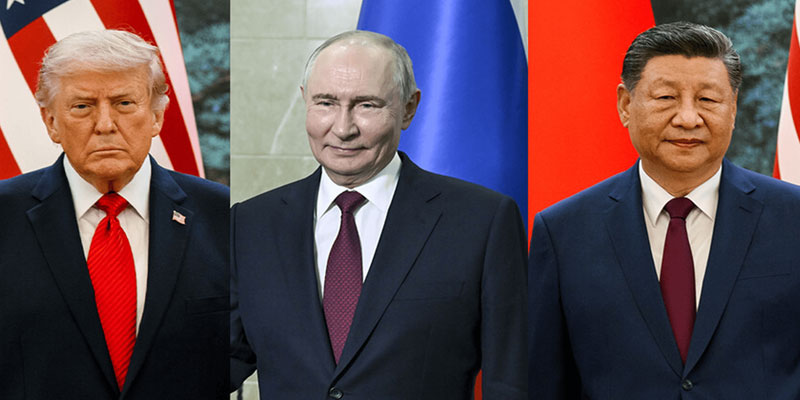
President Donald Trump’s meeting with Chinese President Xi Jinping and Russian President Vladimir Putin on November 19 in Shenzhen, China, has brought three of the world’s most powerful leaders together for an unprecedented diplomatic engagement. Held on the sidelines of the Asia-Pacific Economic Cooperation (APEC) summit, the historic gathering places nuclear arms control, the Ukraine war, the Iran conflict, international trade and artificial intelligence at the centre of global attention. While Trump hopes his personal relationships with both leaders can facilitate diplomatic breakthroughs, deep geopolitical differences make any immediate agreement difficult.
An Unprecedented Meeting Amid Global Rivalries
The trilateral gathering marks the first formal meeting involving the presidents of the United States, China and Russia together. It comes at a time when relations among major powers are increasingly strained by military competition, economic disagreements, technological restrictions and regional conflicts.
Trump’s approach to international diplomacy relies heavily on direct engagement and personal relationships. He believes discussions with Xi and Putin could create opportunities that conventional diplomatic negotiations have struggled to achieve.
However, the three countries have conflicting strategic priorities. China and Russia have strengthened their economic and political partnership since Moscow launched its invasion of Ukraine in 2022. Trump’s previous meeting with Putin in Alaska in 2025 failed to produce an agreement to end the war.
Nuclear Arms Control Takes Centre Stage
Nuclear disarmament is expected to be the most significant issue. Trump wants a new, modernised agreement covering all three countries, particularly after the expiry of the New START treaty in February 2026.
The treaty had provided the last binding limits on American and Russian strategic nuclear arsenals. Its expiration has removed an important safeguard against an uncontrolled nuclear arms competition.
The principal challenge is the imbalance between their nuclear capabilities:
· The United States and Russia each possess more than 5,000 nuclear warheads.
· China has an estimated arsenal exceeding 600 warheads.
· Beijing remains reluctant to accept restrictions designed primarily around the much larger American and Russian stockpiles.
Ukraine War: A Major Diplomatic Complication
The Ukraine conflict remains one of the most sensitive subjects, although Washington has indicated that it is not formally part of the trilateral agenda. Trump has nevertheless expressed interest in discussing the war, while Putin wants a settlement favourable to Moscow’s strategic objectives.
Ukraine and its European allies are concerned that negotiations between Washington and Moscow could determine Ukraine’s future without Kyiv’s participation. German Chancellor Friedrich Merz has cautioned against repeating the controversial outcome of the previous Trump-Putin meeting in Alaska.
The disagreement highlights the difficulty of achieving peace when Russia, Ukraine and Western governments have fundamentally different expectations.
Iran, Trade and Artificial Intelligence
The conflict involving Iran is another important subject. Trump wants to explore possibilities for de-escalation, particularly because regional instability has increased energy-market uncertainty and affected global economic growth.
China and Russia maintain economic and political relationships with Tehran, creating differences with Washington over sanctions and regional security.
Other important issues include:
· US-China trade: The existing trade truce faces a January 10 deadline, with disagreements over agricultural purchases and rare-earth restrictions.
· Technology competition: American restrictions on advanced semiconductor exports remain a major concern for Beijing.
· Artificial intelligence: Competition over AI capabilities, computing infrastructure and strategic technologies adds another dimension to their rivalry.
Global Diplomacy: What Lies Ahead?
The meeting's immediate significance may lie more in establishing communication than securing enforceable agreements. Nuclear negotiations, Ukraine, Iran and trade involve conflicting national interests that cannot easily be reconciled through one presidential encounter.
Beyond the Photograph: The Real Test Begins
The unprecedented gathering represents an important diplomatic moment, but its success will ultimately depend on concrete outcomes rather than political symbolism. If the three leaders establish sustained negotiations on nuclear security and regional conflicts, Shenzhen could become the starting point for a broader international understanding. Otherwise, it risks remaining a high-profile diplomatic photograph without meaningful progress.
(With agency inputs)