A New Chapter in Canada’s Foreign Posture
With Mark Carney taking office as Canada’s 24th Prime Minister in March 2025, Ottawa signalled it would steer a more assertive and globally engaged foreign policy. Carney—an economist-turned-politician with no prior electoral experience—has already sought to recalibrate Canada’s relations with the United States, pressing for a “new economic and security relationship.”
Against this backdrop, Carney’s recent public endorsement of U.S. President Donald Trump’s alleged role in brokering a ceasefire between India and Pakistan has raised eyebrows in New Delhi. The episode now stands as a test of how Canada-India relations may evolve under this new leadership.
Carney’s Declaration: Trump as “Transformative”
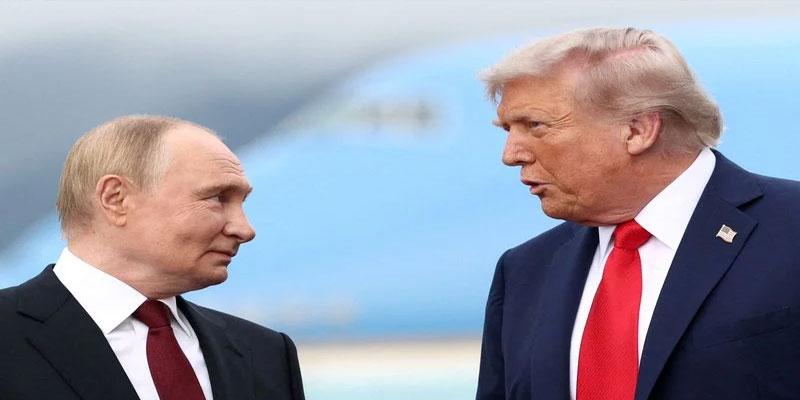
During a White House meeting, Carney lauded Trump as a “transformative” leader, citing his impact on the global economy, defense commitments among NATO allies, and contributions toward peace between India and Pakistan.
He pointed to the claimed India-Pakistan ceasefire as one of Trump’s diplomatic triumphs, saying it aligned with broader stability “from India, Pakistan through to Azerbaijan, Armenia.”
This public crediting of Trump’s mediation is notable in itself, given that Carney’s premiership comes amid unresolved trade friction and past tensions with the U.S. (including Trump’s prior suggestions that Canada might be annexed).
Trump’s Ceasefire Claim vs India’s Firm Denial
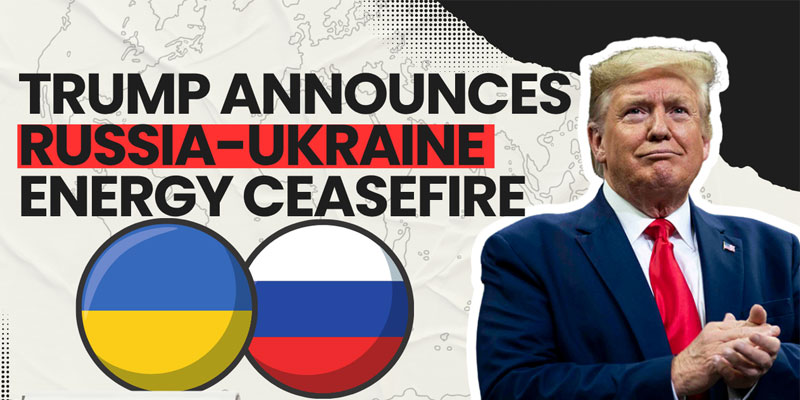
Trump has repeatedly asserted—almost 50 times since May—that his diplomatic intervention secured a “full and immediate” ceasefire between India and Pakistan after tense exchanges. He credited U.S. tariff pressure and direct communications for quelling a potentially escalating confrontation.
He has also stated that, without America’s trade leverage, several global conflicts would have erupted.
India’s Position
India has unequivocally denied any third-party role. The Ministry of External Affairs maintains that the cessation of hostilities was achieved directly through military communication channels between the Directors General of Military Operations (DGMOs) of India and Pakistan. New Delhi insists the public narrative of U.S. mediation is a misrepresentation of events.
Operation Sindoor: The Military Context
The ceasefire followed India’s Operation Sindoor, launched on May 7 as retaliation for a terror attack in Pahalgam that claimed 26 civilian lives. Over the ensuing four days, hostilities included drone and missile exchanges, before both sides agreed to pause on May 10. That timeline—which India attributes entirely to intra-military negotiations—remains central to New Delhi’s refusal to validate any external mediation narrative.
Implications & Analysis
Diplomatic Discord or Subtle Pushback?
Carney’s overt alignment with Trump’s version of events underscores Canada’s leaning toward closer U.S. coordination in global affairs. But on the Indian subcontinent, his narrative conflicts with New Delhi’s stated principles of sovereignty and military autonomy.
The Credibility Question
For India, the insistence that its military framework—rather than foreign power diplomacy—drove the ceasefire is foundational. Any external claims to influence can be seen as an erosion of that narrative, particularly when advanced by a third country like Canada.
Canada’s Foreign Policy Posture
Carney’s public statements reflect a Canada that is not shy about assuming its place amid broader geopolitical discourse. His backing of Trump’s South Asia role may be understood as part of a bid to be taken seriously in strategic conversations—and to bolster his credibility in Washington.
Will It Strain India-Canada Relations?
While Carney’s remarks are bold, a full-blown rupture in India-Canada ties seems unlikely. In fact, the relationship has already begun to reset after a diplomatic freeze triggered by controversy over the killing of Sikh separatist Hardeep Singh Nijjar. Earlier this year, the two nations agreed to restore diplomatic services and appoint new high commissioners.
At the G7 meeting in Kananaskis, Carney and Modi reaffirmed shared interests in technology, climate action, counterterrorism, and trade dialogue.
Still, trust will require active rebuilding. India will likely expect Canada to demonstrate respect for its diplomatic position and principle of non-interference. Canada, for its part, must balance its close U.S. alliances with sensitivity toward India’s strategic autonomy.
In short: Carney’s endorsement of Trump’s India-Pakistan narrative is a provocative opening in a new era of diplomacy. But whether it becomes a wedge—or a footnote—will depend entirely on how respectfully and pragmatically both governments handle the fallout.
(With agency inputs)