A Major Agricultural Warning
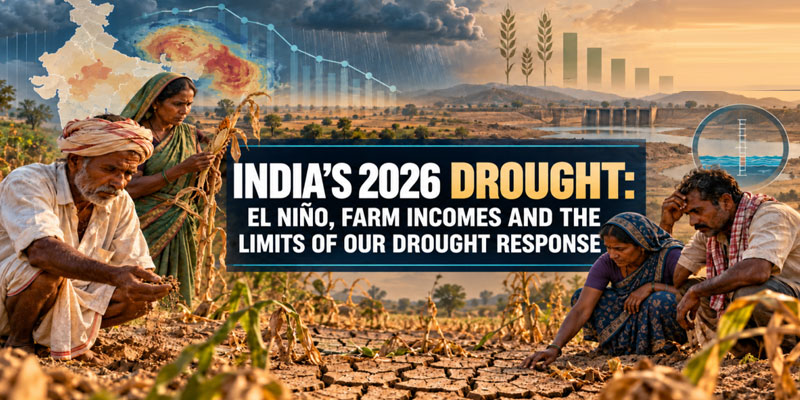
El Nino-related rainfall disruption could put nearly ₹1 lakh crore worth of India's gross agricultural output at risk, with the Rabi season facing a substantially greater threat than the Kharif season, according to an SBI Research assessment. The warning raises concerns not only about agricultural production and farmers' incomes but also about loan repayments, rural consumption and the health of banks' agricultural credit portfolios.
Understanding the Scale of the Threat
SBI's Economic Research Department has analysed district-level rainfall patterns and agricultural production data to estimate the potential consequences of El Nino-related weather disruptions. Its scenario-based assessment suggests that approximately 1.35 crore hectares of cropped area could face production-equivalent impacts across the two agricultural seasons.
The estimated ₹1 lakh crore exposure has been calculated using indicative market-arrival-weighted commodity prices. However, this represents the gross value of agricultural production potentially at risk, not an actual or confirmed financial loss. The eventual impact will depend on rainfall distribution, irrigation facilities, crop selection, agricultural inputs and government intervention.
Rabi Season Faces Three Times Greater Risk
The report highlights a significant imbalance between the two cropping seasons.
· Kharif: Estimated production loss of 0.89 crore tonnes, accounting for approximately 23% of the combined exposure.
· Rabi: Projected production loss of 2.97 crore tonnes, representing nearly 77%.
· Combined: Potential production impact of 3.86 crore tonnes.
The concentration of projected losses in Rabi is particularly concerning. The assessment also refers to a government expectation of an 11.4% decline in production this year, underlining the vulnerability of winter crops to changing rainfall conditions.
States Facing the Greatest Agricultural Exposure
The impact is expected to vary geographically. During Kharif, Rajasthan, Punjab, Uttar Pradesh and Maharashtra face comparatively higher risks. For Rabi, Madhya Pradesh, Uttar Pradesh and West Bengal are among the most vulnerable.
This concentration also matters for banks. Agricultural credit exposure in highly vulnerable districts includes ₹43,548 crore in Tamil Nadu, ₹20,256 crore in Andhra Pradesh and ₹12,115 crore in Maharashtra.
Banking Sector Faces Emerging Credit Risks
Lower harvests could weaken farmers' cash flows, affecting repayments of crop loans, Kisan Credit Card dues and agricultural term loans. Banks could consequently face increased delinquencies, restructuring requests and demands for additional working capital.
Nevertheless, SBI Research estimates the direct credit impact at around 2.8%, suggesting that the overall exposure remains manageable.
Targeted Relief, Not Blanket Loan Waivers
The report advises states against widespread loan waivers, favouring targeted restructuring arrangements with banks and government participation in sharing the associated costs.
Protecting Farms to Safeguard Financial Stability
Ultimately, the ₹1 lakh crore warning underscores how climate uncertainty can translate into economic and financial stress. Timely rainfall monitoring, irrigation support and targeted credit relief will be essential to protect farmers, sustain agricultural production and prevent localised weather shocks from becoming broader banking-sector problems.
(With agency inputs)