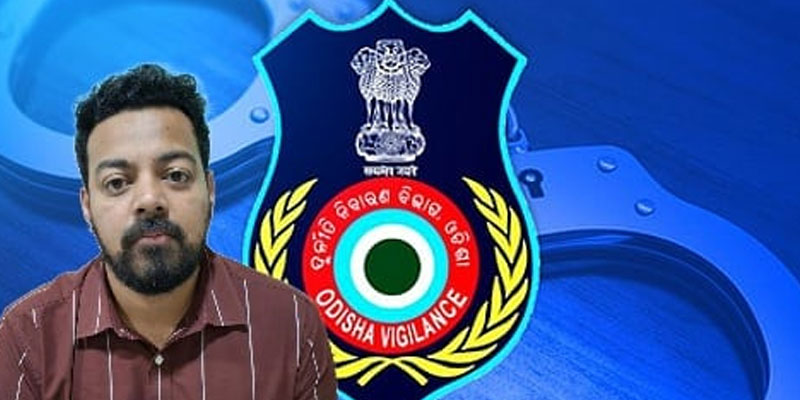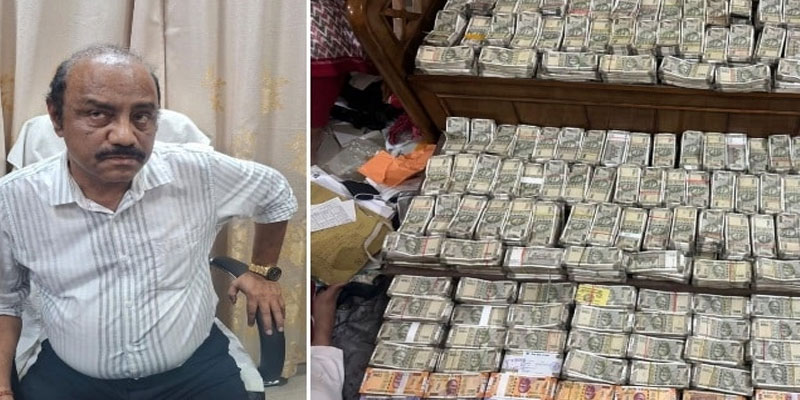
In what officials describe as the largest cash seizure in the state’s history, Odisha Vigilance on February 24, 2026, arrested Debabrata Mohanty, Deputy Director of Mines, Cuttack Circle, after recovering more than Rs 4 crore in unaccounted cash. Mohanty was caught red-handed while allegedly accepting a Rs 30,000 bribe from a coal trader in exchange for facilitating depot operations and transport permits. What began as a routine trap operation soon snowballed into a record-breaking recovery, exposing what investigators called a “mountain” of cash hidden across multiple premises.
Inside the Raid: From Rs 30,000 Trap to Crores in Cash
The Vigilance team first intercepted Mohanty during the bribe transaction and immediately expanded searches to his properties. At his Patia apartment in Bhubaneswar, officials discovered over Rs 4 crore stuffed into trolley bags and cupboards. An additional Rs 1.2 lakh was recovered from his office and personal possession. Raids at his ancestral house in Bhadrak further widened the probe.
Authorities also seized 130 grams of gold and uncovered a 2,400 sq ft house in Bhubaneswar, along with 15 bank accounts and 20 mutual fund investments now under scrutiny for disproportionate assets. A case under Section 7 of the Prevention of Corruption Act has been registered. The scale of recovery highlights a recurring pattern: modest bribe traps often unravel extensive illicit wealth networks.
A Pattern of Corruption in Odisha’s Mining Sector
Odisha’s mining department has long been vulnerable to corruption, given the state’s vast reserves of coal, iron ore, and manganese. With mining revenues estimated at around Rs 50,000 crore annually and contributing nearly 7% of India’s mineral output, the sector presents high discretionary power at field levels.
The Mohanty case mirrors previous crackdowns. In November 2024, Junior Mining Officer Padmanav Hota was arrested after raids across seven locations uncovered crores in disproportionate assets, including multiple land plots and luxury properties. Earlier that year, an unnamed Deputy Director of Mines in Talcher, Angul, was arrested for amassing assets exceeding Rs 5 crore. Even as far back as 2015, a Deputy Director was arrested for allegedly permitting illegal iron ore extraction in exchange for bribes.
These cases reflect systemic vulnerabilities—illegal lease clearances, transport permit manipulation, and syndicate-driven operations—where small bribe transactions often mask extensive corruption networks.
Governance and Economic Implications
The arrest poses uncomfortable questions for Odisha’s governance framework. As the state positions itself as a mining-led growth engine under Chief Minister Mohan Charan Majhi, such scandals risk denting investor confidence. Persistent corruption could deter domestic and foreign investors eyeing Odisha’s mineral wealth.
While reforms such as e-auctions and digitized approvals aim to reduce human discretion, field-level authority continues to enable rent-seeking practices. Vigilance Director YK Jethwa’s aggressive anti-corruption drive signals zero tolerance, yet critics argue that prosecution delays—often stretching for years—dilute deterrence. Conviction rates remain a concern, with many cases dragging through courts.
Reform Beyond Raids
The Rs 4 crore seizure is not merely an isolated scandal but a stark reminder of entrenched corruption risks in resource-rich states. While the Vigilance department’s swift action reinforces institutional accountability, sustainable reform demands deeper structural changes—faster prosecutions, stronger whistle-blower protections, technology-driven monitoring, and transparency in lease allocations.
If this investigation exposes broader networks and leads to systemic overhaul, it could mark a turning point. Otherwise, it risks becoming another headline in a long ledger of mining-sector scandals. For Odisha, the challenge is clear: convert enforcement spectacle into enduring governance reform.
(With agency inputs)