Billions are flowing into India’s automobile industry as global manufacturers increasingly view the country as more than a fast-growing consumer market. With major investments in production capacity, research and development, electric mobility and vehicle engineering, India is emerging as a strategic manufacturing and export hub for the global automotive industry.
Why Global Automakers Are Betting on India
India is the world’s third-largest automobile market, supported by a growing middle class, competitive engineering talent, expanding supplier networks and government efforts to promote domestic manufacturing and electric mobility.
The investment surge also reflects the China-plus-one strategy, under which companies diversify manufacturing locations and supply chains to reduce excessive dependence on a single country. India offers automakers the opportunity to serve domestic customers while exporting vehicles and technologies to international markets.
Three major developments illustrate this transformation.
Hyundai’s $15.5 Billion Bet on an Automotive Ecosystem
Hyundai Motor Group plans to invest $15.5 billion in India between 2026 and 2032, equivalent to approximately ₹1.47 lakh crore. The programme will cover manufacturing expansion, research and development, supplier development and future automotive technologies, supported by a dedicated investment entity.
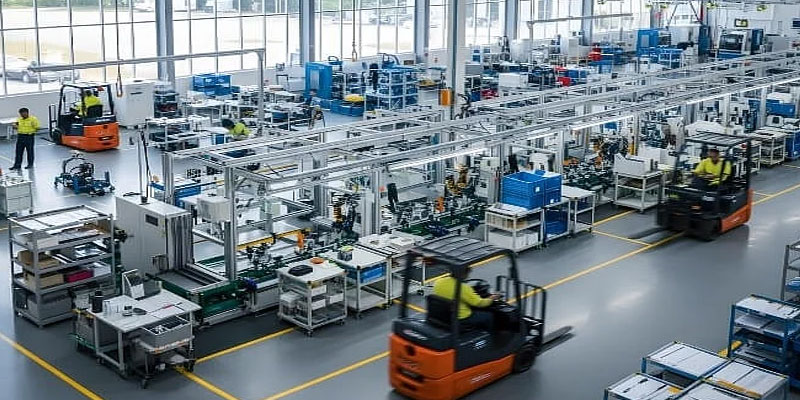
Hyundai and Kia currently have combined annual production capacity exceeding 1.4 million vehicles across their Indian manufacturing operations. The fresh investment aims to strengthen domestic supply and exports while expanding capabilities beyond conventional vehicle assembly.
Its broader ecosystem strategy encompasses electric-vehicle charging, automotive financing, startup partnerships and end-of-life vehicle recycling. This indicates a long-term commitment to developing India as an integrated automotive technology and manufacturing centre.
Suzuki Expands Production for Global Markets
Suzuki, through Maruti Suzuki, announced an investment plan of approximately $8 billion in 2025. Its Kharkhoda plant in Haryana, inaugurated in July 2026, initially provides annual capacity of 500,000 vehicles, with plans to increase this to one million.
Suzuki’s longer-term ambition is to establish an Indian production system capable of manufacturing around four million vehicles annually in the 2030s. Such expansion would strengthen India’s role as a principal global manufacturing base for Suzuki, serving domestic demand and overseas markets.
Tata Motors–Stellantis Partnership Takes India Upstream
An agreement signed on October 12 between Tata Motors Passenger Vehicles and Stellantis marks another significant development. The collaboration will provide Stellantis access to Tata’s proprietary vehicle architecture and technology, enabling joint vehicle development for more than 50 global markets.
Production is planned in India through their 50:50 joint venture, FIAPL. The partnership highlights India’s growing role in product engineering, platform development and automotive intellectual property.
Turning Investment into Lasting Global Leadership
Challenges remain, including price-sensitive demand, uneven EV adoption, intense competition and uncertain export conditions. Manufacturers must balance capacity expansion with sustainable sales and profitability.
Ultimately, India’s automotive ambition extends beyond building more vehicles: it is about designing, engineering and manufacturing globally competitive products. If investment translates into innovation, skilled employment and exports, India could become one of the defining centres of the next automotive era.
(With agency inputs)