Google’s proposed $15 billion AI data centre investment in Tarluvada, near Visakhapatnam, Andhra Pradesh, is emerging as a major milestone in India’s digital infrastructure expansion. However, the ambitious project has also triggered concerns over water security, environmental sustainability and the impact on local communities.
Spread across approximately 600 acres, the facility is described as Google’s largest AI data centre investment outside the United States. It is expected to strengthen India's position as a global hub for artificial intelligence, cloud computing and digital services.
Visakhapatnam offers significant strategic advantages, particularly its proximity to submarine cable infrastructure connecting India with Singapore and other international digital networks. This connectivity could support low-latency data transmission and growing demand for AI computing.
However, water availability has become a central concern. The city reportedly requires approximately 480 million litres of water daily but receives only 410 million litres, creating a deficit of nearly 70 million litres. Existing shortages and rationing have intensified public scrutiny of the proposed development.
Google has reportedly committed to using air-based cooling technologies and avoiding water withdrawals from residential supplies or reservoirs. Nevertheless, concerns remain because an environmental assessment associated with the project reportedly identified potential pressure on local watershed resources.
Environmental activists have challenged aspects of the development before the Andhra Pradesh High Court, calling for an independent water audit and greater transparency regarding the project's long-term environmental impact.
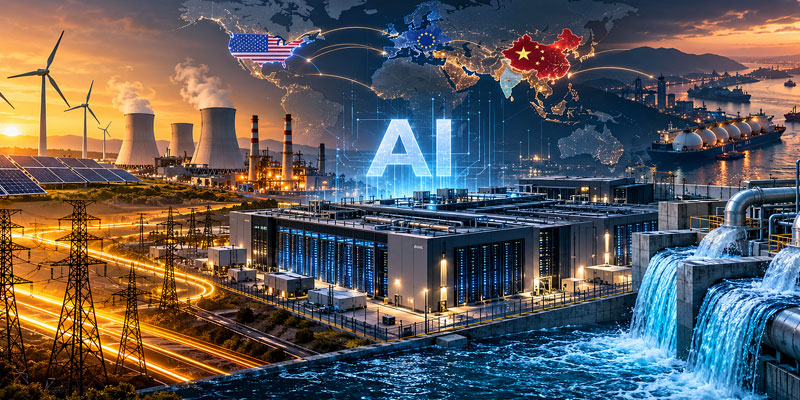
The controversy highlights a wider challenge confronting India's AI infrastructure ambitions. Large data centres require substantial electricity, cooling infrastructure and reliable connectivity, potentially placing additional pressure on local resources.
The larger question is whether India can accelerate AI infrastructure development without compromising environmental sustainability. Transparent water accounting, independent environmental assessments, renewable energy integration and enforceable resource-management commitments will be essential to balancing technological growth with community interests.
Ultimately, Google's investment could transform Visakhapatnam into a strategic AI infrastructure destination. But its long-term success will depend not only on computing capacity and economic benefits, but also on public trust, environmental accountability and sustainable resource utilisation.