Global Crossroads: Tariffs, Conflict, and Energy
The intersection of U.S. trade policy, the war in Ukraine, and India’s growing influence in the global energy market has created new geopolitical friction. Washington’s strategy under President Donald Trump, carried forward by allies in the U.S. Senate, links tariffs directly to countries that purchase Russian oil. For India — now among the top buyers of discounted Russian crude — this puts it in the crosshairs of American lawmakers.
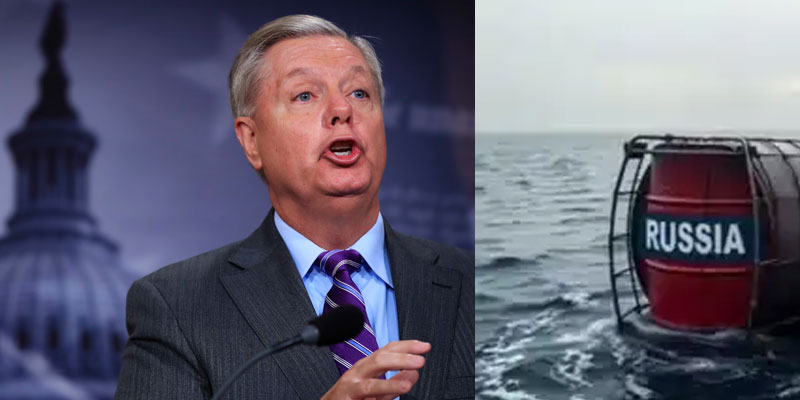
Senator Lindsey Graham, a long-time foreign policy hawk from South Carolina, has become one of the most vocal critics of India’s energy decisions. His sharp remarks reflect a broader debate about how energy flows sustain Russia’s war in Ukraine and how U.S. tariffs are reshaping global trade at India’s expense.
Graham’s Rebuke of India and Others
Reacting to a deadly Russian missile strike on Kyiv that killed at least 23 people, Graham took to social media to directly call out India, China, and Brazil. “How do you feel right now that your purchases have resulted in innocent civilians, including children, being killed?” he asked, linking Russian oil revenue to continued warfare.
This line of criticism is not new. Graham has consistently argued that without oil and gas revenues, Moscow’s military machine would collapse. On NBC earlier, he stressed: “The whole goal is to crush its customers — India, China, Brazil.”
Tariffs as a Weapon of Policy
Echoing Trump’s trade-first approach, Graham has tied punitive tariffs to geopolitical outcomes. Under the Trump administration, Indian exports to the U.S. were hit with a 25% tariff earlier this year, followed by an additional 25% targeting oil-linked imports. In total, nearly $48.2 billion worth of Indian goods could be affected.
For New Delhi, the concern is acute: higher tariffs risk making Indian exports uncompetitive in the American market, threatening both jobs and growth. Officials in New Delhi worry that a trade war disguised as a geopolitical sanction could undercut India’s manufacturing sector at a time when it is striving to establish itself as a global supply-chain alternative.
The 500% Tariff Threat
Graham is also advancing his own legislative proposals. His April sanctions bill, co-sponsored by 84 senators, calls for tariffs of up to 500% on imports from countries that continue to buy Russian oil. The measure also envisions financial sanctions, visa restrictions, and property freezes against Russian institutions and elites.
He has repeatedly emphasized that India and China together purchase around 70% of Russia’s oil, and by doing so, “keep his war machine going.” The bill allows the U.S. president to escalate penalties if Moscow refuses peace talks, violates agreements, or launches new offensives.
While the bill requires multiple levels of approval, Graham remains confident of its passage. With Trump’s return to the White House, there is an expectation that executive authority could be used to fast-track parts of the proposal.
India’s Energy Dilemma
India’s position is more complex than Graham’s accusations suggest. As one of the world’s fastest-growing economies, it faces enormous energy demands. With global oil prices volatile, Russian crude offers affordability and stability, ensuring energy security for over a billion people.
Moreover, New Delhi has balanced its purchases with strong diplomatic support for Ukraine’s sovereignty, humanitarian assistance, and calls for dialogue. For India, diversification in energy supply is not a geopolitical endorsement but an economic necessity. Still, as tariffs mount, the cost of maintaining this balancing act grows heavier.
Who Is Lindsey Graham?
To understand the persistence of his arguments, one must consider Graham’s career. A seasoned politician with a background in military law, Graham has built a reputation as a defence hawk advocating for strong U.S. intervention abroad. Once a sharp critic of Donald Trump, he later became one of his staunchest allies, backing his policies on trade, energy, and foreign relations.
His call for 500% tariffs underscores his broader worldview: pressure through sanctions, trade restrictions, and military strength to achieve diplomatic outcomes.
Navigating Pressure with Pragmatism
Senator Graham’s attacks on India reflect a growing alignment in Washington between tariffs and geopolitics. For the U.S., cutting off Russian energy revenues is central to weakening Moscow’s war effort. For India, affordable oil remains crucial to sustaining growth and stability.
The challenge lies in reconciling these opposing imperatives. Punitive tariffs on India risk undermining a strategic partner that the U.S. itself sees as vital in counterbalancing China. At the same time, India must continue to diversify its energy sources while avoiding the perception of enabling Russia’s aggression.
The path forward will require deft diplomacy. Rather than unilateral penalties, a collaborative framework that acknowledges India’s energy needs while encouraging gradual reduction in Russian imports may prove more constructive. As global fault lines deepen, India’s role as both an energy consumer and a diplomatic bridge will remain pivotal — and managing U.S. pressures with strategic pragmatism will be central to maintaining its autonomy on the world stage.
(With agency inputs)