India’s trade deficit soared to an all-time high of $41.68 billion in October 2025, driven by a sharp rise in gold and silver imports and a contraction in exports, according to preliminary data released by the Commerce Department on Monday.
Exports fell 11.8% year-on-year to $34.38 billion, impacted heavily by ongoing global headwinds and recent U.S. tariffs, while imports surged 16.63% to $76.06 billion.
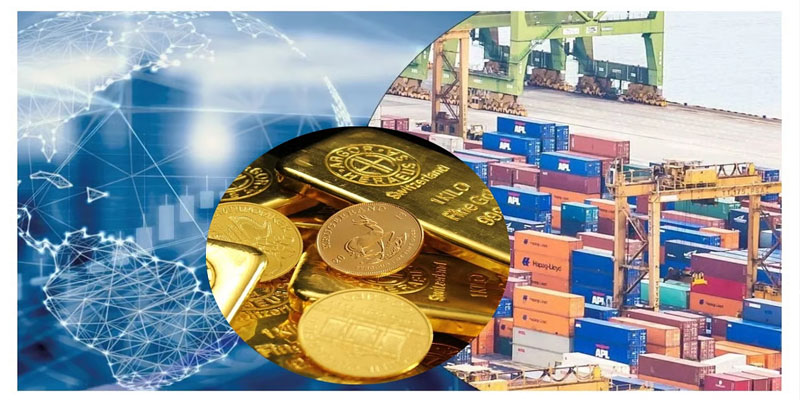
The primary contributor to the surge in imports was a 199.22% spike in gold imports, which rose to $14.72 billion, fueled by strong festive demand ahead of Diwali. Silver imports also witnessed a significant jump, rising to $2.72 billion, compared to just $0.43 billion in the same month last year.
Exports to the U.S., India’s largest trading partner, declined for the second straight month, falling 8.7% to $6.3 billion, as the 50% tariffs imposed by the U.S. in August 2025 began to take a more visible toll.
India’s outbound shipments to other major markets, including the UAE, UK, Netherlands, Germany, and Bangladesh, also fell, reflecting weakened global demand. The only exception was China, where exports rose sharply by 42.35% to $1.62 billion, making it the standout destination for Indian goods during the month.
Commerce Secretary Rajesh Agrawal attributed the record trade deficit to pent-up demand following a period of subdued imports. “The suppression in demand over the past six months due to high prices has likely led to a surge in imports during the festive season,” he said.
Agrawal also highlighted the government’s efforts to revive exports, citing the recently approved ₹25,000 crore export promotion mission, which is aimed at supporting Indian exporters over a six-year period. He also noted that relief measures announced by the RBI may provide further support to outbound trade in the coming months.
In the April–October 2025 period, India’s exports saw marginal growth of 0.63%, reaching $254.25 billion, while imports rose 6.37% to $451.08 billion. This resulted in a cumulative trade deficit of $196.82 billion, significantly higher than the $171.40 billion recorded in the same period last year.
With global uncertainties persisting and domestic demand rebounding, India’s trade dynamics are expected to remain under close watch, especially as policymakers look to balance import surges with export incentives in the coming quarters.