A Warning That Reverberates Across South Asia
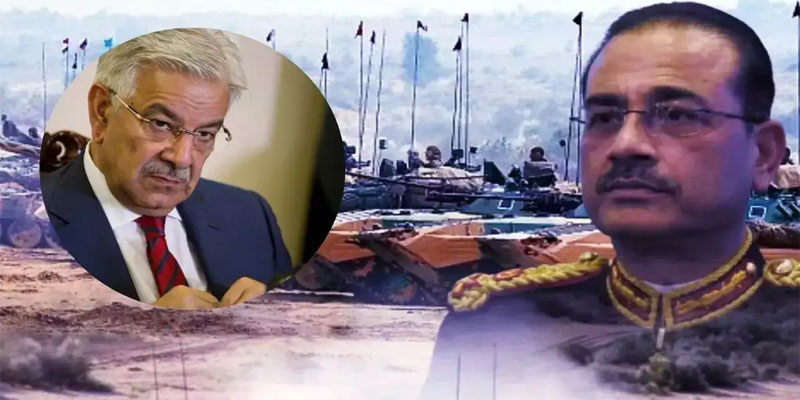
Pakistan Defence Minister Khawaja Asif’s declaration that an “all-out war” with India cannot be ruled out has injected new urgency into an already volatile regional environment. His call for Pakistan to remain on “full alert” follows Indian Army Chief General Upendra Dwivedi’s assertion that the recent Operation Sindoor was merely an “88-hour trailer”—a calibrated but forceful signal that any fresh provocation would draw a decisive response. The exchange lays bare a familiar yet heightened hostility between two nuclear-armed rivals, each accusing the other of destabilizing actions amid a series of cross-border incidents and terror-linked violence.
Operation Sindoor: A New Doctrine in Motion
Operation Sindoor emerged as India’s forceful retaliation to a terror attack in Pahalgam, Jammu & Kashmir, attributed to the Pakistan-based group The Resistance Front (TRF). Conducted over 88 hours, the operation targeted nine terror launch pads and supporting infrastructure across Pakistan and Pakistan-Occupied Kashmir. Its precision strikes—kept deliberately away from Pakistan’s primary military assets—reflected a sophisticated attempt to neutralize threats while avoiding uncontrollable escalation.
Pakistan’s retaliatory drone and missile attacks were met with robust Indian air defenses, leading to limited damage. Yet the operation triggered intense mortar and artillery exchanges along the Line of Control, claiming civilian lives on both sides before a fragile ceasefire took hold. India’s military leadership framed the operation as evidence of a maturing operational doctrine: swift, deep, and intelligence-driven, but restrained enough to prevent war. This marked a significant departure from earlier, more cautious responses to cross-border terrorism.
Islamabad’s Alarm: Khawaja Asif’s Escalatory Rhetoric
Against this backdrop, Khawaja Asif’s warning appears calibrated to serve multiple audiences. Domestically, it seeks to rally national resolve and frame Pakistan as a vigilant state confronting external threats. Internationally, it signals deterrence—communicating that Islamabad views India’s new posture as potentially aggressive and unpredictable.
Asif also accused New Delhi of exploiting Afghan territory to undermine Pakistan, raising the specter of a “two-front” challenge. His insistence that India cannot be trusted “under any circumstances” underscores the depth of strategic suspicion shaping Pakistani thinking. Commentators within Pakistan have highlighted the tension between such rhetoric and the country’s economic fragility, raising concerns about its capacity to sustain any escalatory spiral.
New Delhi’s Stance: Calm Words, Firm Posture
India has maintained that its priority remains peace and development, but it will not hesitate to respond to state-sponsored terror. General Dwivedi’s remark that India would “teach Pakistan how to behave responsibly” if provoked underscores New Delhi’s confidence in its enhanced capabilities since policy shifts in 2019. Together, these signals convey a doctrine of controlled force—meant to deter, not to ignite full-scale conflict.
A Region on a Knife’s Edge
Asif’s stark warning and India’s assertive messaging illuminate a dangerous dynamic: escalating rhetoric coupled with evolving military doctrines on both sides. Operation Sindoor has shown India’s willingness to use calibrated force, while Pakistan’s warnings reflect deep-seated insecurity amid internal strains. In a region marked by nuclear capabilities, historical grievances, and volatile borders, the margin for miscalculation remains perilously thin. Only sustained communication, diplomatic engagement, and crisis-management mechanisms can prevent the next provocation from tipping South Asia into catastrophe.
(With agency inputs)