Strategic Messaging Ahead of Putin’s Visit
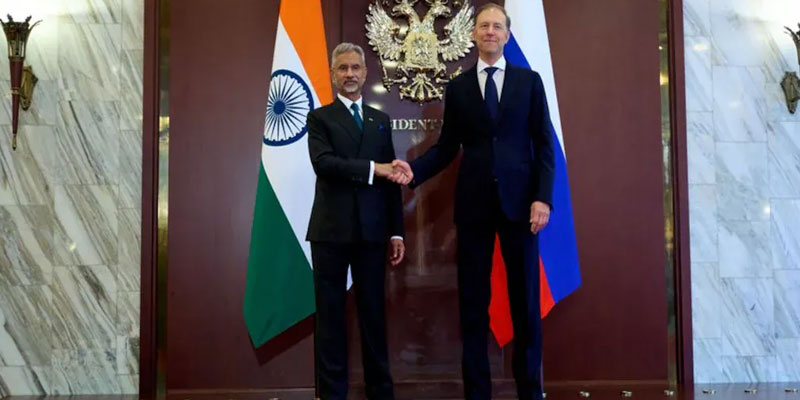
During his recent visit to Moscow, External Affairs Minister S. Jaishankar reaffirmed the enduring relevance of India-Russia relations, calling them a “pillar of stability” in an increasingly volatile global landscape. His remarks come as Russian President Vladimir Putin prepares for his early-December visit to New Delhi for the 23rd Annual India-Russia Summit—an event expected to consolidate key agreements and add greater momentum to the partnership.
A Partnership Rooted in Trust and Strategic Convergence
India and Russia share a relationship defined by continuity, mutual respect, and strategic alignment. As geopolitical tensions rise across regions—from Europe to West Asia—the durability of this bilateral partnership stands out. Jaishankar’s comments in Moscow underscore not only the historical depth of India-Russia ties but also their evolving importance in shaping regional and global stability.
Expanding Bilateral Architecture: Deepening Cooperation Across Sectors
A central theme of Jaishankar’s discussions with Russian Foreign Minister Sergey Lavrov was the widening scope of bilateral cooperation. Key sectors—including trade, investment, nuclear and conventional energy, agriculture, mobility, culture, and technology—are witnessing sustained growth.
Both sides are in advanced stages of finalizing several agreements intended to add greater substance to their “Special and Privileged Strategic Partnership.” The forthcoming summit is expected to transform these plans into actionable initiatives that broaden economic and strategic collaboration.
Open Strategic Dialogue: Navigating Global Flashpoints
India and Russia’s ability to conduct open, candid conversations on sensitive global issues remains a hallmark of their relationship. Discussions in Moscow touched on pressing conflicts such as the Ukraine war, developments in the Middle East, and the situation in Afghanistan.
Jaishankar reiterated India’s consistent stance: global peace efforts must be guided by dialogue and diplomacy. His emphasis on constructive engagement reflects India’s aspiration to play a stabilizing role, even while navigating complex geopolitical dynamics.
Shaping the Global Order: Influence Beyond Bilateral Ties
The significance of India-Russia cooperation extends well beyond the bilateral domain. Their coordination within multilateral forums—including BRICS, the Shanghai Cooperation Organisation (SCO), the UN, and the G20—has grown increasingly impactful.
At a time when global governance structures face strain, the resilience of this partnership helps maintain equilibrium in a fragmented international order. Jaishankar’s framing situates the India-Russia relationship as an actor in global stabilization rather than a conventional bilateral engagement.
Strategic Diplomacy Ahead of the Summit
Jaishankar’s visit also served as crucial groundwork for President Putin’s upcoming visit to New Delhi. The summit is expected to formalize pending agreements and launch new joint initiatives across key sectors, adding renewed strategic depth to the partnership. Both nations aim to leverage this momentum to reinforce their positions amid shifting geopolitical alignments.
A Mature Alliance with Renewed Purpose
Jaishankar’s Moscow visit highlights a relationship that has endured historical shifts and continues to adapt to contemporary challenges. Through multifaceted cooperation and frank strategic dialogue, India and Russia sustain a partnership that advances their respective interests while contributing to global stability.
With the forthcoming summit set to unveil new areas of collaboration, the India-Russia relationship appears poised for deeper engagement—anchoring stability in an increasingly uncertain world.
(With agency inputs)