A Regulator Who Refuses to Go Unnoticed
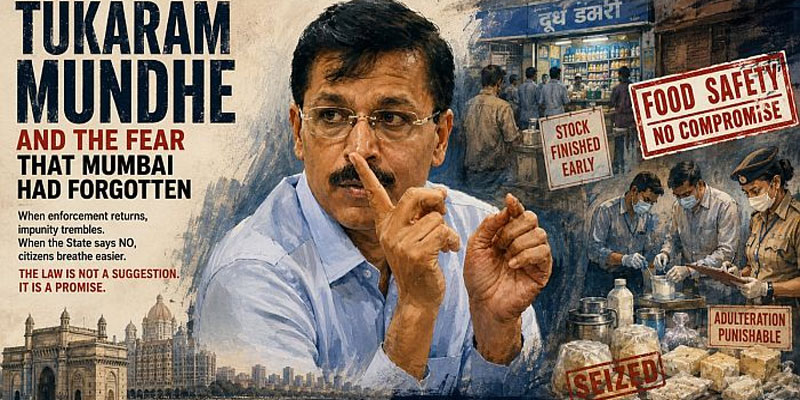
Tukaram Mundhe’s surprise raids have transformed food safety from a routine regulatory issue into a highly visible public campaign across Mumbai. Kitchens, restaurants, dairies and major food chains are facing sudden inspections, while videos of unhygienic practices circulate widely on social media. The campaign has earned Mundhe public admiration—but also made him one of Maharashtra’s most polarising bureaucrats.
The Mundhe Factor
A 2005-batch IAS officer and Maharashtra FDA Commissioner since May 25, Mundhe has spent two decades developing a reputation for aggressive, hands-on administration. The son of a farmer from Beed, he has held more than 16 significant assignments and reportedly faced around 25 transfers. His earlier stints as Solapur Collector, Navi Mumbai Municipal Commissioner and Health Commissioner established a pattern: direct intervention, surprise inspections and little hesitation in confronting powerful or entrenched interests.
At the FDA, that approach has dramatically raised the department’s public profile. Inspection teams have documented stained kitchens, pest infestations, improper storage and expired or allegedly adulterated products through photographs and videos. Mundhe’s personal visibility has become inseparable from the enforcement drive.
From Raids to Pre-Emptive Compliance
The scale of the campaign is striking. By July, the FDA had conducted 1,131 inspections and seized food stocks worth ₹49.57 crore, including around 1.6 lakh litres of allegedly adulterated milk, while 56 restaurant licences had been suspended. By late August, Reuters reported more than 3,000 raids since Mundhe took charge.
The action has extended from small vendors to elite clubs, heritage eateries, hotels and multinational chains. Several outlets of Domino’s, Pizza Hut and McDonald’s faced regulatory action following alleged hygiene violations.
More importantly, the campaign appears to be changing behaviour before inspectors arrive. Vendors have reportedly reduced artificial colouring, changed frying oil more frequently and adopted gloves and head coverings. The FDA’s ban on wrapping vada pav in newspapers has also encouraged cleaner packaging. The real achievement, therefore, may be deterrence rather than punishment.
When Enforcement Meets the Courts
Mundhe’s methods, however, have generated serious questions about proportionality and due process. Restaurant operators broadly accept the need for stricter hygiene, but some argue that immediate closures can be excessive, particularly for small businesses that could correct deficiencies through warnings and technical guidance.
The Bombay High Court has intervened in several cases, staying or reversing FDA suspensions. It has emphasised that under Section 32 of the Food Safety and Standards Act, improvement notices and opportunities to rectify violations are normally required, while immediate closure should be reserved for demonstrable and urgent public-health risks.
From Fear to Lasting Food Safety
Mundhe has undeniably made food safety commercially and politically urgent. His aggressive style has exposed practices that consumers often overlooked and forced businesses to take hygiene more seriously. Yet sustainable regulation cannot depend indefinitely on the personality or visibility of one officer.
The lasting test of the Mundhe model will be whether fear evolves into compliance, and whether uncompromising enforcement remains equally uncompromising about fairness, evidence and the law.
(With agency inputs)