Students gather, tensions rise on Parliament’s opening day
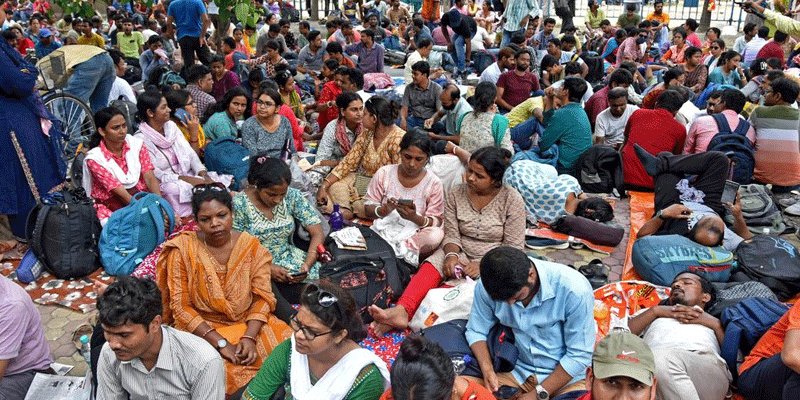
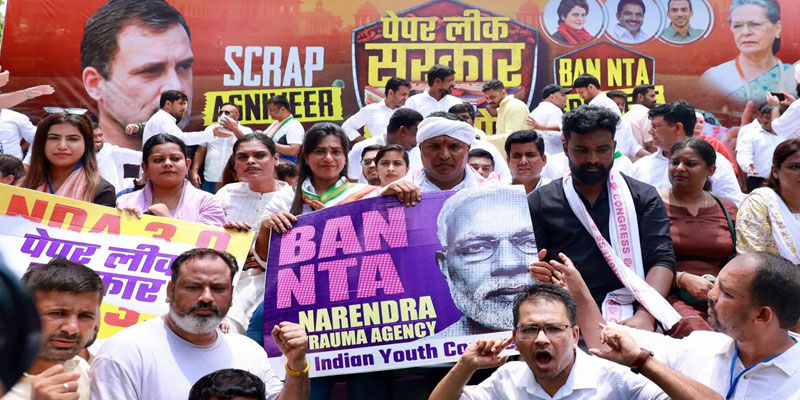
Thousands gathered at Delhi’s Jantar Mantar on Monday as the Cockroach Janta Party (CJP) launched its “Chalo Sansad” march, demanding accountability over alleged NEET irregularities and the resignation of Union Education Minister Dharmendra Pradhan. The demonstration, timed with the opening of Parliament’s Monsoon Session, quickly escalated into confrontations with security personnel as protesters attempted to march towards Parliament. While police enforced restrictions citing security concerns, the protest underscored the growing frustration of students over repeated examination controversies and the government’s handling of the crisis.
From exam scandals to a nationwide youth movement
The CJP has emerged as a prominent youth-led platform campaigning against alleged paper leaks, technical glitches, cancelled examinations and disputed results affecting high-stakes competitive tests, including NEET. What began as online outrage evolved into a sustained sit-in at Jantar Mantar, where thousands of students and job aspirants transformed the designated protest site into a symbol of resistance against perceived failures in India’s examination system.
The movement has demanded comprehensive reforms, greater transparency in recruitment and entrance examinations, and compensation for families of students who allegedly died by suicide after repeated examination setbacks. Activist Sonam Wangchuk’s indefinite hunger strike since June 28 further amplified the campaign, with his appeal for parliamentary engagement lending moral weight and national visibility to the agitation.
March to Parliament meets security barriers
Seeking to maximise political pressure, the CJP called for a “Chalo Sansad” march on the first day of the Monsoon Session. Protesters reportedly began assembling from Sunday night, with several thousand spending the night near Jantar Mantar before attempting to march towards Parliament.
Delhi Police, however, had imposed prohibitory orders restricting large gatherings outside designated protest zones. Authorities maintained that permission had only been granted for a limited protest at Jantar Mantar and not for any march towards Parliament. Extensive security arrangements followed, including barricades, Rapid Action Force deployment and additional police personnel tasked with preventing demonstrators from reaching the parliamentary complex.
Clashes trigger competing narratives
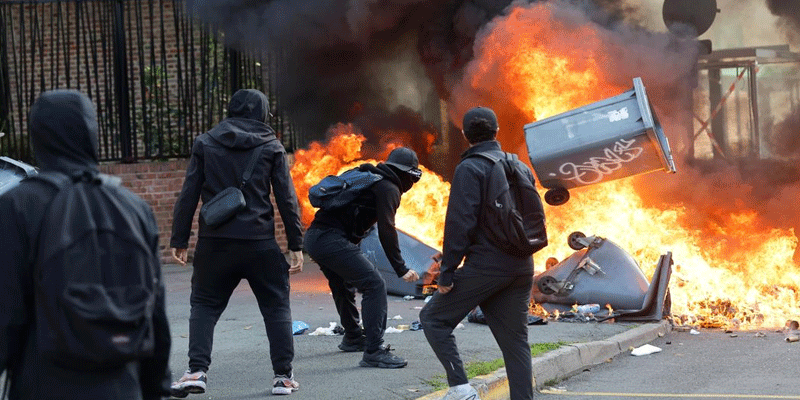
As protesters attempted to move beyond barricades, clashes broke out. Eyewitnesses and media reports described police using batons to disperse demonstrators, with visuals showing scuffles, protesters retreating and security personnel charging at crowds along approach roads.
Delhi Police, however, rejected allegations of violence "at Jantar Mantar", insisting the protest was handled professionally and denying reports of detentions or excessive force at the designated site. This distinction became central to the day's competing narratives. While protesters and media treated the surrounding routes as part of the protest zone, police limited their denial to the sanctioned protest location, creating contrasting interpretations of the same events.
A broader political and governance challenge
Beyond the confrontation, the protest reflects a widening legitimacy challenge centred on education and employment. Unlike traditional party-led demonstrations, the CJP movement draws its strength largely from students and young aspirants demanding systemic reforms rather than electoral gains.
The government's emphasis on security measures highlights the increasing securitisation of protests around Parliament, while critics argue that reliance on barricades and prohibitory orders risks overshadowing legitimate grievances. Simultaneously, the gap between official statements and widely circulated videos has fuelled debate over the credibility of institutional communication in the age of social media.
The timing of the protest also ensured maximum political visibility, effectively creating a parallel youth platform outside Parliament while lawmakers convened inside. Whether the agitation evolves into a sustained national campaign or prompts policy concessions will depend on how the government balances public order with meaningful engagement.
A Defining Test of Democratic Engagement
The Jantar Mantar confrontation marks more than a clash over a protest route. It reflects the growing intersection of education, employment and democratic participation in contemporary India. As students demand accountability for examination failures and the right to be heard, the government faces a broader challenge—whether to address youthful discontent through institutional reforms and dialogue or continue prioritising containment and narrative management. The choices made in the coming weeks could shape not only the future of examination reforms but also the relationship between the Indian state and an increasingly vocal generation of aspirants.
(With agency inputs)