The Centre has cleared a ₹797 crore green hydrogen jetty project at Paradip Port, marking a decisive push to strengthen clean energy logistics on India’s east coast. Approved by the Ministry of Ports, Shipping and Waterways, the project positions Odisha’s industrial hub at the forefront of India’s emerging hydrogen economy.
Project Blueprint: Building Hydrogen-Ready Infrastructure
The green hydrogen facility will be developed by the Paradip Port Authority on a Build-Operate-Transfer (BOT) basis. Designed with a 4 million tonnes per annum (MTPA) handling capacity, the jetty will manage green hydrogen, green ammonia and related derivatives.
Key specifications include a 279-metre jetty span, a 14.3-metre dredged depth, advanced storage tanks and dedicated pipeline networks equipped with high-end safety systems for volatile cargo. Paradip Port will contribute ₹159 crore—about 20% of the capital expenditure—with completion targeted within 24 months.
Importantly, the facility will allow interim liquid bulk handling to ensure optimal utilisation during the early ramp-up phase of hydrogen production.
Strategic Fit: Anchoring the National Green Hydrogen Mission
The project dovetails directly with India’s National Green Hydrogen Mission, launched in 2023 with an outlay of ₹19,744 crore. The mission aims to produce 5 million metric tonnes (MMT) of green hydrogen annually by 2030, alongside 17 MMT of derivatives such as ammonia. The broader objective is to reduce fossil fuel imports by over $10 billion annually and cut 50 MMT of carbon emissions.
While production-linked incentives and electrolyser manufacturing schemes under the mission focus on supply creation, export logistics have remained a critical bottleneck. The Paradip jetty fills this gap by providing specialised infrastructure for handling and shipping green molecules at scale.
With Odisha attracting investments from major industrial players in renewable energy and electrolysers, Paradip could become a seamless “electrolyser-to-ship” gateway—converting inland hydrogen production into export-ready cargo for markets such as the European Union and Japan.
Economic and Regional Multiplier Effects
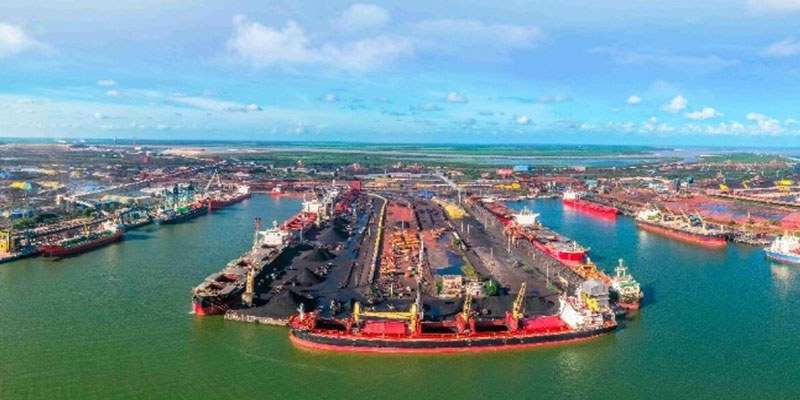
Paradip, already among India’s leading east-coast cargo hubs with a capacity exceeding 140 MTPA, stands to gain a competitive green edge. The jetty could catalyse over ₹50,000 crore in downstream investments across electrolysers, renewable power parks and ammonia synthesis facilities.
The project is also expected to generate more than 5,000 direct and indirect jobs, strengthening Odisha’s maritime GDP and positioning the state as a green energy corridor. By integrating with port modernisation efforts under SagarMala, the initiative enhances India’s ambition to develop “green ports” capable of handling future fuels.
Risks and Execution Challenges
Despite its promise, the venture faces uncertainties. Global hydrogen prices remain volatile, electrolyser manufacturing capacity is still scaling up, and infrastructure construction in coastal zones poses logistical challenges. However, the BOT model distributes risk between public and private stakeholders, increasing execution discipline.
From Coal Gateway to Clean Energy Hub
The Paradip green hydrogen jetty represents more than a port expansion—it is a structural pivot in India’s energy logistics strategy. By aligning production incentives with export infrastructure, the project strengthens the National Green Hydrogen Mission’s credibility and commercial viability.
If executed on schedule and backed by steady demand, Paradip could evolve into India’s primary eastern export node for green fuels. In doing so, it would transform a traditional cargo hub into a cornerstone of the country’s clean energy transition and global climate leadership ambitions.
(With agency inputs)