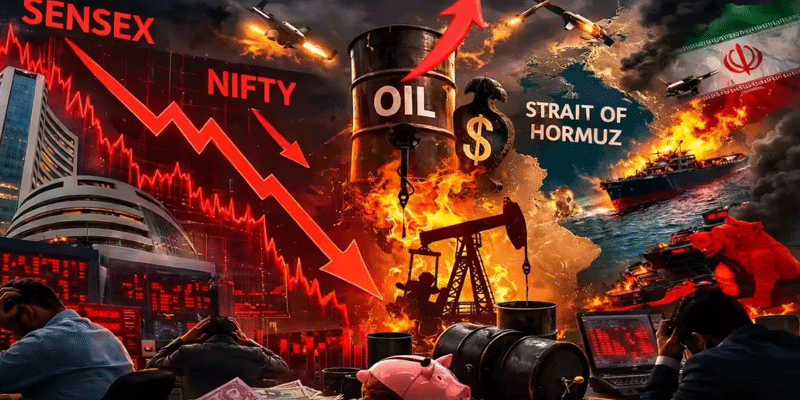
The United States has decided not to extend the temporary waiver that allowed the sale of Russian and Iranian oil already at sea, marking a significant escalation in its “maximum pressure” campaign amid the ongoing US–Iran conflict. With waivers expiring on April 11 for Russia and April 19 for Iran, global oil flows face renewed disruption—placing major importers like India in a precarious position.
Understanding the Waiver Withdrawal
These short-term waivers, introduced in March 2026, were designed to stabilize global markets after tensions in the Strait of Hormuz disrupted nearly 20% of global crude flows. They allowed shipments loaded before specific cut-off dates to reach buyers without triggering secondary sanctions.
India, heavily dependent on imports for nearly 85% of its crude needs, used this window strategically. It secured around 30 million barrels of discounted Russian oil and resumed limited imports from Iran for the first time since 2019. Russian crude alone accounted for up to 38% of India’s imports in March, underscoring how critical these waivers were.
Immediate Supply Disruptions and Market Pressure
With the waivers now lapsed, Indian refiners such as Reliance Industries and Indian Oil Corporation face immediate uncertainty. Cargoes already in transit risk sanctions exposure, forcing refiners to halt or reroute supplies.
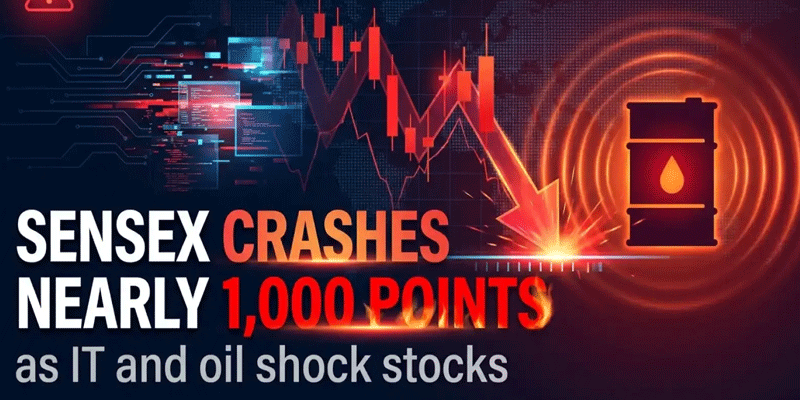
The loss of discounted Russian barrels and the abrupt end of Iranian imports will compel India to pivot toward costlier sources in the Middle East, the United States, and Africa. This comes at a time when oil prices have already surged past $119 per barrel due to geopolitical tensions and supply constraints.
Additionally, disruptions in the Strait of Hormuz and ongoing naval tensions further complicate logistics, raising freight and insurance costs. The cumulative effect is a tighter, more expensive crude basket for India.
Economic Impact: Inflation and Growth Pressures
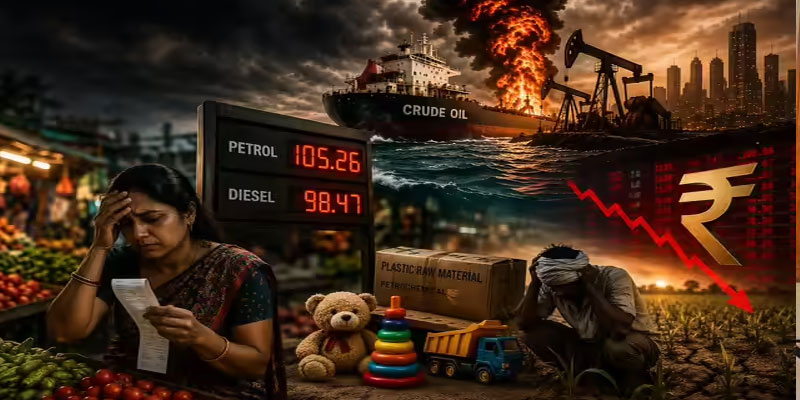
The ripple effects on India’s economy could be significant. Fuel prices are likely to rise by 10–20%, translating into a ₹5–10 per litre increase in petrol and diesel. This will directly impact inflation, which is already under pressure from global commodity volatility.
Higher crude costs will also widen India’s current account deficit, putting downward pressure on the rupee. Refining margins are expected to shrink as input costs rise, affecting both public and private sector oil companies.
Key sectors—including aviation, logistics, and manufacturing—will face cost escalations, potentially slowing GDP growth, currently projected at 6.5–7%. Moreover, financial institutions and insurers may become cautious in handling oil-linked transactions, fearing secondary sanctions from the US.
India’s Response: Diversification and Strategic Balancing
The Indian government has sought to reassure markets, emphasizing that supplies remain “fully secured” through strategic petroleum reserves and diversified sourcing. Efforts are underway to expand long-term contracts with alternative suppliers and tap into International Energy Agency reserves if needed.
Private refiners may explore discounted Russian crude via indirect channels, though such routes carry legal and financial risks. Meanwhile, public sector initiatives are focusing on boosting domestic exploration and accelerating investments in renewable energy, biofuels, and nuclear power to reduce long-term dependence on imports.
Diplomatically, India continues to walk a fine line—maintaining strong ties with Washington while safeguarding its energy security interests.
A Stress Test for India’s Energy Resilience
The US decision to end these waivers has triggered a fresh wave of uncertainty in global energy markets, with India among the most exposed. While short-term disruptions may be managed through reserves and diversification, the episode highlights the structural vulnerabilities of an import-dependent economy. In the long run, this crisis could act as a catalyst for accelerating India’s energy transition and strategic autonomy. However, in the immediate term, balancing affordability, supply security, and geopolitical alignment will remain a complex and delicate challenge.
(With agency inputs)