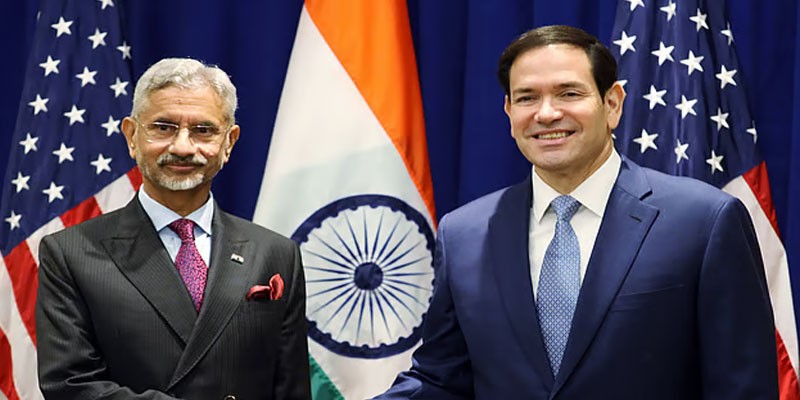
US Secretary of State Marco Rubio is scheduled to visit India from October 17 to 22 as part of a broader diplomatic tour spanning Central and South Asia. His meetings in Mumbai and Jamnagar are expected to focus on strengthening strategic cooperation, expanding commercial engagement and exploring energy partnerships, against the backdrop of differences over India’s purchases of Russian crude oil.
Background and Regional Significance
Rubio’s itinerary begins in Samarkand, Uzbekistan, where he will attend the C5+1 Ministerial with the five Central Asian republics: Uzbekistan, Kazakhstan, Tajikistan, Turkmenistan and the Kyrgyz Republic. He is also expected to hold bilateral meetings and lead a US commercial delegation comprising more than 200 business leaders.
The Central Asian leg highlights Washington’s interest in regional connectivity, investment and energy security. His subsequent visit to India reflects the importance the United States attaches to its partnership with New Delhi, particularly amid geopolitical competition and uncertainty in global energy markets.
Mumbai, India’s financial and commercial centre, offers opportunities for discussions with business leaders, while Jamnagar in Gujarat is a major refining hub. The choice of destinations suggests an emphasis on translating diplomatic engagement into practical economic cooperation.
Energy Cooperation and Russian Oil in Focus
Energy is likely to be among the most consequential subjects during Rubio’s India visit. Washington has been pressing countries to reconsider their purchases of Russian energy, while India has consistently emphasised the importance of affordable supplies, energy security and strategic autonomy.
The discussions could explore:
· Russian crude imports: Managing differences over India’s purchases of Russian oil and the implications of US measures targeting buyers of Russian energy.
· Diversified energy supplies: Expanding imports of American liquefied natural gas (LNG), alongside cooperation in energy technology and infrastructure.
· Refining and investment: Identifying opportunities for US companies in India’s refining, petrochemical and broader energy value chains.
· Clean energy: Exploring collaboration in renewable technologies, energy efficiency and emerging energy solutions.
Jamnagar’s inclusion could provide a practical setting for examining refining capacity, commercial opportunities and the complexities of balancing energy diversification with affordability.
Trade, Investment and Strategic Alignment
Beyond energy, Rubio is expected to meet senior Indian officials and business leaders to discuss economic cooperation and regional and global developments.
Trade and investment could feature prominently, particularly efforts to reduce commercial friction, improve market opportunities and encourage greater participation by American companies in India’s expanding economy.
Strategic issues are also likely to command attention. These may include Indo-Pacific security, regional stability, China’s growing influence and cooperation among partners seeking a stable, rules-based regional order.
The two countries have developed substantial defence and technology cooperation, but differences over tariffs, trade and energy policy demonstrate that their partnership still requires careful diplomatic management.
What Will Define the Visit’s Success?
Rubio’s visit comes at a sensitive moment, with energy-related disagreements testing the broader relationship. The immediate challenge will be to prevent differences over Russian oil from overshadowing opportunities for long-term commercial and strategic cooperation.
His engagements in Mumbai and Jamnagar could help identify practical areas for investment, while discussions with Indian officials may clarify the scope for compromise on contentious issues. However, any specific agreement or policy breakthrough should not be assumed before official announcements.
Turning Strategic Intent into Tangible Gains
The visit offers Washington and New Delhi an opportunity to reinforce a partnership that extends well beyond energy purchases and trade disputes. Its success will depend on whether both sides can accommodate their respective economic priorities while advancing shared strategic interests.
Ultimately, a durable US–India partnership will require more than geopolitical alignment: it must deliver commercially viable cooperation while respecting India’s energy-security needs and strategic autonomy.
(With Agency inputs)