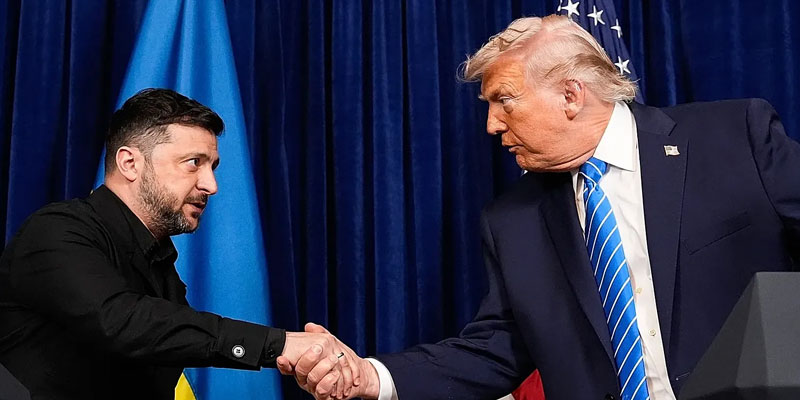
India has emerged among 47 countries whose citizens Ukrainian President Volodymyr Zelenskyy says Russia is using in the war against Ukraine. Addressing the 81st UN General Assembly on September 23, Zelenskyy urged governments to protect their nationals from being drawn into the conflict and to help secure the return of those already deployed. His remarks place India’s ongoing consular concerns within a much broader international issue.
India’s Growing Concern Over Its Nationals
India has acknowledged that its citizens were recruited into the Russian armed forces. Foreign Secretary Vikram Misri said on August 31 that New Delhi had information on 227 Indian nationals who had joined the Russian army. Of these, 139 had been discharged and 51 had died, while India continued discussions with Moscow for the release and repatriation of those remaining.
These figures do not establish identical circumstances for every recruit. Some may have knowingly entered military service, while others have reportedly travelled to Russia after being offered civilian employment.
How Foreign Recruitment Takes Place
Investigations and reports indicate that recruitment can involve intermediaries, online advertisements and informal networks. Potential recruits are offered attractive salaries for jobs such as construction, security, driving or logistics, sometimes alongside promises of residency or citizenship.
In reported cases, people discover only after reaching Russia that military service is involved. Language barriers, unfamiliar contracts, debt, confiscation of documents or pressure from recruiters can further complicate their ability to leave.
The distinction between voluntary enlistment and recruitment through deception or coercion remains critical. Russia disputes allegations of systematic forced recruitment.
What Lavrov Says About Foreign Fighters
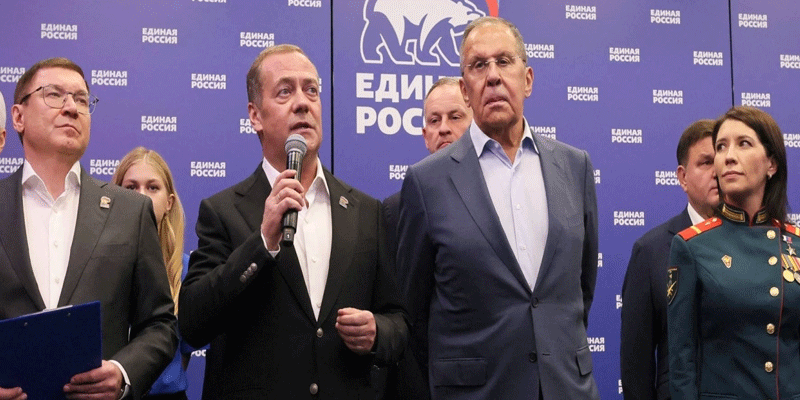
Russian Foreign Minister Sergey Lavrov has rejected the characterization of foreign nationals as people being forcibly recruited. Speaking alongside Kenya’s foreign minister in March, Lavrov said that “no one is being hired” or recruited for Russia’s military operation and that foreign participants were volunteers acting in accordance with Russian law.
That position contrasts with allegations from several governments and rights organisations concerning misleading employment offers and coercive circumstances.
Why Moscow Uses Foreign Manpower
Foreign recruitment can provide Russia with additional manpower while reducing the domestic political pressure associated with another large-scale mobilisation. Financial incentives can also be particularly attractive to people from countries where Russian military contracts offer incomes far above local wages.
Ukraine has additionally highlighted Russia’s military cooperation with North Korea as evidence of a widening international dimension to the conflict. Zelenskyy’s reference to citizens from 47 countries expands that concern beyond formal military alliances.
India’s Diplomatic Challenge
For New Delhi, the immediate priorities remain identifying Indian nationals still serving, securing their discharge and repatriation, and preventing further recruitment. India has repeatedly raised the matter with Moscow, while its embassy continues monitoring the cases.
A Foreign Recruitment Issue with Global Consequences
Zelenskyy’s UN intervention has transformed the issue from a series of individual consular cases into a broader question of how foreign nationals are drawn into prolonged warfare. The competing accounts—Russia’s insistence on voluntary service and allegations of deception or coercion—make independent verification of individual cases essential. For India and other affected countries, stronger scrutiny of overseas job offers, recruitment networks and military contracts could help prevent vulnerable citizens from unexpectedly becoming part of a foreign war.
(With agency inputs)