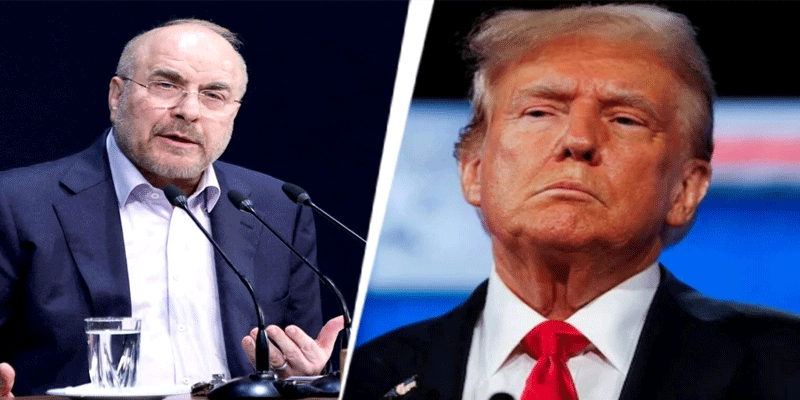
“Iran sets seven conditions to restart talks with US, warns of ‘decisive war’ if Trump rejects demands” captures the sharp deterioration in the diplomatic climate between Tehran and Washington. Iran says it has conveyed seven conditions through Qatar for restarting negotiations, while warning that failure to meet its demands could lead to further confrontation. The development comes as the Strait of Hormuz remains at the centre of the widening crisis and global energy concerns.
Tehran’s Seven Conditions Create a Diplomatic Deadlock
Supreme National Security Council Secretary Mohsen Rezaei said Iran had communicated seven conditions to Washington and was awaiting President Donald Trump’s response. However, Tehran has not publicly disclosed the complete seven-point list. Three principal demands have been identified:
· An end to the war on all fronts, including hostilities involving Iran and its regional allies.
· Release of frozen Iranian funds held abroad.
· An end to the US naval blockade and restrictions affecting Iranian ports and oil exports.
Other reported conditions include an end to US attacks on Iranian territory, interference in Iran’s internal affairs and cooperation with groups Tehran regards as opponents of the Islamic Republic. Rezaei has simultaneously warned that Iran is prepared for what he described as a “decisive war” if further confrontation occurs.
Strait Of Hormuz Becomes Tehran’s Central Leverage
The most consequential element of the standoff is the continued closure of the Strait of Hormuz, one of the world's principal energy corridors. Iranian Parliament Speaker Mohammad Bagher Ghalibaf said the waterway would remain closed until US commitments are fulfilled and Iran's conditions and rights are recognised.
Tehran has effectively linked the reopening of the strategic passage to diplomatic and economic concessions from Washington. The position follows the collapse of a June 2026 memorandum intended to provide a framework for further negotiations between the two countries.
Naval Pressure Raises Risks for Energy Markets
The confrontation has consequences far beyond the immediate US-Iran dispute. Before the current crisis, roughly one-fifth of global oil and liquefied natural gas flows passed through Hormuz. Shipping activity has fallen sharply amid the confrontation, increasing concerns about energy supplies, freight costs and market volatility.
Iran has also warned of retaliation against US military and commercial interests if American pressure or attacks continue. Washington, meanwhile, has maintained a heightened military posture, creating the possibility that any fresh incident at sea could rapidly widen the conflict.
Nuclear Question Remains a Dangerous Undercurrent
Tehran has also sought to clarify its nuclear position. Rezaei said Iran has not decided to withdraw from the Nuclear Non-Proliferation Treaty, while maintaining that its stated nuclear doctrine remains unchanged. At the same time, he warned that further US or Israeli military action could influence Tehran’s future calculations.
Iran has therefore kept both diplomatic and military options open: negotiations remain possible, but only after its stated conditions are addressed.
Hormuz Standoff Puts Diplomacy Under Pressure
The current impasse has transformed the Strait of Hormuz from a maritime flashpoint into a central bargaining instrument in the US-Iran confrontation. Tehran is demanding tangible changes before returning to the previous negotiating framework, while Washington faces pressure to respond without further escalating regional tensions. Until there is movement on the conditions, the combination of a closed energy corridor, military threats and stalled diplomacy leaves the wider region exposed to another potentially dangerous escalation.
(With agency inputs)