Supreme Court Flags Risks of Compulsory Policy
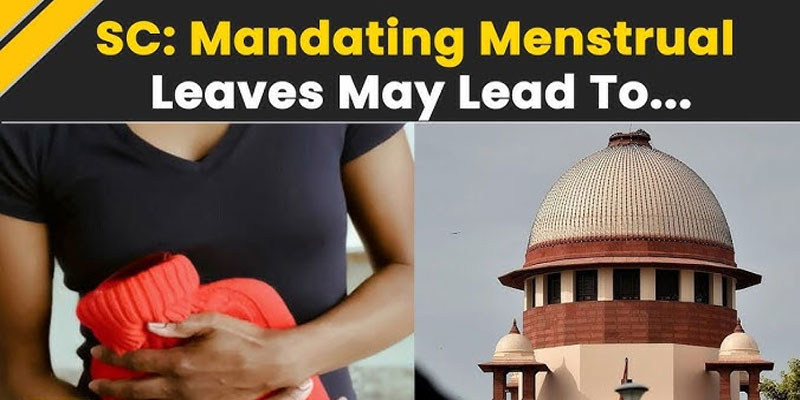
India’s Supreme Court has declined to mandate menstrual leave across workplaces, cautioning that such a legal requirement could unintentionally harm women’s employment prospects. Hearing a public interest litigation seeking compulsory paid leave for menstruation, a bench led by Chief Justice Surya Kant observed that forcing employers through law might discourage them from hiring women.
“The moment you say it is compulsory in law, nobody will give them jobs… they will say you should sit at home,” the Chief Justice remarked, highlighting the risk of workplace bias if employers perceive women employees as costlier or less available.
The bench, also comprising Justice Joymalya Bagchi, declined to intervene judicially but asked the government to examine the issue. It suggested that the Centre could explore the feasibility of a policy after consulting employers, women’s groups, labour organisations and other stakeholders.
Why the Court Preferred Policy Over Mandate
The court’s decision reflects a broader principle of judicial restraint in socio-economic policymaking. Rather than imposing a uniform national rule through the judiciary, the bench said the matter falls within the domain of the executive.
The petitioner had earlier submitted representations to the Ministry of Women and Child Development, seeking workplace protections for menstruating employees. The court advised that such proposals should be evaluated through consultations and policy frameworks rather than through a court order.
Another concern raised by the bench was the potential stigma attached to legally defining menstruation as a workplace disability. According to the judges, framing menstruation in this way might reinforce stereotypes about women being physically weaker or less capable, which could ultimately undermine equality in hiring and promotion.
Health Concerns and Workplace Reality
Menstrual health is a genuine workplace issue. Studies suggest that nearly 70 percent of women experience significant discomfort during their menstrual cycle, and severe conditions such as dysmenorrhea can lead to absenteeism.
However, India’s female labour force participation remains relatively low, hovering around 37 percent according to recent labour surveys. In such a scenario, the court feared that a legally mandated leave provision might inadvertently widen the gender gap in employment if companies begin factoring in additional costs or productivity concerns while recruiting.
Thus, the bench indicated that balancing health needs with workplace equality requires a more nuanced approach than a blanket legal mandate.
How Companies Are Adopting Voluntary Menstrual Leave
Despite the absence of a national law, several Indian companies have already introduced voluntary menstrual leave policies in recent years. The food delivery platform Zomato was among the first major firms to adopt such a policy in 2020, offering up to ten days of paid period leave annually to women and transgender employees.
Other companies soon followed. Swiggy introduced paid menstrual leave for female delivery partners, while organisations in sectors such as education, finance and media have experimented with similar policies.
These initiatives typically emphasise flexibility and privacy. Most do not require medical documentation, aiming instead to reduce stigma and encourage employees to prioritise their health. Some companies report improved employee satisfaction and retention after implementing these measures.
At the same time, adoption remains uneven, particularly among smaller firms that worry about operational costs and staffing challenges.
Finding the Right Balance
The Supreme Court’s decision underscores the complexity of addressing menstrual health within the workplace. While acknowledging the real challenges faced by many women, the court warned that mandatory leave laws could inadvertently reinforce discrimination in hiring.
By urging the government to consult stakeholders and consider policy solutions, the bench has opened the door for a more balanced approach—one that supports women’s health without limiting their professional opportunities.
Ultimately, the future of menstrual leave in India may lie in a mix of voluntary corporate practices, flexible work policies and broader awareness efforts that treat menstrual health as a matter of dignity rather than disadvantage.
(With agency inputs)