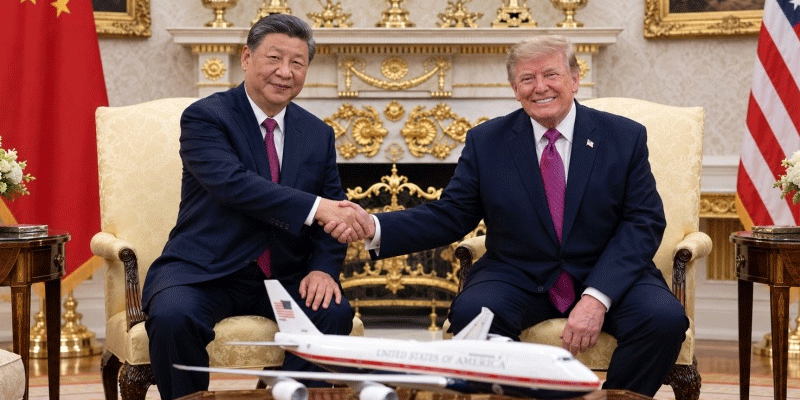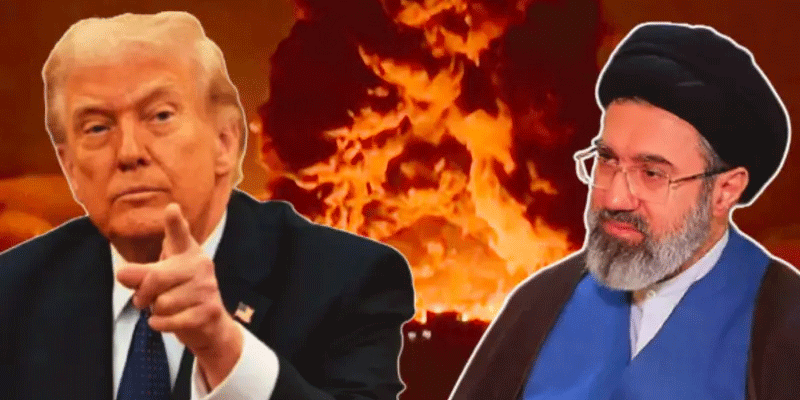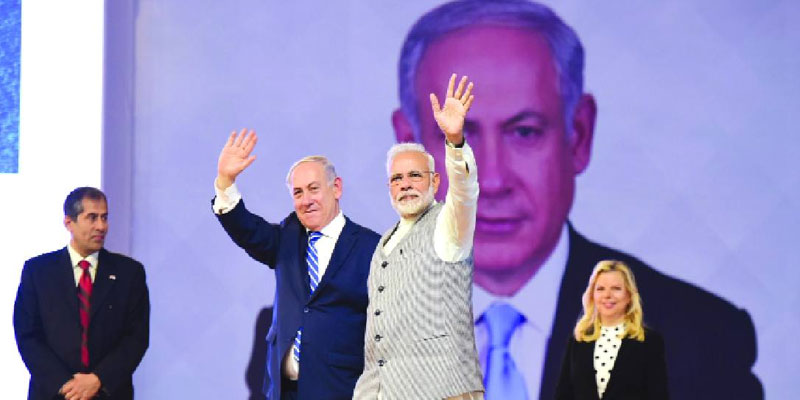
Prime Minister Narendra Modi’s scheduled visit to Israel on February 25–26, 2026, marks a pivotal moment in India’s foreign policy, occurring against the backdrop of heightened geopolitical volatility in the Middle East. As U.S. President Donald Trump weighs potential military strikes against Iran amid a stalled nuclear deal, and with two U.S. carrier strike groups deployed to the region, Modi’s decision to proceed with the trip underscores India's commitment to maintaining its strategic partnership with Israel, even at a time of extreme regional tension.
A Calculated Strategic Signal
Geostrategists view the visit not merely as a diplomatic courtesy, but as a deliberate signal from New Delhi. While Netanyahu’s planned visits to India in 2025 were repeatedly postponed due to security concerns and domestic turbulence, Modi’s journey is framed as a reaffirmation of the "special relationship" between the two nations.
For India, the visit serves several strategic objectives:
- Defense & Technology: The partnership is slated to deepen through updated security agreements, focusing on advanced anti-ballistic missile systems, loitering ammunition, and collaboration in AI, quantum computing, and cyber security.
- Geopolitical Balancing: India continues to navigate a delicate balance, maintaining deep ties with Arab states while fostering a robust security alliance with Israel. Recent diplomatic efforts, including hosting Arab foreign ministers, demonstrate India's intent to remain a consequential stakeholder in regional stability.
- Economic Integration: Both nations are moving toward finalizing a Free Trade Agreement (FTA) in 2026, signaling a desire to transition from tactical cooperation to a structural economic partnership.
Navigating Reputational Risk
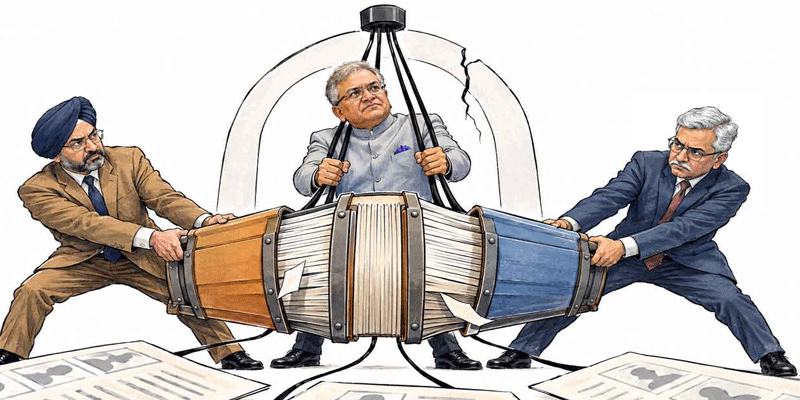
The visit is not without significant friction. Domestically, Israel is embroiled in a heated debate over judicial overhaul, with the opposition threatening to boycott Modi’s Knesset address over the government’s exclusion of the Supreme Court President from state events.
Internationally, the trip faces scrutiny due to the ongoing Gaza conflict and allegations surrounding the Israeli leadership.Critics argue that the visit risks undercutting India's claims to leadership in the Global South and its commitment to a rules-based order, as it could be perceived by some international observers as an endorsement of the current Israeli government's policies.
India’s Pragmatic Diplomacy
The visit highlights a shift in Indian diplomacy: moving from a cautious, reactive stance to a proactive, interest-driven approach. By engaging directly with Israel at a moment of global scrutiny, New Delhi is signaling that its bilateral security and technological imperatives remain paramount.
For the Netanyahu administration, the visit is a vital domestic and international asset, validating his narrative that Israel’s alliances remain robust despite internal unrest and international pressure. As India navigates this volatile landscape, the success of this visit will be measured by its ability to secure concrete defense and economic gains while preserving the nuanced, multi-layered engagement strategy that has defined its Middle Eastern policy for decades