A City Mourns Its Beloved Star
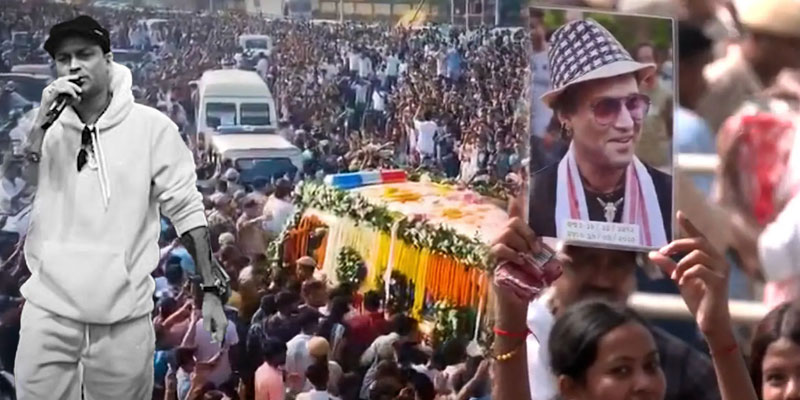
Assam came to a standstill as lakhs of grieving admirers gathered to bid an emotional goodbye to Zubeen Garg, the legendary singer who passed away on September 19 in a tragic scuba diving accident in Singapore. His cremation, held on September 23 in Kamarkuchi village near Guwahati, was conducted with full state honours. Draped in the Assamese gamosa and placed in a glass coffin, his remains were carried in a flower-decked ambulance as fans lined the roads, singing his iconic “Mayabini” through tears. His sister, Palmee Borthakur, performed the final rites, marking the end of an era in Assamese music.
A Historic Gathering Recognised
The sheer scale of Zubeen’s funeral stunned the world. Guwahati’s streets overflowed with people for two days, with mourners ranging from common citizens to celebrities. The Limca Book of Records officially recognised the event as the fourth-largest public funeral globally, placing it alongside the farewells of Michael Jackson, Pope John Paul II, and Queen Elizabeth II. This unprecedented turnout reflected not just grief but also the cultural impact Zubeen left behind.
The Rise of a Cultural Icon
Known as the “King of Humming,” Zubeen Garg was far more than a regional artist. His music gave Assamese culture a national platform while also carving space in Bollywood. His Bollywood breakout, “Ya Ali” from Gangster (2006), became an anthem and introduced his artistry to millions outside Assam. Over decades, Zubeen performed in multiple languages, from Assamese and Bengali to Hindi and Tamil, constantly reinventing his style and connecting with diverse audiences.
Beyond Music: A Voice of Assam
Zubeen’s appeal went beyond melodies. He was a cultural ambassador, whose songs often carried the ethos of Assamese identity. From folk-inspired compositions to modern romantic ballads, his range made him relatable across generations. His humility and activism—supporting social and environmental causes—endeared him further to fans. For many, Zubeen symbolised the soul of Assam, embodying its creativity, resilience, and pride.
An Outpouring of Grief
As his funeral cortege moved through the city, Guwahati witnessed an atmosphere of profound sorrow mixed with unity. Offices shut down, schools declared holidays, and public life paused as people lined up to catch a final glimpse. Social media amplified the mourning, with tributes pouring in from every corner of India. Photos and videos of fans holding flowers, lighting candles, and singing his songs captured the shared heartbreak of millions.
A Legacy Etched in Memory
Zubeen Garg’s sudden departure has created a void that cannot easily be filled. Yet, his legacy endures in the music that shaped emotions and identities across decades. His farewell, one of the largest in world history, underscored the deep connection he built with ordinary people through extraordinary talent.
An Immortal Voice
Though silenced too soon, Zubeen Garg’s voice continues to echo in the hearts of millions. His songs, filled with love, passion, and cultural pride, will inspire future generations. The mammoth farewell he received is not just a measure of his popularity but a testament to how art can unify communities and transcend boundaries. Assam, and indeed India, has lost a legend—but his music ensures that Zubeen will remain immortal, forever humming in the soul of the nation.
(With agency inputs)