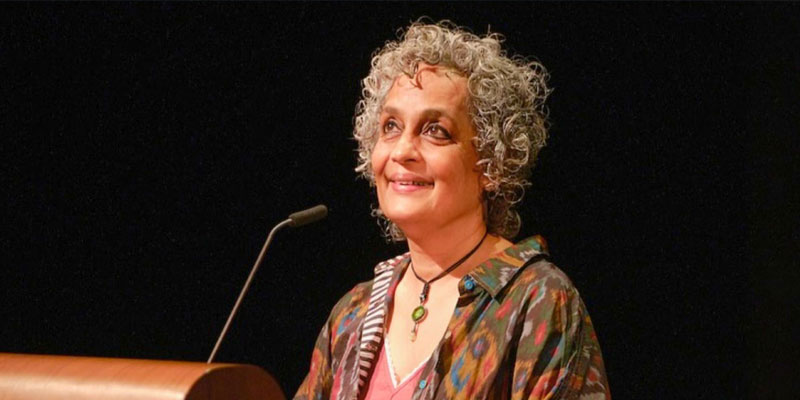
Author and activist Arundhati Roy has withdrawn from the 2026 Berlin International Film Festival jury after remarks by festival representatives suggesting that filmmakers should steer clear of overt political positioning. Her decision has reignited debate over whether art can—or should—remain detached from contemporary conflicts, particularly amid global tensions surrounding Gaza and broader questions of free expression.
A Literary Figure Defined by Engagement
Roy, born in Kerala in 1961, rose to international prominence with her Booker Prize–winning novel The God of Small Things (1997), a work celebrated for its layered exploration of caste, family and postcolonial society. Over time, she transitioned into a prominent public intellectual, publishing essays that challenge state power, global inequality, militarization and environmental policies. Her writing often blurs the boundaries between literature and activism, positioning her as a leading voice of political dissent in India and abroad.
Her participation in the Berlinale jury had been viewed as consistent with the festival’s reputation for engaging with socially conscious cinema. However, tensions surfaced during a press interaction when jury leadership—including German filmmaker Wim Wenders—urged artists to focus on storytelling rather than political advocacy. For Roy, such comments were incompatible with the responsibility she believes artists bear in moments of humanitarian crisis.
Why the Berlinale Controversy Matters
Roy described the jury’s stance as deeply troubling, arguing that cultural platforms cannot remain neutral in the face of violence and injustice. In public statements following her withdrawal, she maintained that cinema and literature have historically served as tools of resistance and moral inquiry. Her departure thus became a symbolic act, underscoring tensions between artistic autonomy and political engagement within global cultural institutions.
The incident also highlights broader sensitivities within European cultural spaces regarding discussions of the Israel–Gaza conflict. Festivals that once encouraged overt political commentary now face scrutiny over balancing artistic freedom with institutional neutrality. Roy’s exit places the Berlinale at the center of this evolving debate.
A History of Legal and Political Controversies
Roy’s stance at the festival cannot be separated from her long record of confrontations with Indian authorities. Over the years, she has faced multiple legal challenges tied to her public statements and activism. One of the most significant stems from a 2010 speech in New Delhi in which she questioned the status of Kashmir and called for self-determination. That speech later became the basis for sedition proceedings and additional charges under anti-terror legislation, though the case remains contested.
Earlier, Roy had been briefly detained for protesting the Narmada dam project and faced contempt-of-court proceedings for criticizing judicial decisions in essays. Even her early literary success was accompanied by legal scrutiny, including an obscenity case filed against The God of Small Things—charges from which she was ultimately cleared. Collectively, these episodes illustrate how Roy’s public interventions have repeatedly placed her at the center of debates over nationalism, dissent and free speech.
The Politics of Cultural Platforms
Roy’s withdrawal from the Berlinale underscores a recurring tension between artistic expression and institutional caution. For her supporters, the move reaffirms the role of writers and filmmakers as witnesses to political reality. For critics, it raises questions about whether cultural spaces should remain insulated from geopolitical disputes. What remains clear is that Roy continues to occupy a polarizing yet influential position in global cultural discourse. Her decision reflects not only personal conviction but also a broader struggle over the boundaries of art, activism and accountability in an increasingly polarized world.
(With agency inputs)