National Push for AVGC Labs in Education
The Ministry of Information and Broadcasting has initiated consultations to establish Animation, Visual Effects, Gaming and Comics (AVGC) content creation labs across India’s education system. The proposed plan envisions setting up such facilities in 15,000 schools and 500 colleges, creating an early pipeline of creative and technical talent. Officials indicated that the initiative will be anchored by the Indian Institute of Creative Technologies and implemented in collaboration with industry stakeholders, academia and skill-development agencies. The objective is to standardise infrastructure, integrate mentorship, and encourage intellectual property creation among students at an early stage.
The consultations signal a coordinated push to embed creative technology training within mainstream education, reflecting the government’s broader ambition to position India as a global AVGC hub.
AVGC as the Engine of the ‘Orange Economy’
The initiative is closely tied to India’s vision of expanding the “Orange Economy,” where culture, media and creative technology contribute substantially to growth. With the AVGC sector projected to expand into a multi-billion-dollar market over the next decade, policymakers see content labs as critical infrastructure for developing skilled creators rather than relying solely on outsourcing work.
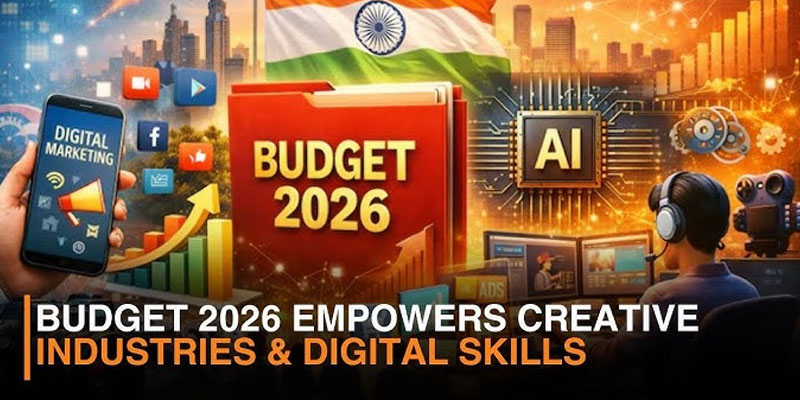
Funding support announced in the Union Budget aims to provide hardware, software and training ecosystems in participating institutions. These labs are expected to function as mini production studios, enabling students to experiment with animation pipelines, gaming engines, virtual production tools and extended reality technologies. The emphasis on original intellectual property is particularly significant, as India seeks to move from a service-delivery model to one centred on globally exportable content.
Stakeholder Perspectives and Implementation Strategy
Industry associations, technology firms and academic representatives participating in the consultations highlighted the importance of aligning curriculum with global workflows. Mentorship programmes connecting professionals with educational institutions are expected to play a central role. Such partnerships could expose students to real-world production environments, improving employability and fostering entrepreneurship.
Pilot deployments are likely to begin in major media and technology hubs before expanding to tier-two and tier-three cities. The involvement of national training institutions is expected to ensure scalable certification programmes and consistent teaching standards across the network of labs.
Projected Job Creation by 2030
The AVGC sector is widely expected to become a major employment generator by the end of the decade. Government projections suggest that the industry could create nearly two million skilled jobs by 2030, driven by rising demand for animation, gaming, virtual production and immersive media. Annual job additions may reach over 150,000 positions as global outsourcing, domestic gaming markets and digital media consumption continue to grow.
Roles anticipated to expand include animation artists, VFX specialists, game designers, AR/VR developers and digital storytellers. The integration of artificial intelligence, real-time rendering and 5G connectivity is likely to accelerate demand for new skill sets, making early exposure through school and college labs particularly valuable.
Challenges and Opportunities
While the rollout promises transformative impact, several hurdles remain. Ensuring equitable infrastructure across regions, training teachers in advanced creative tools and protecting intellectual property will be crucial. Without consistent standards and funding, disparities between urban and rural institutions could persist.
However, if implemented effectively, the initiative could democratise access to creative technology education and build a strong domestic content ecosystem. It also complements broader national programmes focused on digital skills and innovation.
Building a Creative Talent Pipeline
The proposed AVGC lab network represents a strategic effort to bridge education and employment in a rapidly expanding sector. By nurturing creative and technical skills early, India aims to generate millions of jobs, boost exports of original content and strengthen its position in the global digital media landscape. If backed by sustained investment and industry collaboration, the initiative could transform India from a major service provider into a leading creator of global entertainment and immersive experiences.
(With agency inputs)