Compliments and Controversy in the Oval Office
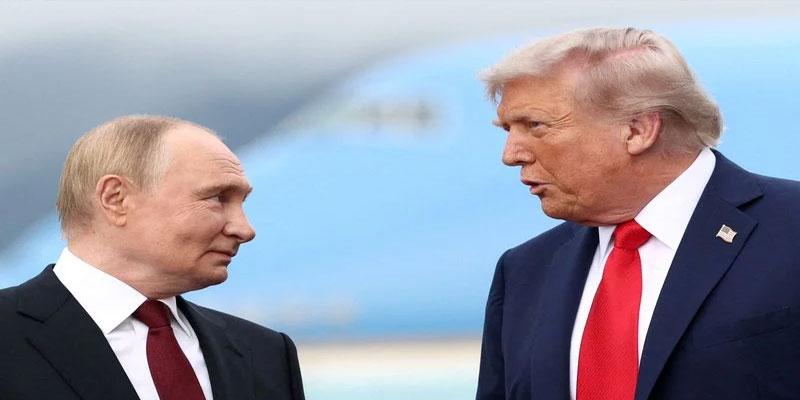
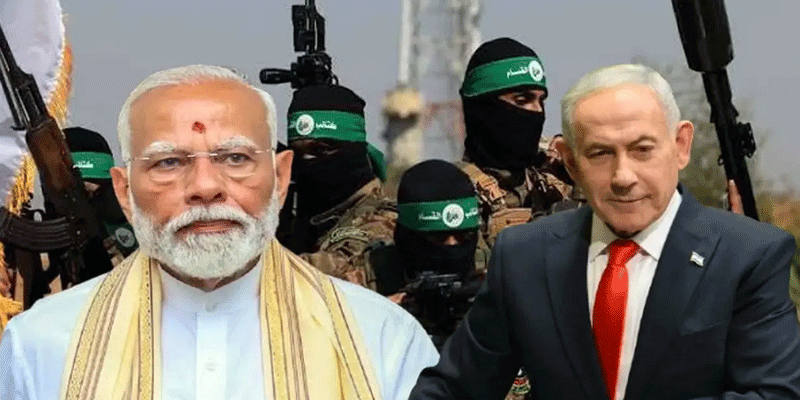
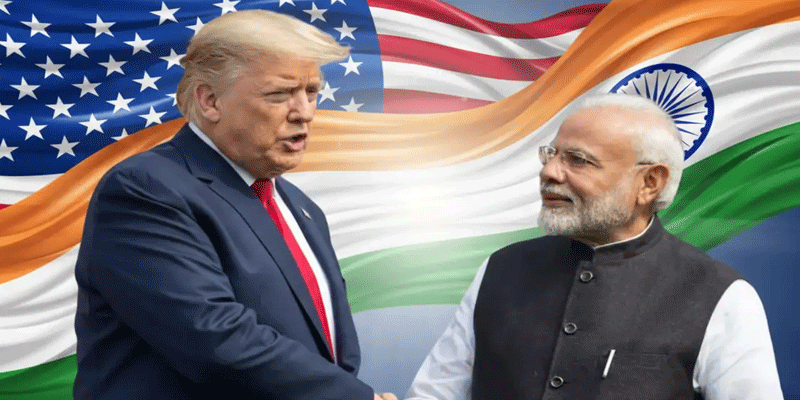
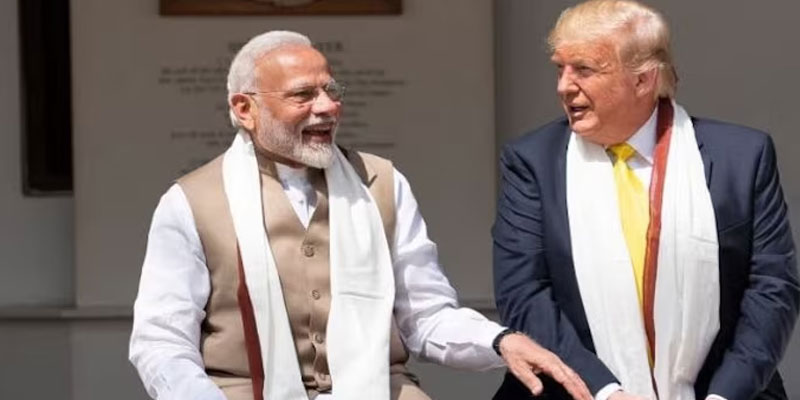
In a mix of praise and political posturing, U.S. President Donald Trump once again brought India into the global spotlight, this time with remarks about his “friend,” Prime Minister Narendra Modi. Speaking to reporters at the Oval Office, Trump lauded Modi’s leadership and longevity while claiming that India had assured him it would soon stop purchasing Russian oil.
The comments came months after Washington imposed punitive tariffs on India over its continued crude imports from Moscow. While Trump framed the development as a diplomatic breakthrough, India’s response was far more measured, emphasizing that its energy decisions remain guided by the national interest and the welfare of Indian consumers.
Trump’s Claim: Praise for Modi, Pressure on Moscow
During his interaction with reporters, Trump described Modi as a “great man” and a “friend,” while referring to himself in the third person: “He loves Trump,” the president said, smiling. In a characteristic mix of flattery and bravado, Trump added, “I don’t want to destroy his political career.”
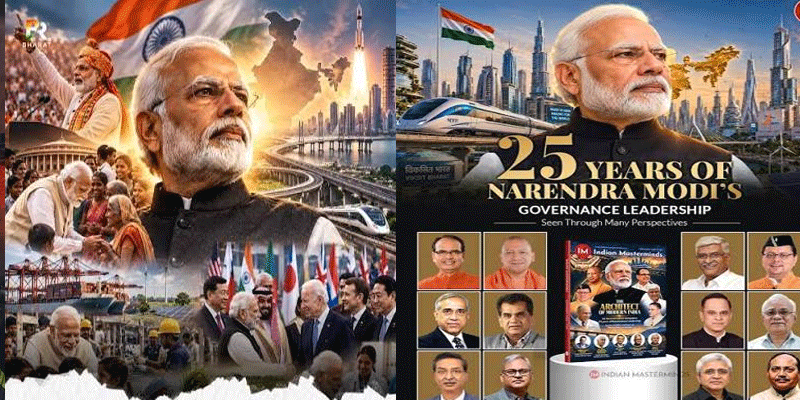
The U.S. president credited Modi’s long tenure as a mark of India’s growing stability and global stature, remarking, “Every year India would have a new leader. My friend has been there now for a long time.”
However, his praise quickly segued into geopolitics. Trump claimed Modi had given him personal assurance that India would stop purchasing oil from Russia — a move he called a “big step” toward curbing Moscow’s war revenues amid the ongoing Ukraine conflict.
“He has assured me there will be no oil purchased from Russia. You can’t do it immediately — it’s a bit of a process — but it will be over soon,” Trump told journalists, framing the supposed decision as part of Washington’s wider effort to isolate Russia economically.
India’s Response: Strategic Autonomy Above All
New Delhi, however, made no confirmation of Trump’s claim. Instead, the Ministry of External Affairs (MEA) issued a clear and composed statement reiterating India’s longstanding position on energy imports.
“India is a significant importer of oil and gas,” said MEA spokesperson Randhir Jaiswal. “It has been our consistent priority to safeguard the interests of the Indian consumer in a volatile energy scenario. Our import policies are guided entirely by this objective.”
In essence, the ministry underscored that India’s oil trade decisions are driven by economic necessity, not external pressure. Officials have repeatedly pointed out that buying discounted Russian oil helps keep domestic fuel prices stable and inflation in check — a key consideration for a developing economy navigating global market fluctuations.
Diplomatic Balancing: Praise, Pressure, and Pragmatism
Trump’s remarks once again highlight the delicate diplomatic balance India must maintain. On one hand, it seeks to preserve strong strategic ties with Washington; on the other, it continues to rely on affordable Russian crude to meet domestic demand.
While Trump’s tone suggested camaraderie, his comments also carried an undertone of expectation — a familiar pattern in the transactional diplomacy that defines his foreign policy style.
Friendship Tested by Realpolitik
Donald Trump’s affectionate references to Modi may underscore personal rapport, but India’s policy compass remains firmly aligned with its national interest. The MEA’s restrained but resolute response signals that while friendship with the U.S. is valued, strategic autonomy is non-negotiable.
As global politics grow more complex and energy markets more volatile, India’s challenge is to keep walking the tightrope — maintaining partnerships without surrendering sovereignty. In this equation, praise may be welcome, but pressure is not persuasive.
(With agency inputs)