Tariffs, Tensions, and India’s Energy Equation
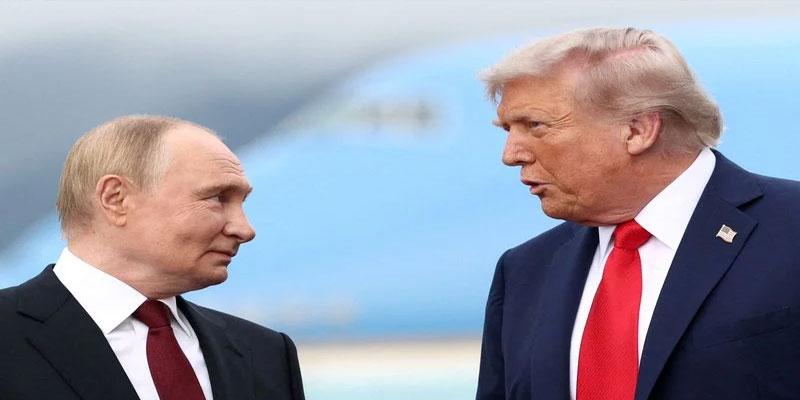
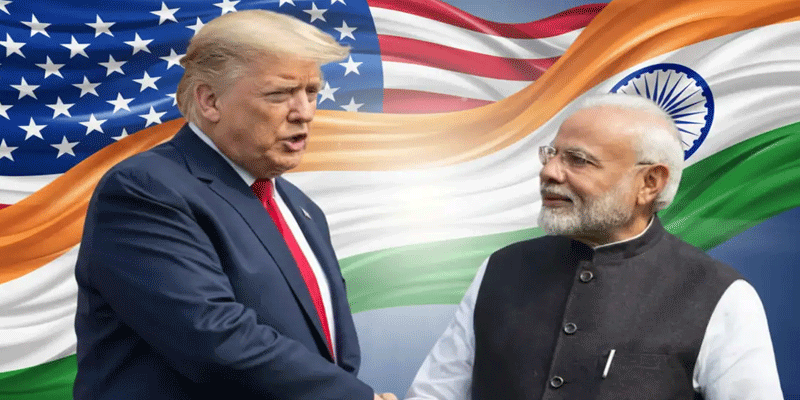
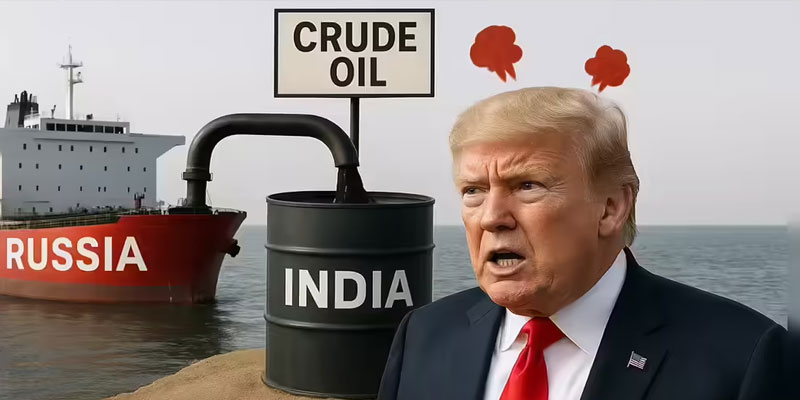
A fresh wave of geopolitical tension has emerged after U.S. President Donald Trump reignited the debate over India’s Russian oil imports. Months after imposing a 25% tariff on Indian goods in response to New Delhi’s continued crude purchases from Moscow, Trump has now asserted that India will soon stop buying Russian oil. His statement, aimed at tightening the screws on Russia’s war economy, has triggered political ripples both in Washington and New Delhi.
India, however, has maintained a measured and firm stance, defending its right to source energy based on national priorities and consumer welfare. As global oil markets reel under volatility, New Delhi insists that its decisions are anchored in pragmatism — not politics.
Trump’s Claim: An “Assurance” from Modi
Speaking from the White House, Trump told reporters that Prime Minister Narendra Modi had assured him that India would soon halt purchases of Russian seaborne crude. Framing the move as a step toward ending the Ukraine conflict, Trump said, “I was not happy that India was buying oil, and Modi assured me they will not be buying from Russia. That’s a big step.”
He further elaborated that both India and China, the largest importers of Russian oil, must cooperate for peace efforts to progress. Trump even suggested that if New Delhi stopped its imports, it would be “much easier” to broker a truce between Moscow and Kyiv. The U.S. leader hinted that India might “go back to Russia” for oil trade only once the war concludes.
India’s Response: Energy Security Comes First
Within hours of Trump’s comments, the Ministry of External Affairs (MEA) issued a carefully worded clarification. Spokesperson Randhir Jaiswal reaffirmed that India’s oil import policies are shaped solely by national interest and the imperative to keep domestic fuel prices stable.
“It has been a consistent priority of the government to safeguard Indian consumers in a volatile energy scenario,” Jaiswal said. He highlighted that India’s energy policy rests on two pillars — ensuring affordable prices and diversifying supply sources.
The MEA also noted that talks with the U.S. on deepening energy cooperation are ongoing, underscoring a steady expansion in energy ties over the past decade. However, the ministry made no mention of any promise to cease Russian crude imports — signaling a deliberate diplomatic restraint.
Rahul Gandhi’s Reaction: A Political Reproach
Back home, Trump’s remarks became immediate fodder for political sparring. Congress leader Rahul Gandhi launched a sharp attack on Prime Minister Modi, accusing him of being “frightened” of Trump and failing to contradict the U.S. president’s statement.
The Leader of Opposition alleged that Modi routinely sends flattering messages to Washington despite “repeated snubs,” referring to the Trump claim as yet another instance of misplaced deference. Gandhi’s comments, however, drew mixed reactions, with critics dismissing them as opportunistic in a sensitive foreign policy matter.
Balancing Diplomacy and Domestic Duty
The episode underscores India’s delicate balancing act in a fragmented global order. As energy prices fluctuate and Western pressure mounts, New Delhi continues to prioritize strategic autonomy — buying from whoever offers the best deal, while keeping its diplomatic channels open with all major powers.
Trump’s assertion may have momentarily reignited the debate, but India’s position remains unchanged: its energy security cannot be dictated by others’ geopolitical agendas. In a world of shifting alliances and uncertain supply lines, safeguarding national interest — and the Indian consumer — remains New Delhi’s unshakable bottom line.
(With agency inputs)