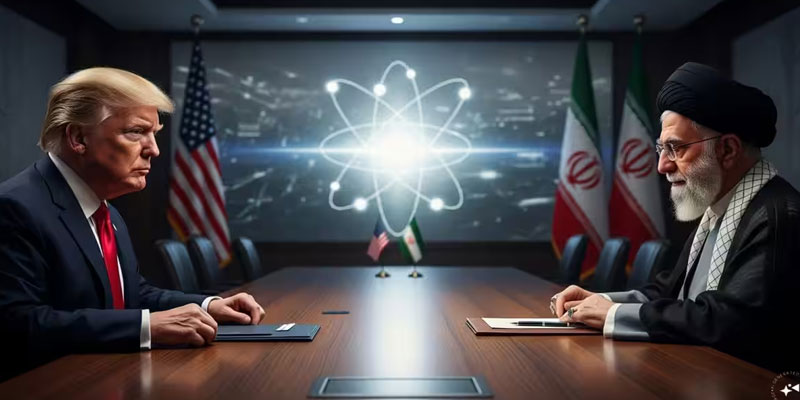
US–Iran indirect talks in Geneva concluded on February 25, 2026, without a formal agreement but with mediators noting “significant progress.” The Oman-mediated negotiations—described as the longest and most serious round in recent years—were widely seen as a last-ditch attempt to avert direct confrontation between Washington and Tehran. Yet the absence of a deal, combined with escalating rhetoric and military posturing, has left the Middle East on edge.
Diplomatic Context: Narrow Openings, Wide Gaps
The talks come against the backdrop of decades of hostility since the 1979 Iranian Revolution. A senior Iranian official indicated that a framework agreement remains possible—provided the United States separates nuclear issues from broader disputes over missiles and regional proxies.
Washington’s position reportedly demands strict limits on uranium enrichment, intrusive monitoring and expanded conditions covering Iran’s missile programme and allied militias. Tehran, while signaling flexibility on nuclear stockpiles and enrichment caps, insists that non-nuclear issues remain off the table. Sanctions relief remains Iran’s central demand, as its economy continues to strain under years of financial isolation.
The mediator’s optimism suggests that technical groundwork may have been laid for further talks. However, political mistrust and maximalist demands on both sides continue to block a breakthrough.
Military Build-up and Escalation Risks
Diplomacy is unfolding under the shadow of force. President Donald Trump has publicly warned of “really bad things” if a deal is not reached within days. The United States has reportedly reinforced its regional posture with additional fighter jets, two carrier strike groups and forward deployments near Iran—moves reminiscent of joint US-Israeli strikes on Iranian-linked facilities in mid-2025.
Tehran has responded with its own warnings, vowing retaliation against US bases and regional allies if attacked. Iran’s ballistic missile arsenal and network of allied militias—ranging from Hezbollah in Lebanon to Houthi forces in Yemen and armed groups in Iraq and Syria—create the risk of rapid multi-front escalation.
Even absent deliberate strikes, the density of military assets in the Gulf increases the danger of miscalculation.
Potential Impacts on Middle East Stability
Failure to reach a deal could destabilize the region across multiple dimensions:
1. Direct Military Conflict: A strike on Iranian nuclear facilities such as Fordow could trigger missile retaliation against US assets, Israel or Gulf infrastructure. Hezbollah and the Houthis could reopen secondary fronts, expanding conflict beyond bilateral lines.
2. Energy Market Shock: The Strait of Hormuz, through which roughly 20% of global oil flows, remains a strategic chokepoint. Disruption could send crude prices surging well above $100 per barrel, reigniting global inflation and pressuring energy-importing economies in Asia and Europe.
3. Proxy Escalation: Iran-aligned militias have conducted over 100 attacks annually on US-linked targets in recent years. A breakdown in talks may embolden these groups, while Israel could face renewed multi-theatre threats.
4. Geopolitical Realignment: China and Russia may deepen economic and military coordination with Iran, weakening US-led sanctions frameworks and reshaping regional power balances.
A Fragile Pause Before the Next Move
While the Geneva round ended without agreement, it did not collapse into outright failure. The acknowledgment of “serious” and “intense” exchanges suggests both sides recognize the catastrophic costs of war. Yet diplomacy is running against the clock of political rhetoric and military signaling.
The coming weeks will test whether incremental progress can mature into a framework—or whether brinkmanship will tip the region into confrontation. In a Middle East already strained by overlapping crises, the stakes of US–Iran diplomacy extend far beyond Geneva’s negotiating tables.
(With agency inputs)