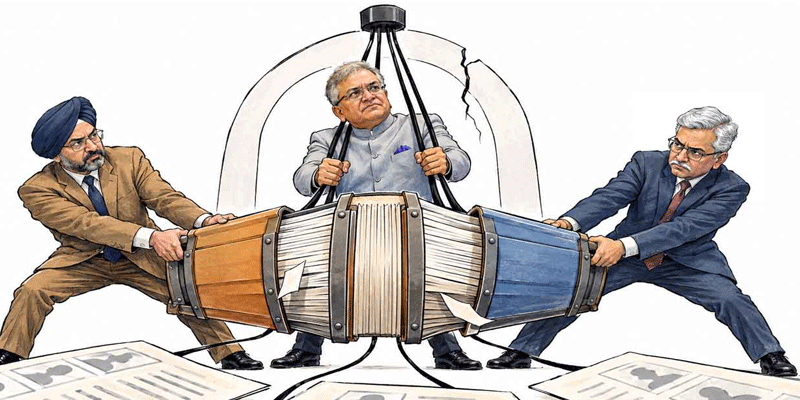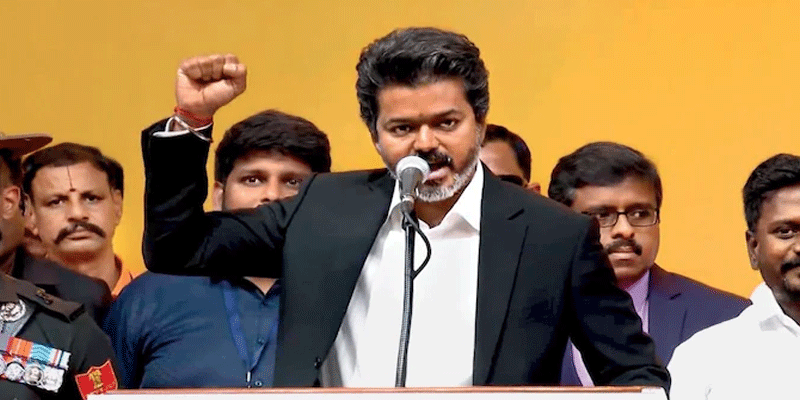
Chief Minister C. Joseph Vijay’s allegation that the previous DMK government systematically collected “party funds” from government contractors has triggered a major political confrontation in Tamil Nadu. The controversy escalated inside the Assembly when DMK MLAs demanded that his remarks be removed from the records, leading to their eviction and turning an allegation into a fresh flashpoint in the state’s post-election politics.
A Familiar Corruption Charge, A New Political Battle
The dispute centres on Vijay’s claim that corruption during the previous DMK regime was not isolated but operated through an organised system of collections from contractors. Citing an Enforcement Directorate (ED) document, he alleged that contractors were required to pay between 7.5% and 10% of contract values as “party funds”.
According to Vijay, the alleged payments were connected with projects under the Municipal Administration and Water Supply Department. He also claimed the ED communication referred to senior DMK leaders, including former Chief Minister M. K. Stalin, Deputy Chief Minister Udhayanidhi Stalin and minister Senthil Balaji. These are allegations cited by Vijay and remain politically contested; they should not be treated as established findings against the individuals named.
Veeranam Project Adds Historical Weight
Vijay further invoked the Sarkaria Commission report concerning the Veeranam water project, alleging that it contained references to demands for party funds. He cited a purported demand of 2.5% involving Dayanidhi Maran.
By linking the current allegation to an earlier political controversy, Vijay sought to present corruption as a recurring institutional problem rather than an isolated episode. His “party funds” description has consequently become the central phrase in the political battle, carrying implications far beyond the Assembly floor.
Assembly Erupts Over Vijay’s Remarks
The controversy intensified when the Assembly reconvened. DMK Whip E. V. Velu demanded that references to the ED document and corruption allegations be expunged, arguing that they violated legislative conventions.
DMK legislators raised slogans, moved towards Speaker J. C. D. Prabhakar’s podium and pressed for removal of Vijay’s statements. The Speaker rejected their demand, maintaining that the Chief Minister had referred to information already available in the public domain.
With the disruption continuing, marshals were directed to remove the protesting DMK members from the House. The dramatic eviction transformed an already contentious political exchange into a highly visible confrontation between the government and principal opposition.
Political Fallout Spreads Beyond the House
The episode has provided the ruling TVK–BJP combine with a potent political narrative: that Vijay is willing to confront alleged corruption associated with the previous administration. The DMK, meanwhile, has questioned the political intent behind the allegations and accused the government of using investigative-agency material as a political weapon.
For the opposition, the immediate challenge is to contest the interpretation and evidentiary basis of the ED-related claims without allowing the “party funds” narrative to dominate public discourse.
Beyond The Uproar, The Evidence Will Matter
The Assembly confrontation may eventually fade, but its political consequences could endure. Vijay has placed corruption and accountability at the centre of Tamil Nadu’s emerging political contest, while the DMK faces pressure to respond substantively rather than through legislative confrontation alone.
Ultimately, political allegations gain lasting significance only when supported by credible evidence and due process. The coming debate will therefore be shaped not merely by who wins the Assembly’s political theatre, but by whether the claims withstand documentary scrutiny and translate into demonstrable accountability.
(With agency inputs)