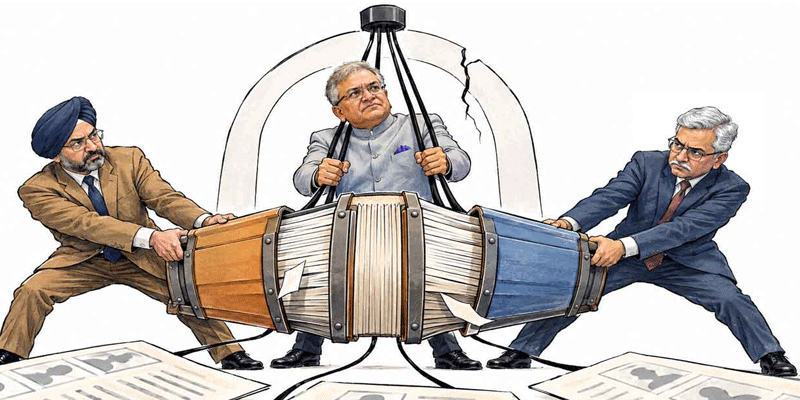
An investigation by The Indian Express has brought unusual internal disagreements within the Election Commission of India (ECI) into public view. According to the report, Election Commissioners Sukhbir Singh Sandhu and Vivek Joshi recorded objections at least 14 times over 10 months concerning electoral-roll administration and the Special Intensive Revision (SIR).
Key Highlights:
- 14 recorded objections: Two Election Commissioners reportedly raised objections at least 14 times in 10 months.
- SIR under scrutiny: Disputes involve voter additions, deletions, restoration and electoral-roll management.
- Form 6 controversy: Commissioners reportedly challenged SIR-related changes to the statutory voter-registration form.
- Database governance: Concerns were raised over increasing centralisation of electoral-roll systems.
- Institutional independence: Justice Dipankar Datta stressed that the ECI must both be independent and be seen as independent.
- ECI rejects the broader inference: The Commission says internal observations are part of deliberation and final decisions were unanimous.
- Digital trust becomes central: The controversy highlights the importance of transparent authorization, access controls and auditable electoral technology.
The disagreements matter because they concern the mechanics of electoral integrity: registration of new voters, deletion and restoration of names, access to electoral databases and institutional authorization for decisions. The investigation reports that the two Commissioners objected to certain steps they said had been taken without their knowledge or approval.
One significant dispute involved Form 6, used for new voter registration. Internal records reviewed by the newspaper reportedly show that the Commissioners argued that adding SIR-related questions required amendments to the Registration of Electors Rules, with Sandhu subsequently describing the change as “unauthorised and illegal.”
A second issue concerns the centralisation of electoral-roll technology. The Commissioners reportedly questioned whether Electoral Registration Officers were losing appropriate access to voter databases as greater technological control moved toward central systems. Their concerns eventually extended to changes involving oversight of the ECI's IT infrastructure.
The controversy has triggered strong political reactions. Congress and several other Opposition leaders have demanded CEC Gyanesh Kumar's resignation or removal, while other political figures have sought investigations and fresh elections. These are political demands and allegations, not established findings of wrongdoing. The supplied report also records Justice Dipankar Datta's observation that ensuring free and fair elections requires the ECI not only to be independent but to be seen as independent.
Importantly, the Election Commission disputes the implication that the internal notes demonstrate improper institutional functioning. It says differing views are normal during deliberations and maintains that final decisions, including SIR-related measures and other electoral reforms over the past year, were taken unanimously by the full Commission.
The larger issue therefore extends beyond personalities. Electoral databases are becoming increasingly digital and centralized, making governance of technology, authorization, audit trails, accountability and transparencyfundamental to election administration. The competing accounts now raise questions that can ultimately be assessed through documentary disclosure, legal scrutiny and institutional explanation. For public confidence, clarity about who can alter electoral data, under whose authority, with what approvals and with what auditability is increasingly important.