A New Revolution for a New Vision
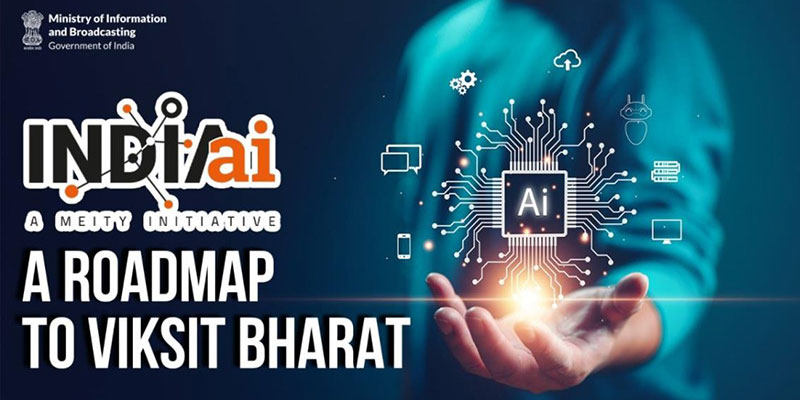
India’s aspiration of becoming a Viksit Bharat (Developed India) by 2047 demands more than roads, factories, or financial growth—it requires a structural leap that mirrors past industrial revolutions. If the 19th century was powered by steam and steel, and the 20th century by electricity and oil, then the 21st century is unmistakably driven by data and artificial intelligence (AI).
Unlike earlier revolutions confined to industrial hubs, this transformation must cut across cities, towns, and rural communities. AI cannot be an urban indulgence; it must be embedded in the daily lives of farmers, teachers, small entrepreneurs, and patients. This is where India’s startup ecosystem, vibrant and fast-growing, emerges as the catalyst to translate AI’s promise into the practical engine of development.
From Policy Backing to Startup Action
The government’s IndiaAI Mission, announced in March 2024 with a budget of ₹10,371.92 crore over five years, aims to build AI infrastructure, create open data platforms, and support entrepreneurial ventures. Already, India is home to over 4,500 AI-focused startups, with 40% founded in just the past three years.
While many of these solutions remain at the pilot stage, they cover a wide spectrum: vernacular AI models for classrooms, GovTech tools for faster municipal services, and sector-specific AI for healthcare and farming. The real challenge lies in scaling these solutions from prototypes to everyday utilities that touch millions of citizens.
Healthcare: Faster Detection, Broader Access
Health remains one of India’s sharpest development gaps, particularly in rural areas where secondary care can be over 50 kilometers away. Startups are beginning to close this divide with AI-driven innovations.
Niramai’s Thermalytix uses non-invasive thermal imaging to detect breast cancer at early stages, already screening over one lakh women across clinical sites and health camps. The time from detection to consultation has dropped from months to mere weeks. SigTuple’s Shonit automates blood smear analysis, halving diagnostic time for labs that lack pathologists. Such innovations highlight how AI can turn constrained resources into broader reach and faster interventions, potentially reshaping public health delivery.
Agriculture: AI in the Fields
Farm incomes often fluctuate due to unpredictable weather, pest attacks, and price volatility. Startups are deploying AI to buffer farmers against these uncertainties. DeHaat, a platform serving around seven lakh farmers, delivers real-time advisories on pests, disease risks, and planting schedules, improving yields by 10–20%.
Kisan e-Mitra, supported by IndiaAI, adds predictive analytics for crop forecasting and resource planning. These digital tools are transforming smallholder farming into a data-augmented activity, helping farmers take timely decisions and reduce losses.
Education: Learning in Native Languages
India’s classrooms face chronic teacher shortages and learning gaps. The added barrier of language diversity further widens inequity. AI is beginning to address this challenge. Bhashini, part of the Digital India initiative, supports over 35 Indian languages and integrates with platforms like IRCTC and NPCI. For students, it means access to study material in their mother tongue; for teachers, real-time translation and classroom support.
Projects under AI4Bharat and similar efforts aim to bridge the gap between local languages and digital systems, enabling inclusive access to knowledge. Pilot programs show stronger engagement, with chatbot use in classrooms rising by 40–60%, though the long-term impact on learning outcomes is still under review.
Governance and Services: Reducing Delays
Municipal permits, grievance redressal, and official documentation often take weeks, slowing economic activity and frustrating citizens. AI is streamlining this process:
· Platforms like Umang and MyGov now use AI-enabled chatbots, cutting grievance response times significantly.
· With the IndiaAI compute cluster providing access to over 18,000 GPUs and open datasets, GovTech startups can build scalable tools to reduce delays in permits, registrations, and local service delivery.
Such systems hold the potential to reduce bureaucratic lags by 30–50% in digitally mature regions.
Opportunities and Obstacles
While the momentum is strong, barriers remain. Compute costs are steep, making large-scale AI deployment unaffordable for smaller startups. Fragmented data across states and weak digital infrastructure in some regions also constrain growth. Yet, as Vivek Goyal of LdotR puts it, “AI is the great equalizer, allowing small startups to compete with larger players by being smarter and faster.”
Experts argue that inclusivity must be the cornerstone. AI designed in local languages, reflecting cultural contexts, and built with transparency can enhance dignity, participation, and trust.
Toward an Inclusive AI-Driven Bharat
For India, AI is not an end but a tool—a means to unlock the vision of Viksit Bharat. Startups, with their agility and problem-solving spirit, are proving that AI can be more than an elite experiment. From detecting disease earlier, raising farm productivity, and bridging education gaps to making governance responsive, AI is demonstrating its potential to lift millions into better health, higher incomes, and stronger learning outcomes.
The task ahead lies in scaling these innovations responsibly, ensuring they are accessible, affordable, and accountable. If AI is woven into the nation’s development fabric with equity at its core, it can be the multiplier that turns the ambition of Viksit Bharat into reality—empowering every citizen, not just the privileged few.
(With agency inputs)