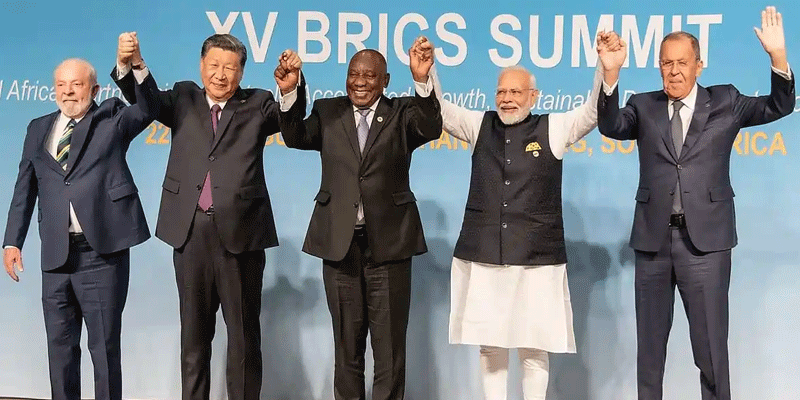
India is preparing to host the 18th BRICS Summit on September 12–13, 2026, at Bharat Mandapam in New Delhi, bringing together leaders from BRICS members, partner countries and specially invited outreach nations. The summit comes as BRICS marks 20 years and India holds the chairship for the fourth time.
The expanded grouping now spans Asia, Africa, Latin America and the Middle East. India has invited all 11 BRICS members—Brazil, China, Egypt, Ethiopia, India, Indonesia, Iran, Russia, Saudi Arabia, South Africa and the UAE—along with 10 partner countries and outreach invitees, including Bangladesh.
Under the theme “Building for Resilience, Innovation, Cooperation and Sustainability,” India is positioning its presidency around a people-centric “Humanity First” approach. More than 350 meetings and high-level engagements across 25 Indian cities have already addressed political and security cooperation, economic and financial issues, and cultural and people-to-people exchanges.
The New Delhi summit is expected to focus on trade, development finance, economic cooperation and reform of global institutions. But geopolitical tensions could dominate negotiations, particularly the Middle East conflict, Iran-related issues and continuing differences among members over major international crises.
The expected presence of Chinese President Xi Jinping and Russian President Vladimir Putin will give the summit additional strategic significance. Xi’s visit would be closely watched for signals of improving India-China relations, while Putin’s participation underscores India’s continuing strategic and economic engagement with Russia despite geopolitical pressure from Western countries.
For India, BRICS 2026 represents more than hosting a multilateral summit. It offers New Delhi an opportunity to strengthen its position as a bridge between major powers and the Global South, while pushing for greater representation of emerging economies in global governance. The real test, however, will be whether an increasingly diverse BRICS can convert its expanding geopolitical weight into consensus, practical cooperation and meaningful economic outcomes.