Russian Attack Kills Ten, Injures Over 50
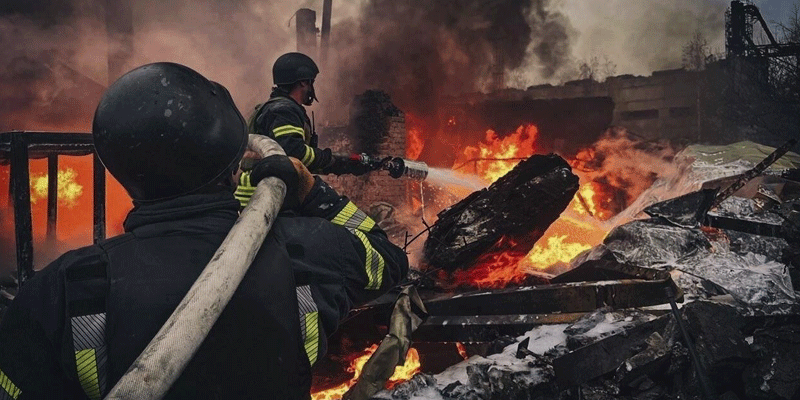
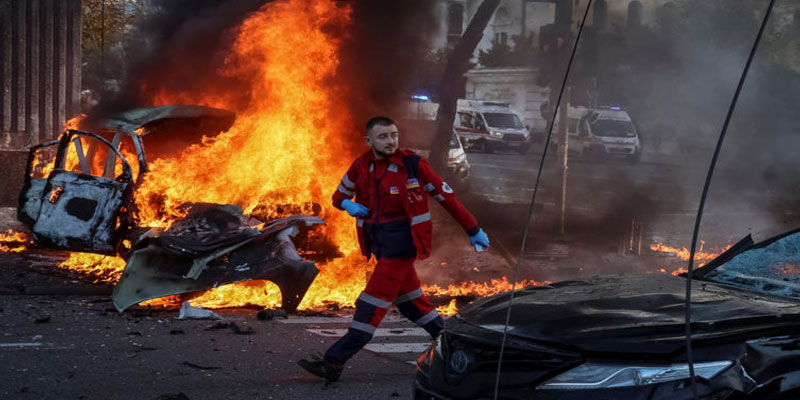
A fresh wave of Russian drone and missile strikes on Ukraine's capital, Kyiv, has left at least 10 people dead and more than 50 injured, according to officials, while rescue teams continue searching damaged residential buildings for survivors. The attack, which reportedly caused the collapse of a nine-storey apartment block and ignited fires across multiple neighbourhoods, has once again highlighted the devastating humanitarian cost of the war. Beyond the destruction in Kyiv, the strikes briefly prompted Poland to scramble fighter jets as a precautionary measure, underlining how the conflict continues to generate security concerns well beyond Ukraine's borders.
Kyiv Remains a Strategic Target
The latest assault follows a series of large-scale Russian aerial attacks documented in recent weeks. Earlier strikes in June killed dozens of civilians across Ukraine, with Kyiv repeatedly emerging as one of the worst-affected cities. These attacks have combined waves of drones and missiles, a tactic widely viewed as an effort to overwhelm Ukrainian air defence systems while maintaining sustained pressure on urban centres.
Kyiv occupies a unique strategic position in the conflict. As Ukraine's political and administrative capital, it houses key government institutions, military command infrastructure and a large civilian population. Consequently, attacks on the city carry military significance while also delivering a powerful psychological impact by disrupting everyday life and demonstrating Russia's continuing strike capability.
The repeated targeting of residential districts illustrates the enduring human cost of the conflict, with civilians bearing the brunt of increasingly sophisticated aerial bombardments.
Detailed Report and Reactions
According to the latest official updates, emergency responders remained engaged in rescue operations as fears persisted that additional victims could still be trapped beneath collapsed structures. Authorities cautioned that casualty figures may rise as search efforts continue.
The attack also triggered a brief response from neighbouring Poland, which deployed fighter aircraft under established NATO air-policing procedures after monitoring military activity near its airspace. While no direct threat to Polish territory was reported, the episode underscored the continuing risk that military operations close to NATO borders could create wider regional tensions.
The latest developments also highlight the increasingly reciprocal nature of the aerial conflict. Russian authorities reported intercepting Ukrainian drones over regions including Nizhny Novgorod and Leningrad, reflecting Ukraine's growing ability to conduct long-range strikes against Russian infrastructure and industrial facilities. This evolving battlefield dynamic has added complexity to both countries' air-defence strategies.
International reactions are expected to focus once again on humanitarian concerns and renewed calls for strengthening Ukraine's air-defence capabilities. The repeated strikes on civilian areas are also likely to reinforce arguments among Ukraine's partners that sustained military assistance remains necessary.
What Is Next?
The immediate priority remains rescue operations and damage assessment in Kyiv. At the strategic level, Ukraine is expected to seek additional air-defence systems and interceptor missiles from its allies to better protect major cities against future attacks.
Meanwhile, NATO members bordering Ukraine are likely to maintain heightened vigilance, with rapid-response measures such as fighter-jet scrambles remaining part of standard security protocols whenever large-scale strikes occur near alliance territory.
A Conflict with Expanding Regional Consequences
The latest attack on Kyiv demonstrates that the war continues to evolve beyond conventional battlefield engagements into a prolonged campaign affecting civilians, infrastructure and regional security alike. While Ukraine and Russia increasingly exchange long-range aerial strikes, neighbouring countries are also being drawn into heightened defensive postures. Until meaningful diplomatic progress emerges, such attacks are likely to remain a defining feature of the conflict, reinforcing both the humanitarian tragedy within Ukraine and the broader security challenges confronting Europe.
(With agency inputs)