Flydubai Attack Exposes Plot Behind Cockpit Assault
The question of whether the Omani co-pilot of Flydubai flight FZ1073 intended to crash the aircraft into a Tel Aviv skyscraper has emerged as investigators examine the motive behind the October 1 cockpit attack. The incident, which sent the aircraft into a dramatic descent, could have become a major aviation disaster had the captain and passengers failed to intervene.
A Planned Attack at 33,000 Feet
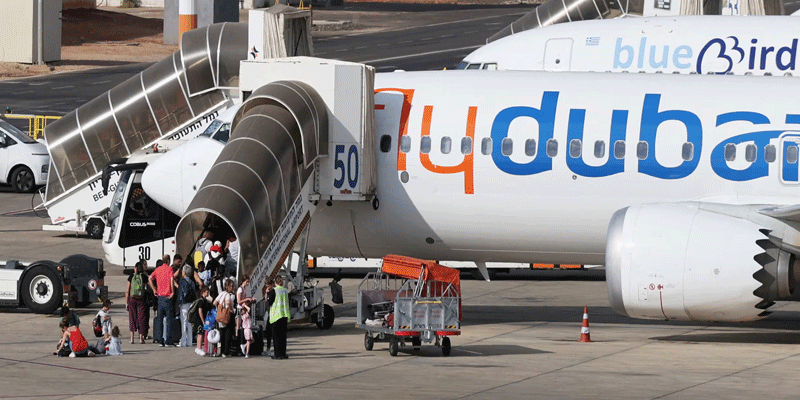
Flydubai flight FZ1073 was flying from Dubai to Tel Aviv with more than 170 people aboard when Omani co-pilot Hamam al-Hammami allegedly launched a pre-planned attack on Indian captain Smit Machchhar.
According to officials and reports, al-Hammami:
· Attacked Machchhar with the aircraft's crash axe, stabbing and striking him.
· Attempted to seize control of the aircraft.
· Triggered a rapid descent of approximately 16,000–17,000 feet in less than two minutes.
· Created an immediate cockpit emergency as passengers and crew confronted the unfolding crisis.
Despite his injuries, Captain Machchhar remained conscious and managed to unlock the cockpit door. This proved crucial, allowing cabin crew, passengers and two reserve pilots travelling on the aircraft to enter and overpower the attacker.
Passengers Turned into a Rescue Team
The intervention inside the cockpit prevented the situation from escalating. Passengers and crew restrained al-Hammami using improvised restraints, including headphone cables, while first aid was provided to the injured captain.
UAE authorities have described the episode as a terrorist attack, while the investigation has focused heavily on whether the assault was part of a larger, premeditated plan.
Captain Machchhar's Courage Became the Turning Point
The actions of Captain Machchhar were central to preventing a potential catastrophe. Although seriously wounded, he resisted the attacker and, critically, opened the cockpit door.
That decision broke the attacker's control over the flight deck and enabled others to intervene. Israeli Prime Minister Benjamin Netanyahu subsequently praised Machchhar's extraordinary bravery.
Investigators were also told that al-Hammami had asked to pray shortly before attacking the captain. The sequence suggests that the assault was not a spontaneous confrontation but an action allegedly prepared in advance.
Confessions Point to a Larger Intended Catastrophe
During questioning, al-Hammami reportedly told investigators that he had deliberately chosen Flydubai because of its Tel Aviv operations. Reports say he had begun gathering information about Ben Gurion Airport and Tel Aviv months before the attack.
His alleged plan was particularly disturbing. According to investigators, he intended to:
· Kill the captain inside the cockpit without immediately raising suspicion.
· Continue flying toward the destination under his control.
· Crash the aircraft into a Tel Aviv skyscraper or a structure or another aircraft at Ben Gurion Airport.
· Consider alternative targets, including US military installations in Jordan, if the primary plan failed.
He reportedly said he was not afraid of death and described crashing into Ben Gurion as his “dream”. Investigators also believe he had initially contemplated carrying out the attack earlier but postponed it because of a personal friendship with another crew member.
Courage That Prevented a Greater Tragedy
The Flydubai incident illustrates how quickly a commercial flight can become vulnerable when danger originates inside the cockpit. More importantly, it demonstrates how decisive human action can alter the outcome of a potential mass-casualty event.
Captain Machchhar's resistance, the rapid response of cabin crew and passengers, and the presence of two reserve pilots transformed what investigators describe as a deliberate attack into a safe emergency landing. The alleged confession, meanwhile, has elevated the incident from a cockpit assault to a potentially far more ambitious terror plot—one whose intended consequences could have been devastating.
(With agency inputs)