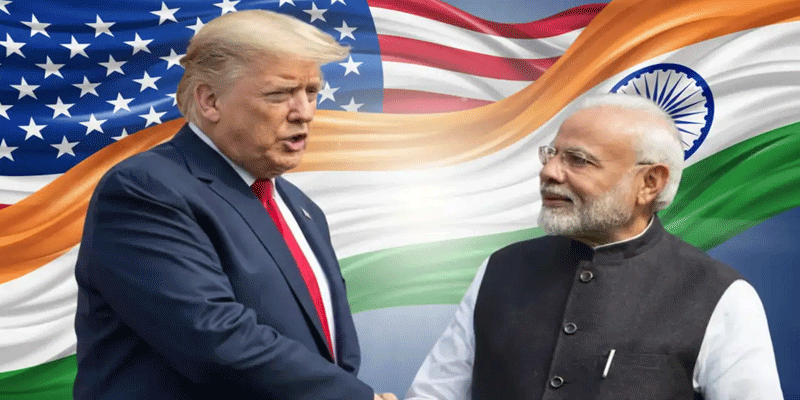
India–US trade negotiations have entered a difficult phase, with Finance Minister Nirmala Sitharaman indicating that the scope for further compromise has narrowed considerably. Her remarks underline the complexity of a deal that must balance market access, tariffs, sensitive domestic sectors and the wider geopolitical relationship between the two countries.
From Ambition to Difficult Bargaining
Formal negotiations for a comprehensive India–US trade agreement began in February 2025, building on efforts to create an interim framework covering tariffs, non-tariff barriers and preferential market access.
The negotiations span several sensitive areas, including:
· Agriculture and dairy
· Pharmaceuticals
· Digital trade
· Services and labour mobility
· Rules of origin
· Tariff reductions and safeguards
While substantial technical progress has reportedly been made during 2025–26, major differences over tariff lines, services access and protection for vulnerable Indian industries have continued to restrict the possibility of a final breakthrough.
Sitharaman Signals a Negotiating Plateau
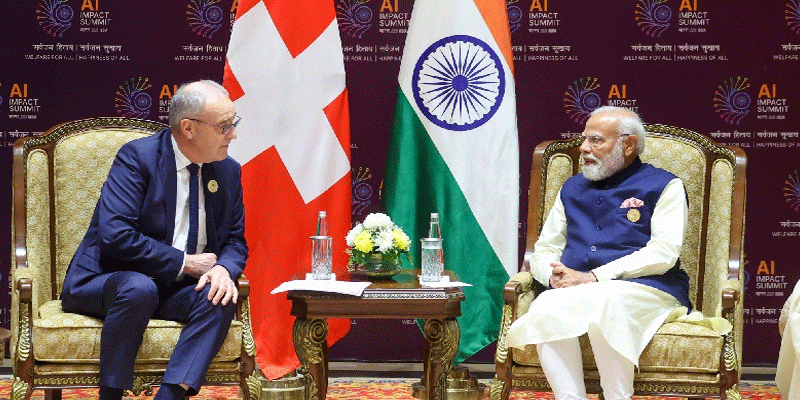
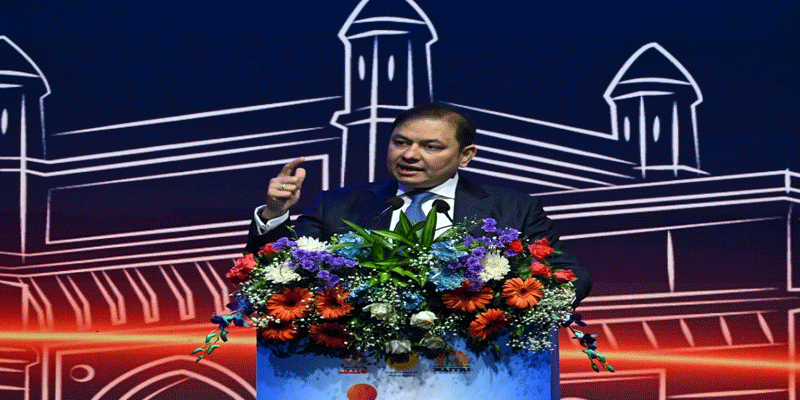
On October 5, 2026, Sitharaman said the negotiations had reached a “plateau”, with further give-and-take becoming “very, very difficult”. Speaking at the Munich Leaders Meeting in New Delhi, she indicated that although discussions remain active, both sides have limited room to offer additional concessions after months of intensive negotiations.
Her assessment suggests that negotiators may have already settled much of the technical framework, while the remaining disagreements involve issues carrying considerably greater economic and political consequences.
Trade Imbalance Adds to the Pressure
The bilateral trade imbalance remains an important point of contention. India recorded a $12.3 billion trade surplus with the US during April–July 2026, reinforcing Washington's demand for measures to rebalance trade.
For India, however, additional concessions cannot be considered in isolation. Greater tariff reductions or expanded market access could expose sensitive domestic industries to stronger competition, while concessions on services must also reflect India's interests in areas such as professional mobility and digital commerce.
The challenge is therefore to expand American market access without undermining India's economic and policy priorities.
Russian Oil Brings a Geopolitical Complication
Sitharaman also criticised what she described as the “weaponization” of tariffs, arguing that trade levies are increasingly being used to pursue geopolitical objectives.
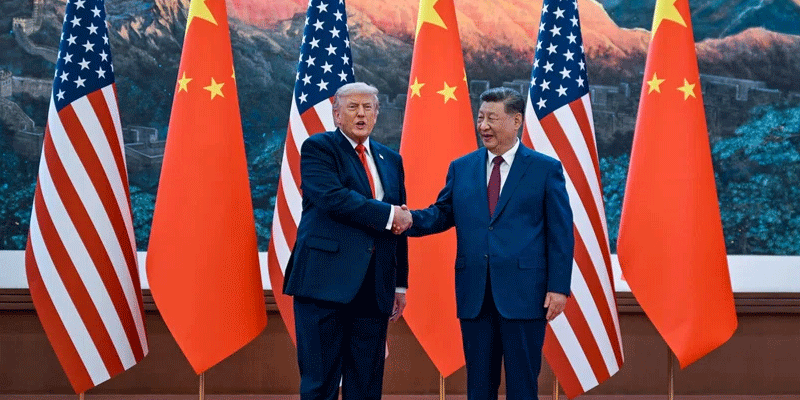
A major complication is the US legislation authorising tariffs of up to 100% on countries purchasing significant quantities of Russian oil, including India and China. Such measures introduce a geopolitical dimension into negotiations that are ostensibly focused on bilateral trade.
For India, this creates uncertainty over whether tariff concessions secured through a trade agreement could be offset by separate Russia-related measures.
A Narrower Deal May Be the Realistic Path
Sitharaman left open the possibility of finding “some room to operate” on individual issues, but her comments convey a cautious assessment of the negotiations. The two countries still have strong incentives to deepen economic ties, yet the remaining gaps involve politically sensitive trade-offs.
The emerging challenge is therefore not simply reaching an agreement, but finding a balanced and durable bargain. If a comprehensive pact proves too difficult, India and the US may increasingly focus on achievable sector-specific gains while keeping the broader trade relationship moving forward.
(With agency inputs)