Domestic cooking gas prices were raised by ₹29 per 14.2-kg cylinder on June 7, marking the second LPG price hike since tensions escalated during the ongoing US-Iran conflict. In Delhi, the price of a domestic LPG cylinder increased from ₹913 to ₹942, taking the cumulative rise over the past three months to ₹89. The latest revision has intensified concerns over household inflation, especially among middle-class and lower-income families already coping with rising food and fuel costs.
Second Price Hike Amid Global Energy Turbulence
The latest increase follows an earlier ₹60 hike in March and comes at a time when global energy markets remain under pressure due to instability in West Asia. Analysts say the conflict involving the United States and Iran has disrupted shipping and fuel supply chains near the Strait of Hormuz — a critical maritime route through which nearly 20 percent of the world’s oil passes.
India remains heavily dependent on LPG imports, with around 60 percent of domestic demand sourced from overseas markets. Nearly 90 percent of these imports transit through the Strait of Hormuz, making the country highly vulnerable to geopolitical tensions in the Gulf region.
The disruption has sharply increased international fuel prices, particularly affecting commercial LPG cylinders, whose prices reportedly rose by over ₹195 in Delhi in recent months.
Government Attempts to Cushion Consumer Impact
Despite the increase, the government has not fully passed on the international price burden to consumers. Officials estimate that state-owned oil marketing companies were absorbing nearly ₹703 per cylinder before the latest revision.
The Centre has adopted a partial pass-through strategy to balance consumer protection with mounting financial pressure on oil companies. Without this intervention, experts say domestic LPG prices could have risen much more sharply.
The government has also increased subsidies for beneficiaries under the Pradhan Mantri Ujjwala Yojana (PMUY). Subsidy support for PMUY households reportedly rose from around ₹174 to over ₹312 per cylinder, reducing the effective burden on economically weaker families.
Officials argue that the actual additional cost for subsidized households translates to less than ₹1 per day, helping limit the social impact of the hike.
Experts Warn of Continuing Volatility
Energy experts believe the latest revision reflects India’s broader energy security challenges. According to analysts, prolonged instability around the Strait of Hormuz could continue affecting global LPG and crude oil prices for months.
Economists warn that repeated fuel price hikes may further increase inflationary pressure, particularly on urban households and small businesses dependent on LPG. Rising fuel costs often indirectly impact transportation, food pricing and household expenditure patterns.
At the same time, experts note that oil marketing companies cannot indefinitely absorb losses without affecting fiscal sustainability. Some analysts believe further price revisions may become unavoidable if geopolitical tensions intensify.
Public Reaction and Growing Household Concerns
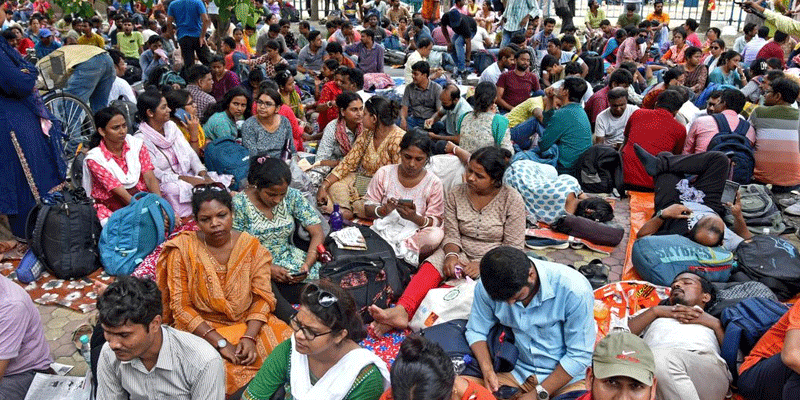
The latest hike has triggered criticism from opposition parties and concern among consumers. Many households have expressed frustration over the rising cost of essential commodities, arguing that cooking fuel has become increasingly unaffordable despite subsidy support.
Social media reactions also reflected growing anxiety among middle-income families who do not qualify for subsidized cylinders but continue to face repeated price increases.
Energy Security Challenges Continue to Shape Domestic Fuel Prices
The latest LPG price hike highlights the direct impact of global geopolitical conflicts on everyday household expenses in India. While the government has attempted to soften the blow through subsidies and partial price absorption, continued instability in global energy markets may keep domestic fuel prices under pressure. Balancing consumer relief, fiscal sustainability and energy security will remain a major policy challenge in the months ahead.
(With agency inputs)