Ahead of the NEET-UG 2026 re-examination, paper setters, moderators and translators have been moved to a secure undisclosed facility under complete lockdown, marking one of the strictest security measures ever adopted for a national entrance examination in India. The unprecedented move comes after the cancellation of the May 3 NEET-UG exam amid allegations of a massive paper leak, a controversy that triggered protests, investigations and widespread anxiety among millions of aspirants. By isolating all personnel involved in preparing the question paper until the June 21 retest concludes, authorities are attempting to prevent another leak scare and restore confidence in the examination process.
The Leak Controversy That Shook NEET-UG
The controversy erupted after portions of the NEET-UG 2026 question paper allegedly circulated online before the May 3 examination, with investigators finding that nearly 120 questions matched the actual paper. “Guess papers” shared through WhatsApp and Telegram fuelled allegations of an organized leak network, prompting the NTA to cancel the exam on May 11 and triggering a CBI investigation. Union Education Minister Dharmendra Pradhan later admitted that the NTA’s “command chain was breached,” exposing major lapses in the country’s largest medical entrance examination system.
Unprecedented Security Measures for the Retest
For the June 21 re-examination, the NTA has introduced a multi-layered security framework designed to eliminate any possibility of unauthorized access to the question paper.
Paper setters, translators and moderators have reportedly been isolated in a monitored facility where mobile phones, laptops, smartwatches and internet access are completely prohibited. Movement inside the premises is being tracked and supervised around the clock.
The security overhaul extends beyond question paper preparation. Printing, packaging, transportation and storage processes have been compartmentalized to ensure no single individual has access to the entire chain. Authorities are also exploring GPS tracking for transportation and enhanced scrutiny at distribution points.
At examination centres, CCTV surveillance has been made mandatory, with footage to be preserved for over 90 days. Additional safeguards include biometric verification, AI-assisted monitoring systems and 5G signal jammers to prevent digital communication during the test.
Misinformation and Continuing Anxiety
Despite the tightened security, fresh controversies have emerged online. Several social media accounts and Telegram channels recently claimed that the retest paper had already been leaked. The NTA dismissed the allegations as “false,” “baseless” and “fraudulent,” warning of strict legal action against those spreading misinformation.
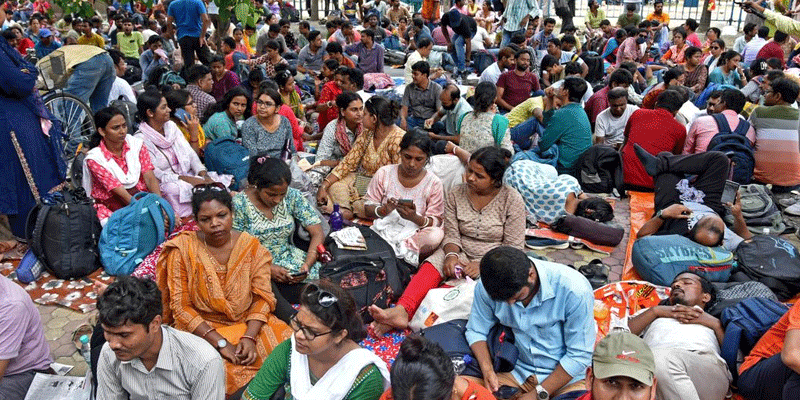
However, the controversy has already taken a psychological toll on students. Months of uncertainty, repeated speculation and delays have heightened stress levels among aspirants and parents alike. Concerns over fairness and equal preparation time continue to dominate discussions around the examination.
Supreme Court Oversight and Institutional Accountability
The NTA has also submitted an affidavit before the Supreme Court outlining extensive reforms, including mock drills, weather contingency planning, forensic CCTV analysis and verification of backup power systems. A high-powered steering committee has reportedly reviewed every aspect of the retest preparations.
Rebuilding Confidence Beyond the Examination
For the government and the NTA, June 21 is about far more than conducting another entrance examination. It is an attempt to rebuild trust in a system shaken by allegations of leaks, investigations, arrests and weeks of uncertainty for millions of students.
(With agency inputs)