France Introduces Europe's Toughest Child Online Safety Law
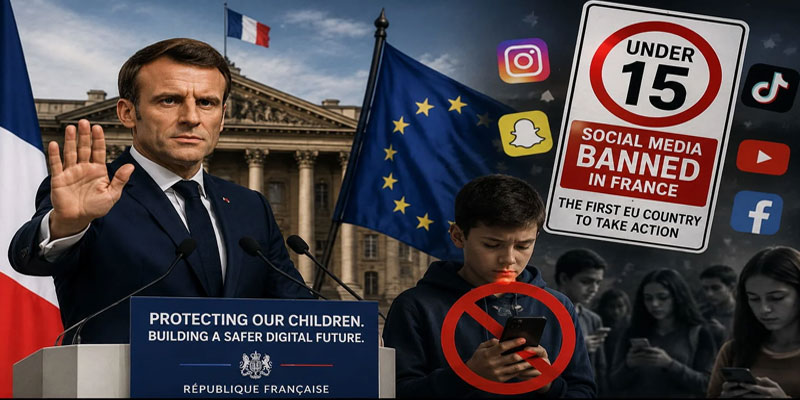
France has become the first European Union country to impose a nationwide ban on social media access for children under the age of 15, marking a major shift in digital regulation aimed at protecting minors. The new law, approved by both the National Assembly and the Senate, combines strict age restrictions with tougher rules on mobile phone use in schools, mandatory age verification, advertising warnings and the deletion of existing underage accounts.
The legislation positions France as the EU's most aggressive regulator of children's digital safety amid growing concerns over the impact of social media on mental health, cyberbullying and online addiction.
Rising Concerns Over Children's Digital Well-being
The move follows increasing global evidence linking excessive social media use among children to anxiety, depression, harmful online content and addictive algorithm-driven platforms. While many social media companies already prescribe minimum age limits, enforcement has largely relied on self-declared ages, making the restrictions easy to bypass.
France has now opted for a legally enforceable framework that goes well beyond existing EU norms.
What the New Law Provides
Under the new legislation:
· Children under 15 will be prohibited from accessing social media platforms.
· The ban will take effect from September 1, coinciding with the new academic session.
· Existing social media accounts belonging to under-15 users must be identified and deleted within four months, giving platforms until around January 2027 to comply.
Platforms Covered and Exemptions
The law primarily targets popular social networking platforms such as:
· TikTok
· Snapchat
· YouTube
· X (formerly Twitter)
However, certain services are excluded, including:
Private messaging platforms such as WhatsApp.
· Online encyclopedias.
· Educational and scientific information platforms.
This distinction ensures that learning resources remain accessible while restricting social networking services designed around public feeds and algorithmic engagement.
Stronger Age Verification and School Rules
A key feature of the law is mandatory age verification.
Social media companies will be required to introduce age-verification systems approved by France's data protection authority. These may include identity verification, third-party authentication or other regulated technologies to prevent children from bypassing age restrictions.
The legislation also expands digital controls within schools by:
· Restricting mobile phone use across high-school campuses, with limited exceptions determined by individual schools.
· Building on earlier bans already applicable in primary and lower-secondary schools.
Advertising Restrictions Add Another Layer
France has also introduced stricter rules governing digital advertising aimed at minors.
The measures include:
· Mandatory warnings stating that social media platforms are "dangerous products for children under 15."
· Restrictions on influencer promotions and advertising specifically targeting children.
The approach treats excessive social media exposure as a potential public health concern, drawing comparisons with warning labels used for tobacco and alcohol products.
A New Global Benchmark for Child Online Protection
France's legislation goes far beyond simply raising the minimum age for social media. By combining an under-15 access ban, compulsory age verification, account deletion requirements, tighter school phone restrictions and advertising warnings, it creates one of the world's most comprehensive child online safety frameworks. As governments worldwide grapple with balancing digital freedom and child protection, France has positioned itself at the forefront of regulating children's online lives. The effectiveness of this landmark law will now depend on robust enforcement, technological compliance by platforms and whether other countries choose to follow its lead.
(With agency inputs)