Controversy Around a Cleaner Fuel
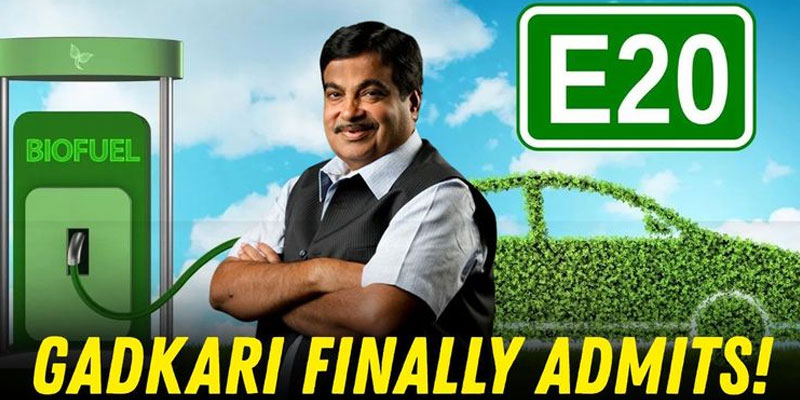
India’s push for ethanol-blended petrol has ignited a fierce debate. At the center of it is Union Minister for Road Transport and Highways, Nitin Gadkari, who has consistently defended the government’s E20 initiative—fuel made of 80% petrol and 20% ethanol. While the government touts it as a game-changer in reducing carbon emissions and cutting costly fuel imports, critics argue it compromises engine health and fuel efficiency. Gadkari, however, insists that much of the opposition is politically motivated.
Gadkari Calls Out “Paid Campaigns”
Speaking at the Society of Automobile Manufacturers’ annual convention, Gadkari dismissed the uproar on social media as a “paid campaign to politically target” him. He emphasized that research conducted by automobile manufacturers and the Automotive Research Association of India (ARAI) validates the safety and benefits of ethanol blending.
Labeling ethanol as “import substitute, cost-effective, pollution-free, and indigenous,” the minister stressed its economic value. India spends billions on crude oil imports, he argued, while ethanol—produced from crops such as maize—has already injected an estimated ₹45,000 crore into farmers’ incomes.
Government’s Green Argument
From the government’s perspective, E20 is both an environmental and economic imperative. Gadkari highlighted alarming reports showing that Delhi residents risk losing a decade of life expectancy due to air pollution. Ethanol, with its lower carbon footprint, is seen as a vital tool to curb emissions.
Officials also underline that claims of major fuel efficiency losses are misleading. Mileage, they argue, depends on multiple factors—driving habits, vehicle maintenance, tyre conditions, and air conditioning usage—not just fuel type. On the contrary, they say, E20 offers advantages such as smoother acceleration, better ride quality, and reduced carbon output.
The Core Issue: Vehicle Compatibility
Yet beneath the political noise lies a more practical concern: vehicle compatibility. Ethanol has chemical properties that can damage engines not designed for higher blends. Since April 2023, most new models from automakers like Maruti Suzuki, Hyundai, and Toyota have been certified as E20-compliant. For owners of these vehicles, the transition is expected to be smooth.
But India’s car market is dominated by older vehicles and imported models. For these owners, E20 presents genuine risks. Ethanol absorbs moisture, increasing the likelihood of rust and corrosion in fuel tanks and pipelines. It also reacts with rubber and plastic components, causing seals, gaskets, and hoses to deteriorate—potentially leading to leaks and system failures.
Costly Risks for Older and Imported Cars
The technical drawbacks go further. Ethanol’s lower calorific value means it delivers less energy than petrol, forcing engines to burn more fuel for the same output. Drivers of performance cars are already reporting noticeable drops in mileage. Additionally, ethanol’s combustion characteristics increase the risk of engine knocking and overheating, particularly in turbocharged or high-compression engines common in premium vehicles.
Luxury car owners are also worried about warranties being voided if they use E20, as manufacturers have not provided clear assurances. Repairing advanced fuel systems in such cars is prohibitively expensive, and reports of failing pumps and injectors have only deepened concerns.
A Divide Between Policy and Consumers
The result is a widening gap between the government’s long-term energy strategy and the short-term realities for many vehicle owners. While E20 supports energy independence, cuts pollution, and boosts farmers’ incomes, it also imposes hidden costs on drivers of non-compliant cars.
The government has so far resisted calls to allow continued access to E10 or ethanol-free petrol, arguing that rolling back would erode progress in the energy transition. But for a significant segment of the population, the lack of choice feels like an unfair burden.
Finding Common Ground
The E20 debate highlights the tension between national priorities and consumer realities. Nitin Gadkari is right to champion ethanol as a cleaner, indigenous alternative that reduces oil dependency and supports farmers. Yet the concerns of motorists—especially owners of older or imported vehicles—cannot be brushed aside as mere politics.
For India’s green fuel transition to succeed, policymakers must bridge this divide. This could mean offering phased rollouts, maintaining limited supplies of E10, or providing subsidies for retrofitting older vehicles. Transparency and clear communication with consumers will also be crucial to counter misinformation and rebuild trust.
Ultimately, the success of E20 depends not just on defending it politically but on ensuring it works practically for all Indians—balancing environmental progress with economic fairness.
(With agency inputs)