A Diplomatic Push for Safe Seas
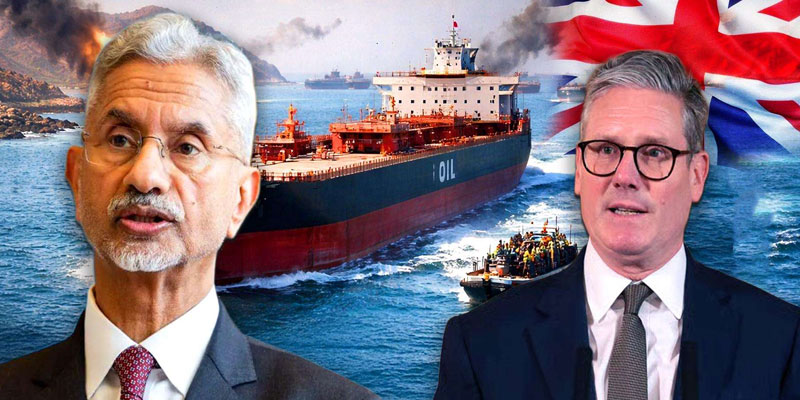
At a UK-led summit aimed at reopening the Strait of Hormuz, India underscored the urgent need to secure global shipping lanes amid the intensifying US–Israel–Iran conflict. Represented by Foreign Secretary Vikram Misri, New Delhi joined nearly 40 nations in calling for the restoration of freedom of navigation through one of the world’s most critical maritime chokepoints. Hosted virtually by British Foreign Secretary Yvette Cooper, the meeting reflected growing international concern over disruptions that threaten global trade and energy flows.
Hormuz and India’s Energy Vulnerability
India’s intervention was rooted in stark economic realities. Nearly 40–50 per cent of its crude oil imports pass through the Strait of Hormuz, while close to 88 per cent of its total crude requirements are imported—much of it sourced from West Asia. Any prolonged blockade or instability in the strait directly endangers India’s energy security and economic stability.
At the summit, India stressed adherence to international law, the protection of commercial shipping, and the safety of seafarers. Misri highlighted that uninterrupted maritime transit is not merely a strategic preference but a necessity for energy-dependent economies. The message was clear: restoring normalcy in Hormuz is integral to preventing wider economic fallout.
Coalition Strategy Without Direct Militarisation
The UK-led initiative brought together a diverse coalition of European, Gulf, and other partners to explore coordinated responses. These include diplomatic pressure on Iran, potential economic tools such as sanctions, and phased operational measures like mine-clearance and naval escort arrangements. Notably, the United States is not formally part of this forum, lending it a broader multilateral character.
For India, participation signals support for collective action while carefully avoiding entanglement in overtly military or US-driven strategies. This calibrated engagement allows New Delhi to contribute to global stability efforts without compromising its independent foreign policy stance.
De-escalation as Strategic Shield
India’s emphasis on de-escalation and dialogue reflects a pragmatic geopolitical calculation. By advocating restraint rather than unilateral force, New Delhi seeks to insulate its own energy-trade ecosystem from the cascading effects of conflict escalation. Military confrontation in Hormuz would not only disrupt oil flows but also spike global prices, strain supply chains, and expose Indian shipping to heightened risks.
Moreover, a diplomacy-first approach enables India to maintain working relationships across the geopolitical spectrum—including with Iran, Gulf states, and Western partners. This multi-vector engagement is crucial in a region where alliances are fluid and tensions can shift rapidly.
Balancing Principles and Interests
India’s stance also reinforces its broader commitment to a rules-based maritime order. By stressing freedom of navigation and respect for international law, New Delhi aligns its immediate economic interests with long-term strategic principles. This approach enhances its credibility as a responsible stakeholder in both the Indo-Pacific and the Gulf region.
At the same time, avoiding overt alignment with coercive measures preserves India’s strategic autonomy—a cornerstone of its foreign policy. The ability to engage all sides without being seen as partisan strengthens its diplomatic leverage in crisis situations.
Stability Through Strategic Restraint
India’s role at the Hormuz summit highlights a nuanced approach to global crises—one that prioritizes stability, dialogue, and economic security over confrontation. By championing de-escalation, New Delhi not only safeguards its own energy lifelines but also contributes to a broader international effort to keep vital trade arteries open. In an era of rising geopolitical tensions, such calibrated diplomacy may prove more effective than force in securing both national and global interests.
(With agency inputs)