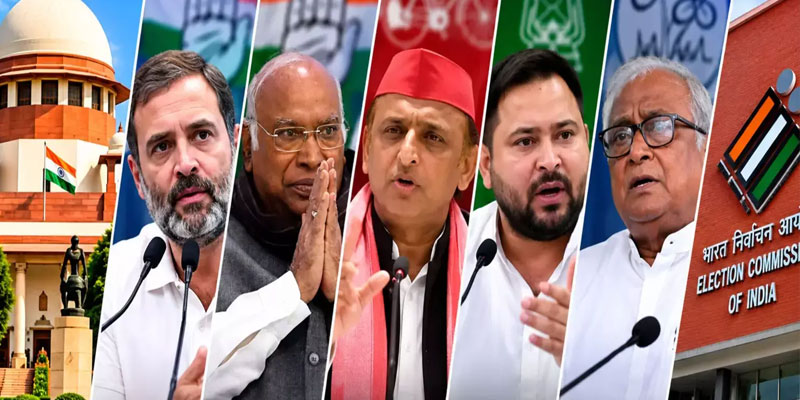
India's political landscape witnessed a major confrontation on November 1, 2026, as the opposition INDIA bloc organised a massive rally at Delhi's Ramlila Maidan, demanding the resignation of Chief Election Commissioner Gyanesh Kumar. The protest reflects growing tensions over electoral transparency, institutional independence and public confidence in India's democratic processes.
Led by Congress leader Rahul Gandhi, the demonstration brought together prominent opposition figures, including Mallikarjun Kharge, Mamata Banerjee and Akhilesh Yadav. Thousands of supporters joined the march, accusing the Election Commission of undermining electoral fairness through the controversial Special Intensive Revision (SIR) of voter lists.
The controversy centres on the reported removal of more than 130 million names from electoral rolls. Opposition parties allege that the exercise disproportionately affects minorities and vulnerable communities, potentially denying legitimate citizens their voting rights. The Election Commission rejects these allegations, maintaining that revisions eliminate duplicate, deceased and otherwise ineligible registrations.
Political tensions intensified after opposition lawmakers staged a symbolic impeachment of Gyanesh Kumar. However, this demonstration carried no constitutional authority to remove him. The BJP condemned the protests, accusing opposition leaders of undermining democratic institutions and creating political instability.
Beyond political confrontation, the dispute raises fundamental questions about electoral data governance. Transparent voter verification, accessible correction mechanisms, independent audits and accountable digital registration systems are essential to prevent wrongful exclusions and restore institutional credibility.
The controversy also exposes competing democratic priorities. Electoral rolls must remain accurate, but administrative efficiency cannot override citizens' voting rights. Equally, allegations of deliberate manipulation require credible evidence, independent scrutiny and established constitutional procedures rather than political rhetoric alone.
Ultimately, the confrontation represents a significant test of India's democratic institutions. The government, Election Commission and opposition share responsibility for protecting electoral integrity. India's democratic strength depends not merely on conducting elections, but on ensuring every eligible citizen can vote freely, fairly and without fear of exclusion.