India is currently reeling under an intense heatwave, with temperatures in several regions soaring to nearly 47.6 degrees Celsius. The relentless heat has triggered widespread health concerns, disrupted daily life, and placed immense pressure on public infrastructure. Authorities across multiple states have issued warnings as nearly 23 states remain under heatwave alerts. Health advisories issued by the government and doctors strongly emphasise staying hydrated, avoiding outdoor exposure during peak afternoon hours, and remaining alert for symptoms of heatstroke and heat exhaustion.
The present crisis is not an isolated weather event. Experts say the deadly combination of global warming, El Nino, and rapid urbanisation is intensifying heat extremes across India with increasing frequency and severity.
Understanding Heatwaves in India
In India, a heatwave is officially declared when temperatures remain at least 5 degrees Celsius above normal for two consecutive days. If temperatures rise 7 degrees above normal, the condition is classified as a severe heatwave. Such extreme conditions were once considered occasional summer events, but they are now arriving earlier and lasting longer.
The growing intensity of heatwaves reflects a broader climate shift. Scientists warn that rising global temperatures caused by greenhouse gas emissions are altering seasonal weather patterns across the world. India, with its dense population and rapidly expanding cities, is among the countries most vulnerable to climate-related heat stress.
Extreme heat not only affects comfort and productivity but also increases the risk of dehydration, cardiovascular stress, crop damage, and electricity shortages due to rising cooling demand.
El Nino and Global Warming Intensify the Crisis
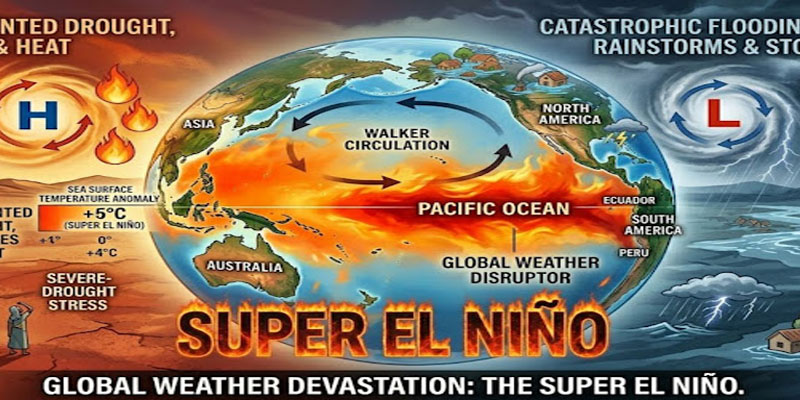
One of the key drivers behind the current heatwave is El Nino, a climate phenomenon linked to unusually warm sea-surface temperatures in the Pacific Ocean. El Nino disrupts global weather systems and often weakens India’s southwest monsoon while increasing summer temperatures across the subcontinent.
Scientists note that El Nino alone is not responsible for the current 47.6-degree temperatures, but it acts as a powerful amplifier when combined with long-term global warming. Heatwaves during El Nino years tend to become more frequent, prolonged, and severe.
Global warming has further intensified the situation by steadily increasing baseline temperatures worldwide. This means natural climate patterns like El Nino now operate in a much warmer atmosphere, resulting in more dangerous weather extremes than in previous decades.
Urban Heat and Pressure on Infrastructure
Cities are experiencing even harsher conditions due to the “urban heat-island” effect. Concrete roads, buildings, asphalt, and steel surfaces absorb heat during the day and release it slowly at night, preventing urban areas from cooling effectively.
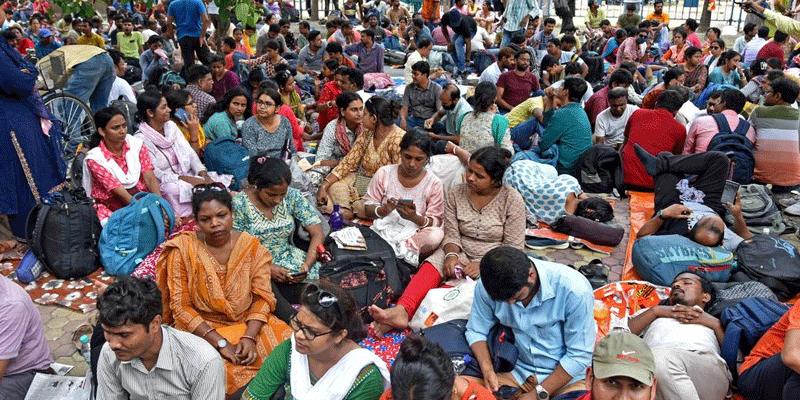
Poor ventilation, shrinking green cover, and overcrowded neighbourhoods further trap heat within cities, exposing residents to continuous thermal stress. Low-income communities and outdoor workers are among the worst affected because they often lack access to cooling systems and shaded spaces.
The intense heat has also increased electricity consumption as households and businesses rely heavily on-air conditioning and cooling devices, placing additional strain on power grids and urban infrastructure.
A Warning Sign for The Future
India’s ongoing heatwave is not merely a seasonal emergency but a stark warning about the growing impact of climate change on human life. The combined effects of global warming, El Nino, and rapid urbanisation are making extreme heat more dangerous and more frequent. While government heat-action plans and public advisories are helping reduce immediate risks, long-term solutions will require climate-resilient urban planning, stronger environmental policies, and greater public awareness. As temperatures continue to rise globally, adapting to a hotter future is no longer optional but an urgent necessity.
(With agency inputs)