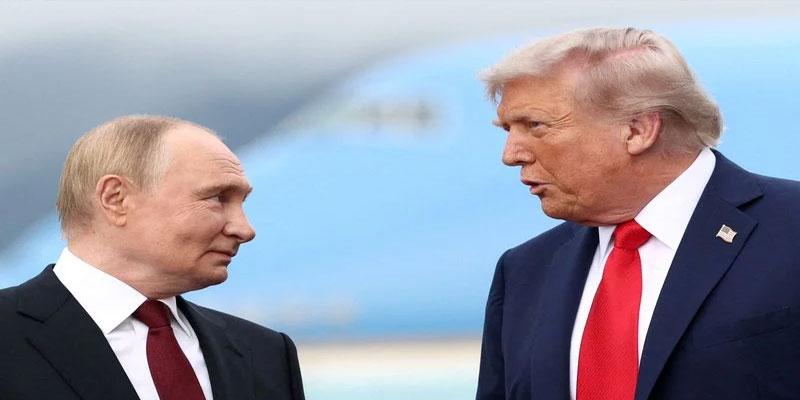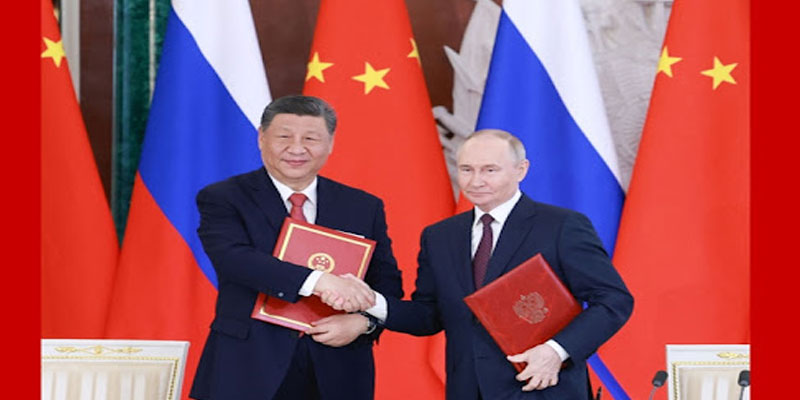
Russian President Vladimir Putin’s latest visit to Beijing and his high-profile talks with Chinese President Xi Jinping have once again highlighted the growing strategic partnership between Moscow and Beijing. The two leaders projected unity on issues ranging from trade and energy cooperation to global governance and geopolitical rivalry with the West. Their meeting came shortly after US President Donald Trump’s own engagement with Xi, turning Beijing into the centre of intense global diplomatic activity and reinforcing China’s image as an emerging epicentre of international power politics.
During the summit, Putin and Xi criticised what they described as a “law of the jungle” approach in world affairs, accusing Western powers, particularly the United States, of relying on sanctions, pressure tactics, and unilateral decisions to shape global outcomes. At the same time, both leaders emphasised the “unprecedented” strength of Russia-China ties, signing multiple agreements aimed at deepening long-term cooperation.
Beijing Emerges as A Global Power Hub
The back-to-back diplomatic engagements involving Trump and Putin underline China’s growing centrality in global politics. Beijing is increasingly positioning itself not merely as an economic giant but as a balancing power capable of managing relationships with rival global actors simultaneously.
For China, hosting both American and Russian leaders within days serves an important strategic purpose. It demonstrates that Beijing remains indispensable in discussions concerning trade, security, energy, and global stability. While Washington views China as its primary strategic competitor, Russia increasingly sees Beijing as its most important geopolitical and economic partner amid continuing Western sanctions and isolation efforts.
This evolving triangle between China, Russia, and the United States reflects a more complex world order where alliances are fluid, economic interests overlap, and geopolitical competition is no longer strictly bipolar.
Putin’s Message Against the Western Order
During the Beijing discussions, Putin repeated Moscow’s longstanding criticism of the US-led international system. Referring to the “law of the jungle,” he argued that force, sanctions, and selective interpretations of international law are increasingly replacing multilateral cooperation and established global norms.
The Russian leader framed the Moscow-Beijing partnership as a stabilising force advocating for a “multipolar world,” where countries pursue independent foreign policies rather than operate under Western influence. Yet Putin also attempted to strike a careful balance by stating that Russia remains open to working with the United States, signalling flexibility even while strengthening ties with China.
Analysts believe this dual messaging allows Moscow to avoid appearing entirely dependent on Beijing while still benefiting from Chinese political and economic support.
Expanding Economic and Energy Cooperation
Economic collaboration formed a major pillar of the summit. Russia and China signed agreements focused on trade, energy, infrastructure, and investment projects. Much of the bilateral trade between the two countries is now conducted in rubles and yuan, reducing dependence on the US dollar and limiting exposure to Western sanctions.
Putin also reaffirmed Russia’s commitment to supplying energy to China, including through proposed projects such as the Power of Siberia-2 pipeline. For China, Russian oil, gas, and raw materials remain vital for sustaining industrial growth and energy security. For Russia, China offers crucial markets, financial connectivity, and diplomatic backing at a time of heightened confrontation with the West.
A New Era of Strategic Realignment
The Putin-Xi summit in Beijing reflects a broader transformation in global politics. China’s ability to engage simultaneously with both Washington and Moscow highlights its expanding influence in shaping international diplomacy. Meanwhile, Russia and China are steadily building an alternative power framework centred on economic cooperation, strategic autonomy, and resistance to Western dominance. While the partnership is presented as stabilising and non-confrontational, its long-term implications could significantly reshape global power balances, trade systems, and international alliances in the years ahead.
(With agency inputs)