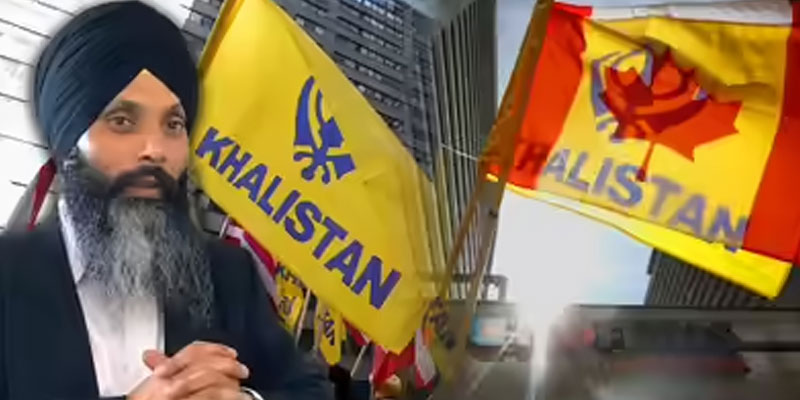
A Strained Backdrop in India–Canada Relations
Ties between India and Canada have been uneasy since former Canadian Prime Minister Justin Trudeau alleged in 2023 that Indian agents were linked to the killing of Khalistani separatist Hardeep Singh Nijjar. India dismissed the claim as baseless, but the episode plunged diplomatic relations into turbulence. Amid cautious attempts to normalize engagement, tensions have resurfaced with a fresh threat from a banned Khalistani group to target Indian diplomatic missions in Canada.
SFJ Calls for a ‘Siege’
Sikhs for Justice (SFJ), a U.S.-based Khalistani organization outlawed in India, has announced plans to “siege” the Indian Consulate in Vancouver on September 18. A public notice circulated by the group warned Indo-Canadians to avoid the consulate on that day, framing the action as a protest against alleged Indian “espionage.”
The group further escalated matters by releasing a poster depicting India’s new High Commissioner to Canada, Dinesh Patnaik, with a target mark on his face — a move widely seen as an intimidation tactic.
In its statement, SFJ accused Indian consulates in Canada of operating surveillance networks against Khalistani activists, particularly those linked to the group’s so-called referendum campaign. The organization reiterated claims that such “operations” persisted even after Trudeau’s 2023 parliamentary remarks about Nijjar’s killing.
By invoking Trudeau’s allegations two years on, the outfit sought to reinforce its narrative that India continues to intimidate activists abroad. India has consistently rejected such charges as politically motivated and dangerous.
The RCMP Angle and Gosal’s Protection
SFJ also pointed to developments involving Inderjeet Singh Gosal, who stepped into a leadership role after Nijjar’s death. The group claimed that Gosal, once arrested for a violent incident at a Hindu temple in the Greater Toronto Area, had been placed under witness protection by the Royal Canadian Mounted Police (RCMP) due to threats allegedly linked to his activism.
or SFJ, Gosal’s case is portrayed as evidence of systemic targeting of Khalistani figures. However, Canadian authorities have not publicly corroborated these claims.
Diplomatic Fallout Still Unresolved
The siege threat comes against the backdrop of still-fragile India–Canada ties. After Trudeau’s allegations in 2023, both countries expelled senior diplomats, including India recalling its High Commissioner. While there have been tentative moves toward dialogue since, the relationship remains overshadowed by mistrust and by Canada’s handling of extremist groups that India accuses of threatening its sovereignty.
The Indian Ministry of External Affairs and the Vancouver consulate have not issued formal comments on the latest threat. However, New Delhi has repeatedly urged Ottawa to take stronger measures against extremist activities targeting Indian missions and officials.
Implications for Bilateral Engagement
The renewed provocation poses challenges not only for Indian diplomats but also for the Canadian government, which must balance freedom of expression with public safety and international obligations. Any failure to prevent disruption of consular functions risks deepening the rift with India and undermining efforts to stabilize ties.
A Relationship at a Crossroads
The threat by Sikhs for Justice to “siege” India’s consulate in Vancouver is a stark reminder of the fragility of India–Canada relations two years after the Nijjar controversy. While Ottawa must ensure the security of foreign missions on its soil, New Delhi will be watching closely to gauge Canada’s resolve in curbing extremist provocations. Constructive engagement between the two democracies hinges on their ability to separate fringe activism from the broader bilateral relationship. Without decisive action, instability could overshadow cooperation in areas where both sides share strategic and economic interests.
(With agency inputs)